[Eric, Daniel]
Today, we tried to see if we could detect any reflections off the photodiodes in our homodyne and discovered some interesting behavior.
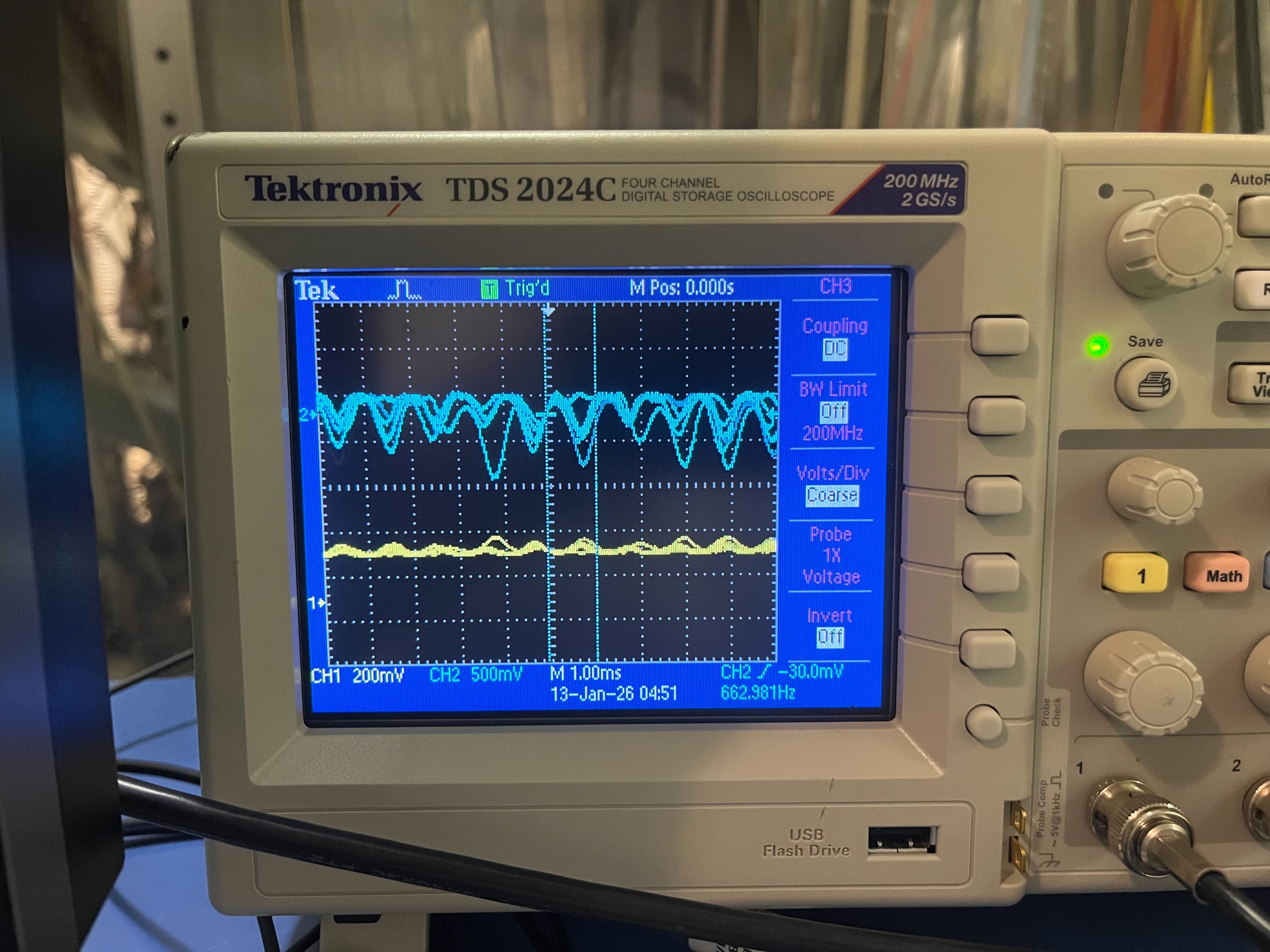
To do this, we needed to recover our input alignment from the LO fiber into the LO PMC, as it needed to be removed when Eric and I built the box around the readout table next to the chamber. A decent alignment was recovered and the PMC still locks okay with one caveat. The ~1 kHz vibrations from the turbo pump are really pronounced in the transmitted power through the PMC. Before we resume squeezing measurements, it may be a good idea to revisit the PDH loop transfer functions to make sure eveything there is working okay. Nevertheless, a noisy lock was achieved (blue is transmission and yellow is reflection in this scope trace) and we continued to try and detect some reflections from the PDs on the homodyne.
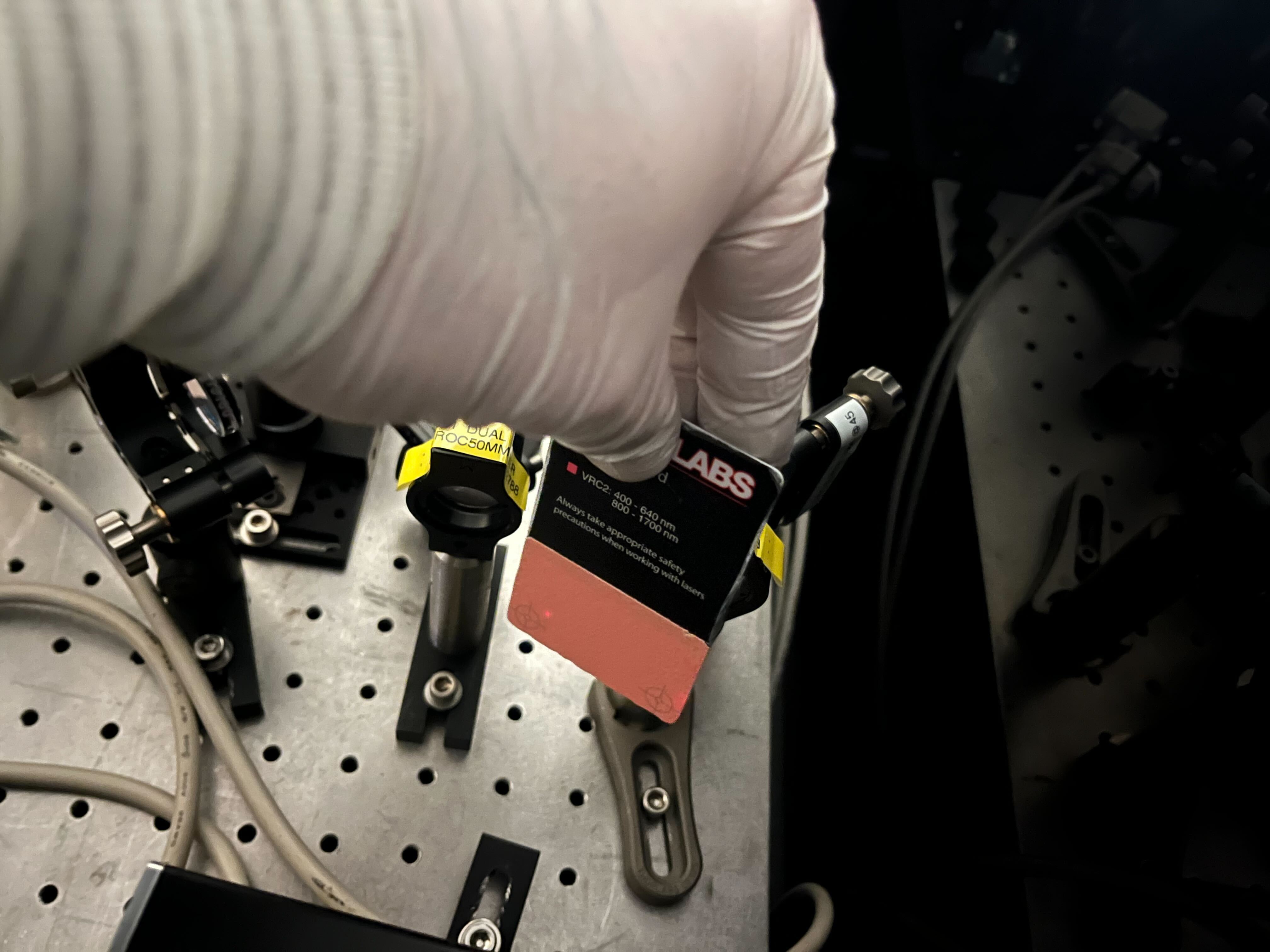
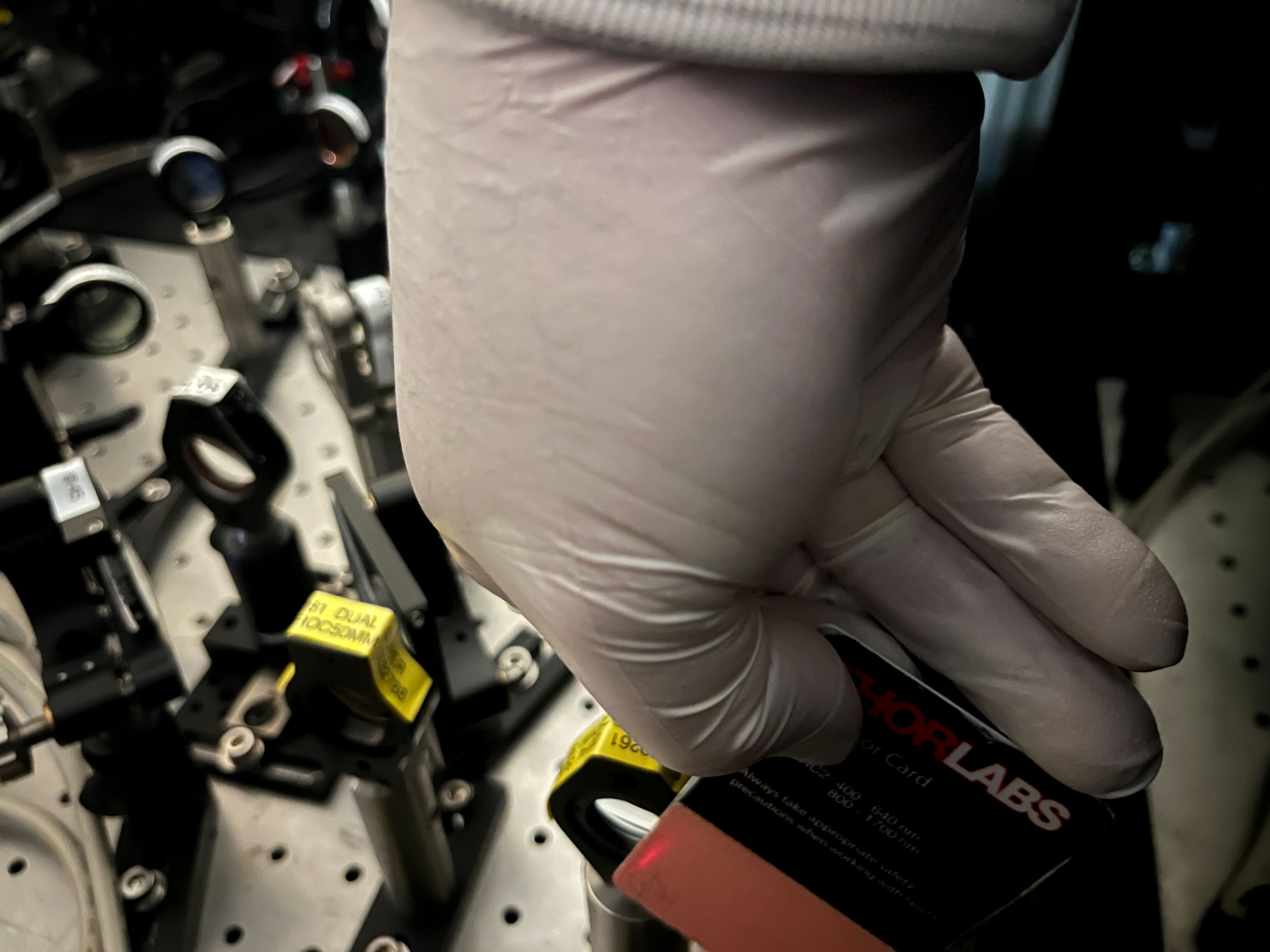
With 2mW of LO leaving the PMC, we measure almost exactly 1mW of LO power incident on each PD. The right-most PD exhibits a very weak reflection at roughly the expected angle from the incoming beam (see detector card in this image). Placing a power meter on this very dim spot revealed that there was only 2uW of reflected power in this beam. That constitutes a 0.2% reflection loss, which is not too bad. However, the left-most detector is more interesting. There appears to be a smeared beam nearly retroreflected from the incident beam (see detector card image here). Since this beam was so close to the incident beam, it was impossible to get a power detector in there to measure the reflected power. I would estimate that the brightness on the card was about 5-10X brighter and over a much larger area, so clearly there is a significant loss here.
Adjusting the turning mirror for the left-most PD affected the position and pattern of the reflection significantly. It seems like this is a result of the input beam on the photodiode somewhere, but it was unclear to me exactly how. It is possible that the beam on the left-most PD and right-most PD are mismatched as they take slightly different path lengths before being focused down, but this should be minimal with our current mode-matching setup.
In any case, it wouldn't be too hard for me to believe that this accounts for the 1-2% excess loss we discuss here. Some close realignment of the homodyne may be all that is necessary to mitigate this.