[Daniel, Eric]
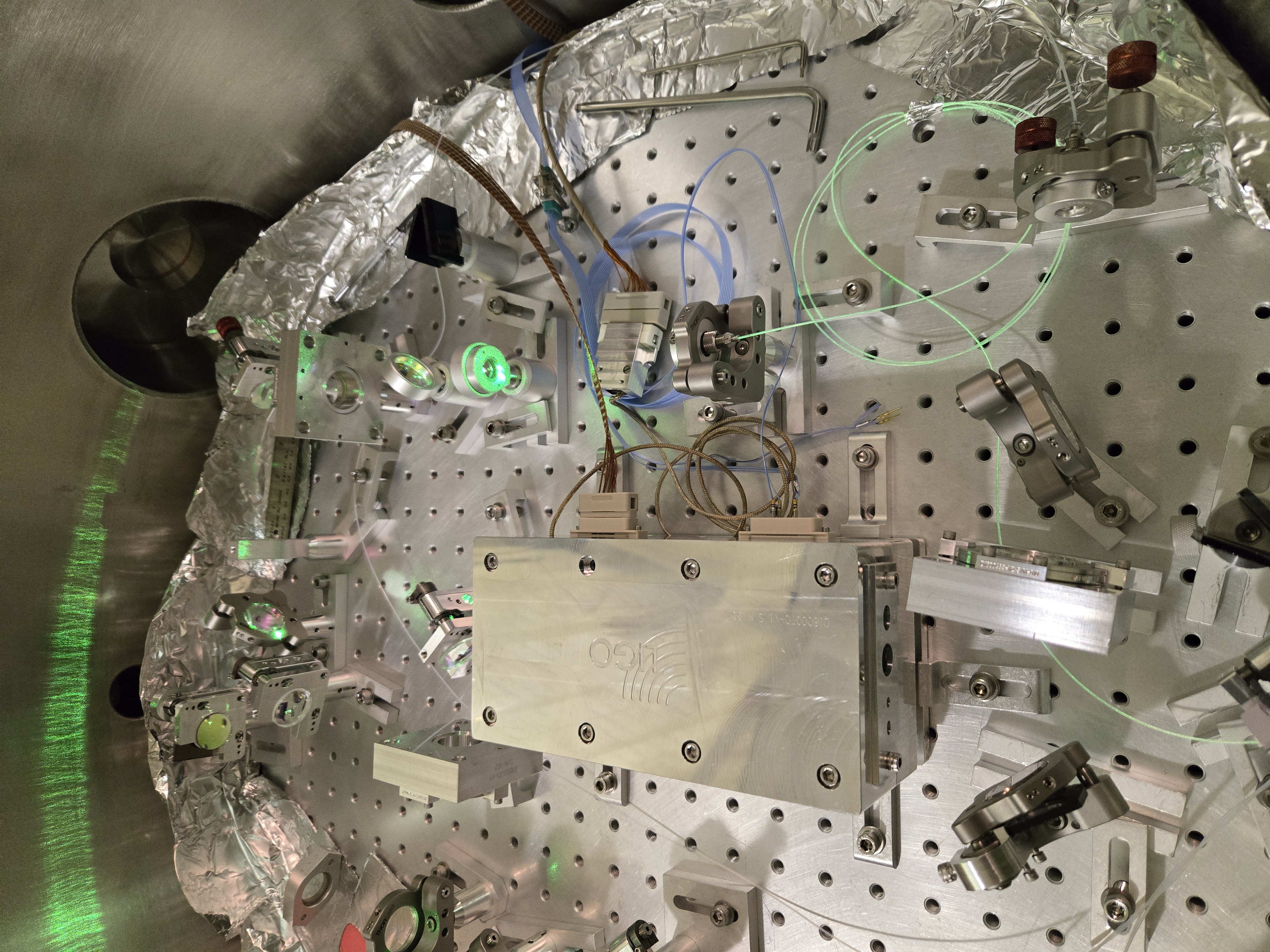
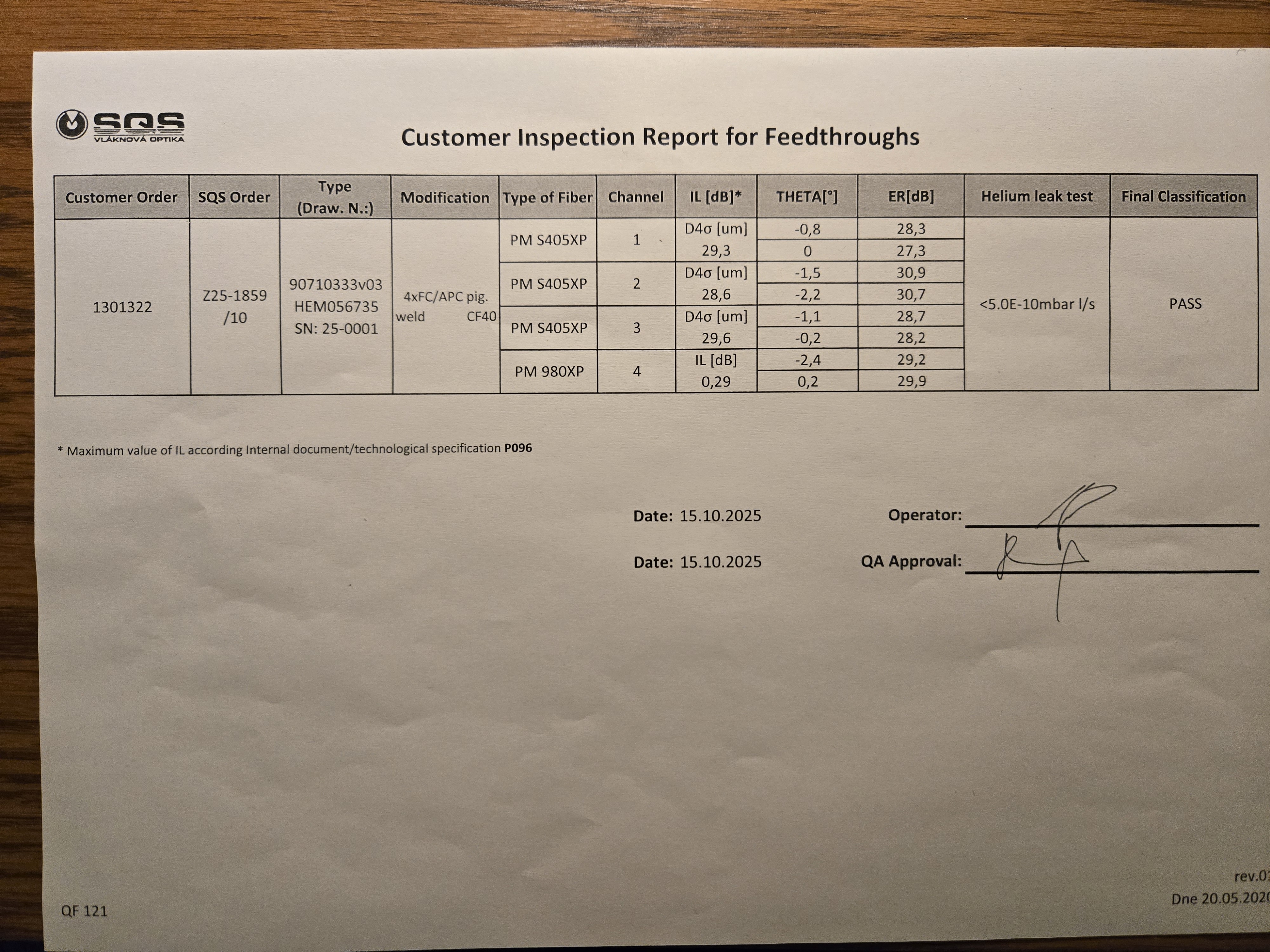
We're getting ready to pump down the VOPO chamber this week. Now that our nifty new 4-channel PM feedthrough is here, we've decided to convert our setup fully to PM.
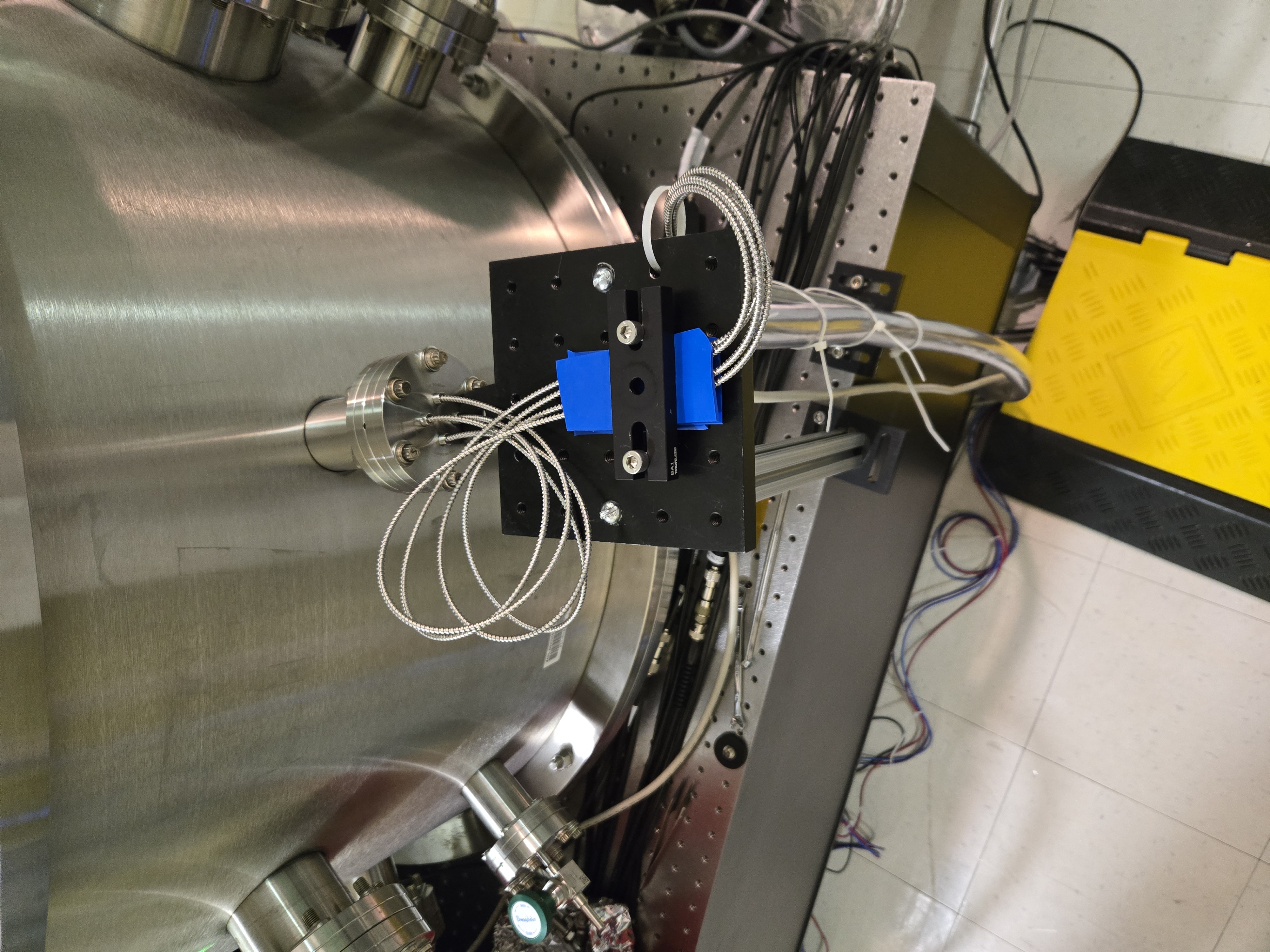
We rigged up a strain relief for the fiber feedthrough and ran the fibers over to the table in a flexible PVC tube for protection and environmental isolation. The stainless steel jacketing is quite nice, very sturdy. In vacuum, the fibers are teflon jacketed. Its easy to see and also seems like a robust solution. The new feedthrough for HAMX that Slawek bought has stainless steel jacketing in vacuum. We still need to test which approach is better for vacuum qualification.
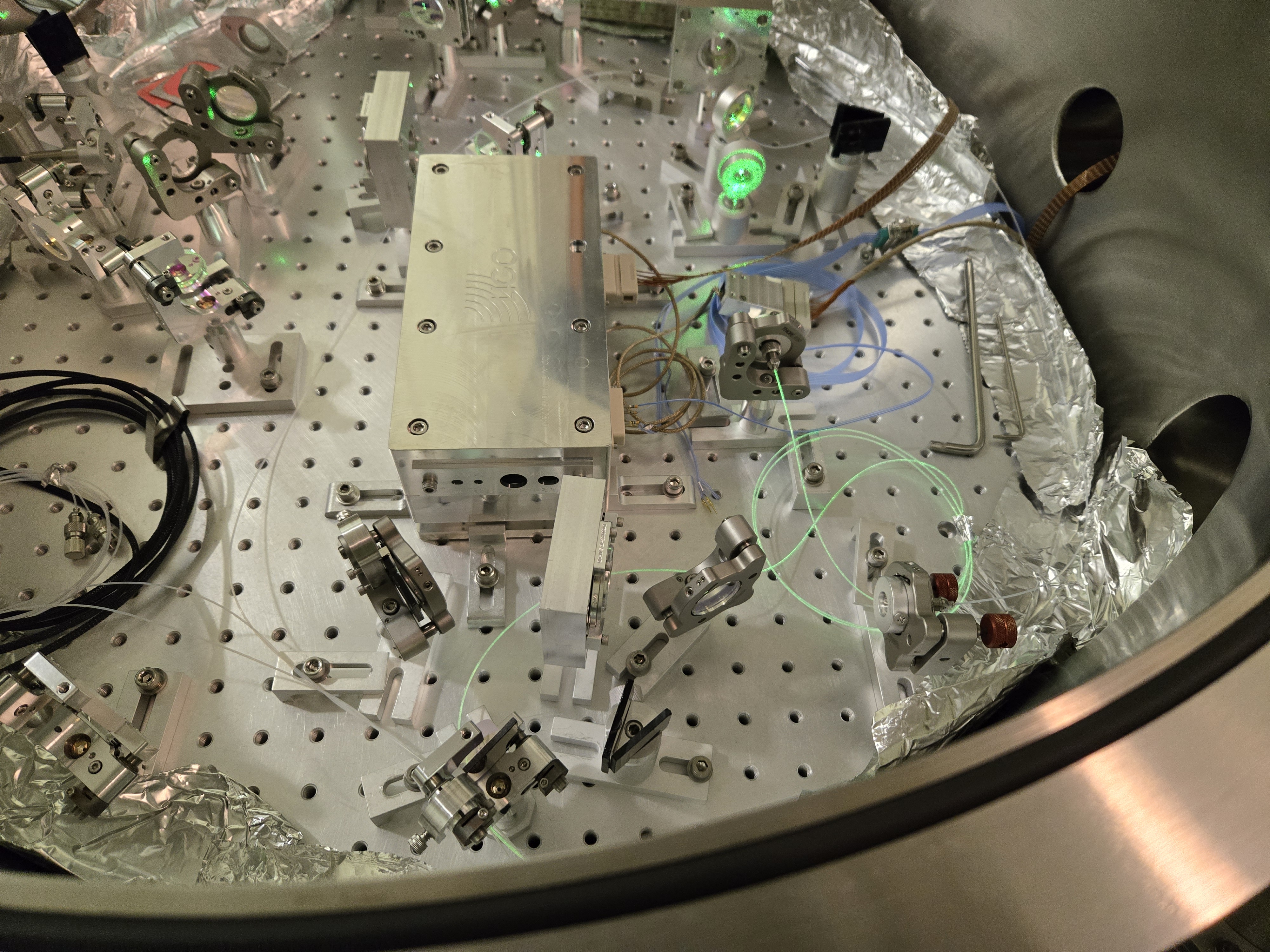
Our feedthrough has 3x 532 nm fibers that are continuous all the way from the main optics chamber to the VOPO breadboard in vacuum. They have high power end caps which should make them quite durable. We hope to do some long-term testing to confirm this. We were able to get about 37 mW into vacuum with 51 mW incident on the collimator, so about 70% end-to-end coupling. Likely this is mode matching limited rather than feedthru limited. We still need to set the polarization axis of the input field correctly, should finish tomorrow.
We rebuilt the 532 nm path in vacuum to account for the altered mode of the end-capped fiber. We were able to get the mode matching to the VOPO up to 95%.
Channel 4 of the feedthrough is 1064 nm and we will use this for the rear seed/CLF path. We've replaced the SM fiber switch for the Seed/CLF with a PM 50/50 fiber beamsplitter. Its fast-axis blocking, so setting the PM axis is a breeze. About 75% throughput connecting from the 50/50 beamsplitter to in vacuum. We are seeing excellent polarization extinction in the chamber. After rotating the collimator to the correct axis we couldn't measure the reflection off of the thin film polarizer. According to the testsheet, the PER should be around 30 dB, which is typically the limit for a PM fiber device.