Wen, Daniel
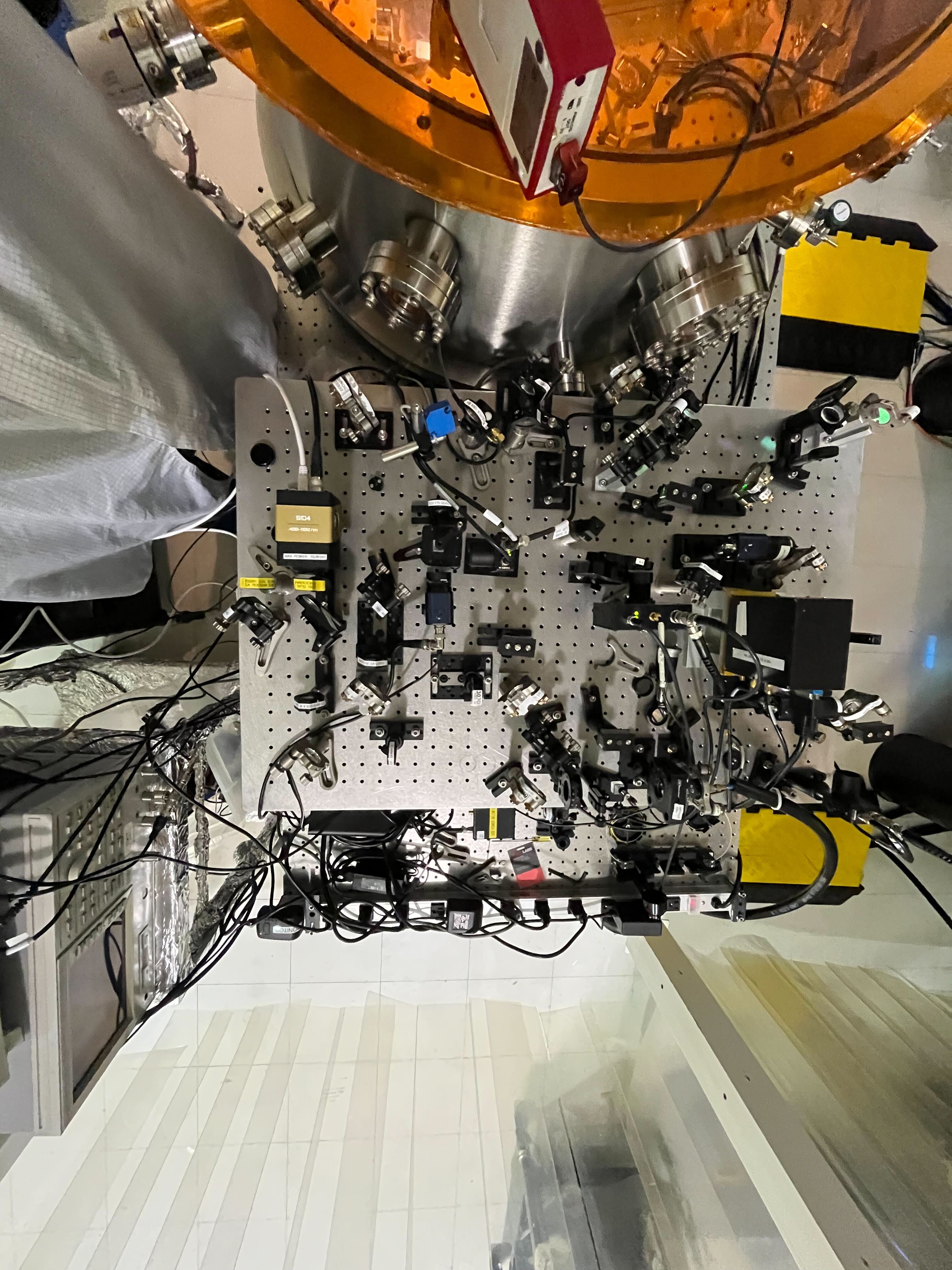
Today we finished a few of the last steps in assembling the optics on the LASTI SQZ table. In summary, we found a few modifications to our previous setup that assisted in alignment of the homodyne detector and were able to observe high visiblity on the homodyne, as well as some preliminary NLG via the 2f signal on the CLF reflection PD.
Seed PDH Loop
Instead of relying on the green PDH loop to stabilize the cavity near a seed resonance, we thought it might actually be pretty quick to set up a rough PDH loop to lock the cavity to the seed beam instead - the main idea being that the stability of the measurements we make of the mode overlap during alignment could be better by locking to the seed. While Wen worked on repairing some broken solder joints on the TEC in the OPO, I quickly threw a broadband EO phase modulator in the seed path on the main laser table. With some careful placement, this did not degrade the mode matching significantly. To quickly attain an error signal for the PDH loop, I used 19 MHz as the dither frequency which makes it possible to borrow the OPO CLF reflection PD signal as an error signal for the demodulator. For the demodulator, we hijacked the OPO green PDH demodulator and routed a 19-MHz LO to generate the error signal which was also fed back through the green OPO CMB. Doing this yielded a fairly stable lock that ensured the mode we were aligning to the homodyne was indeed the seed TEM00 mode.
Homodyne SQZ/LO Mode Matching and Initial Visibility
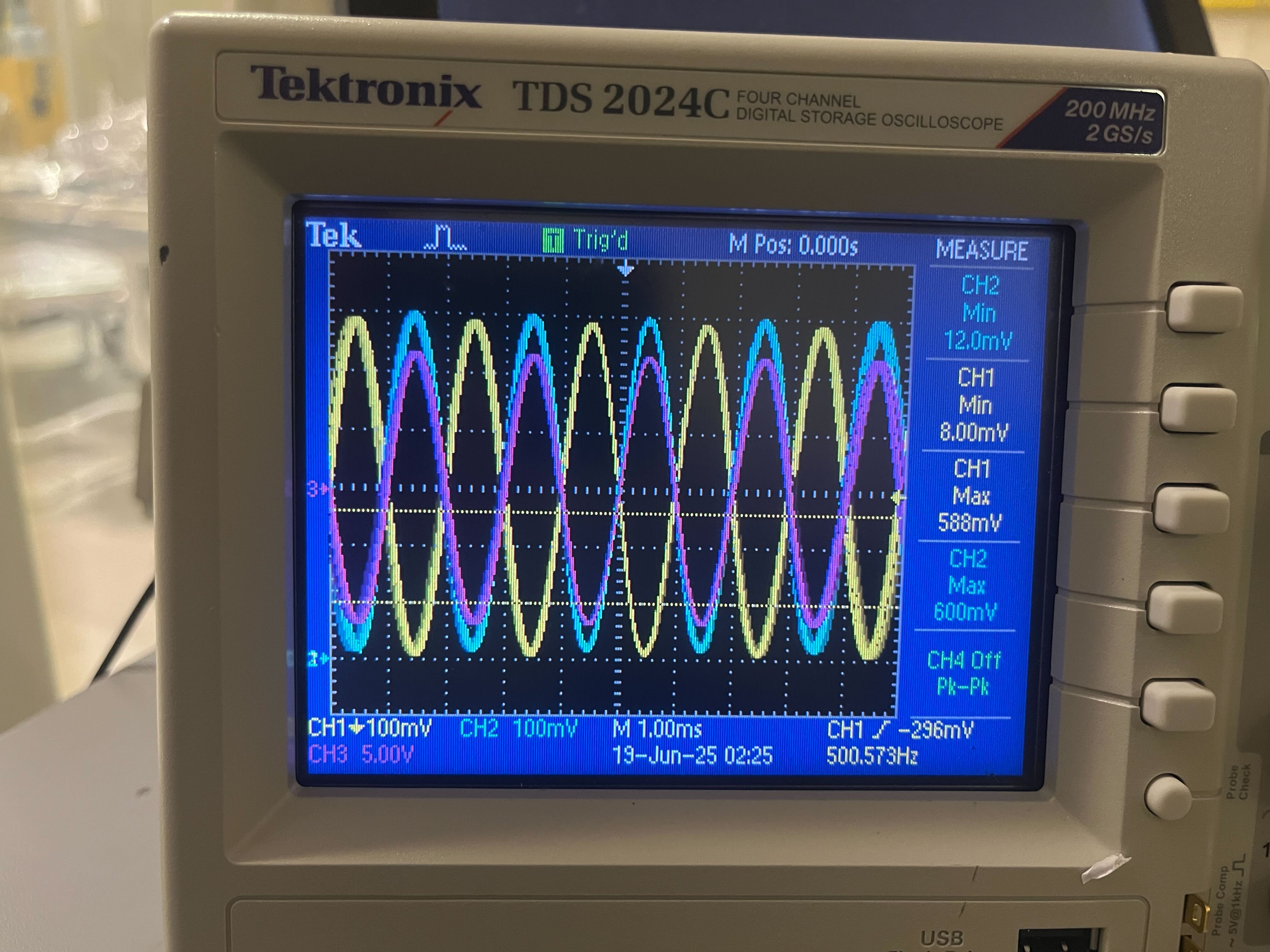
Using the Phasics camera that Hudson lent us, we were able to quickly match the SQZ beam parameters to those of the LO beam on the PDs in real time. A precise calculation of the expected mode overlap will be posted here later, but for now, we estimate based on a rough calculation that the mode overlap should be >99%. After confirming this, we went ahead and tried to align the SQZ beam to the LO beam which had already been aligned and balanced on the homodyne. To observe the visibility, we detuned the LO by 500 Hz from the seed and let the fringes run at that frequency on the photodetectors. A capture of the individual PD channels here (yellow - PD1, blue - PD2), as well as the difference channel (purple) shows a respectably high visiblity right off the bat. Based on the min/max measurements computed by the scope, our rough visiblities on PD1 and PD2 at this time are ~97.3% and ~96.1% respectively. We expect that with some more carfeul alignment we may be able to improve these even more.
NLG Observation via CLF
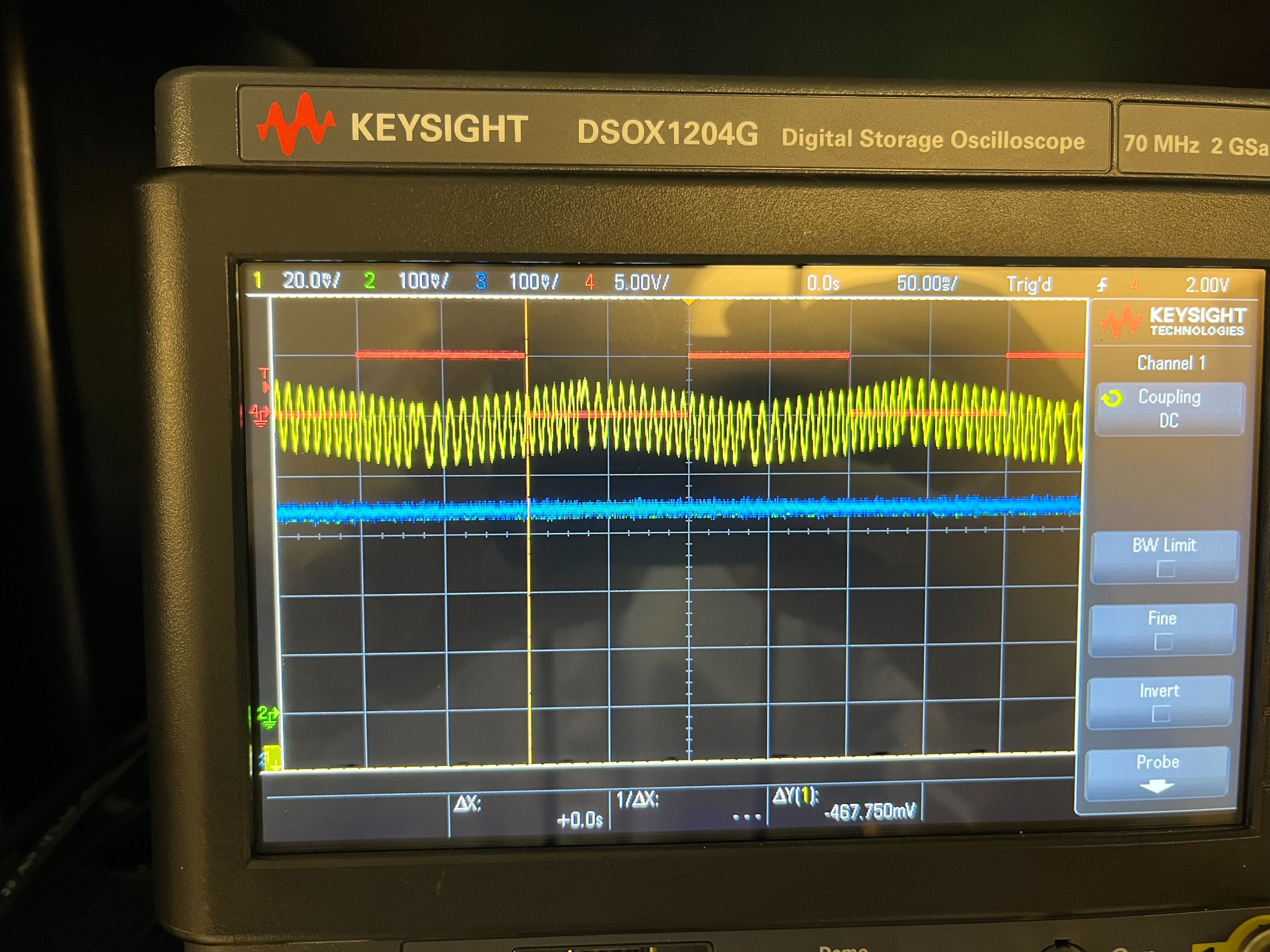
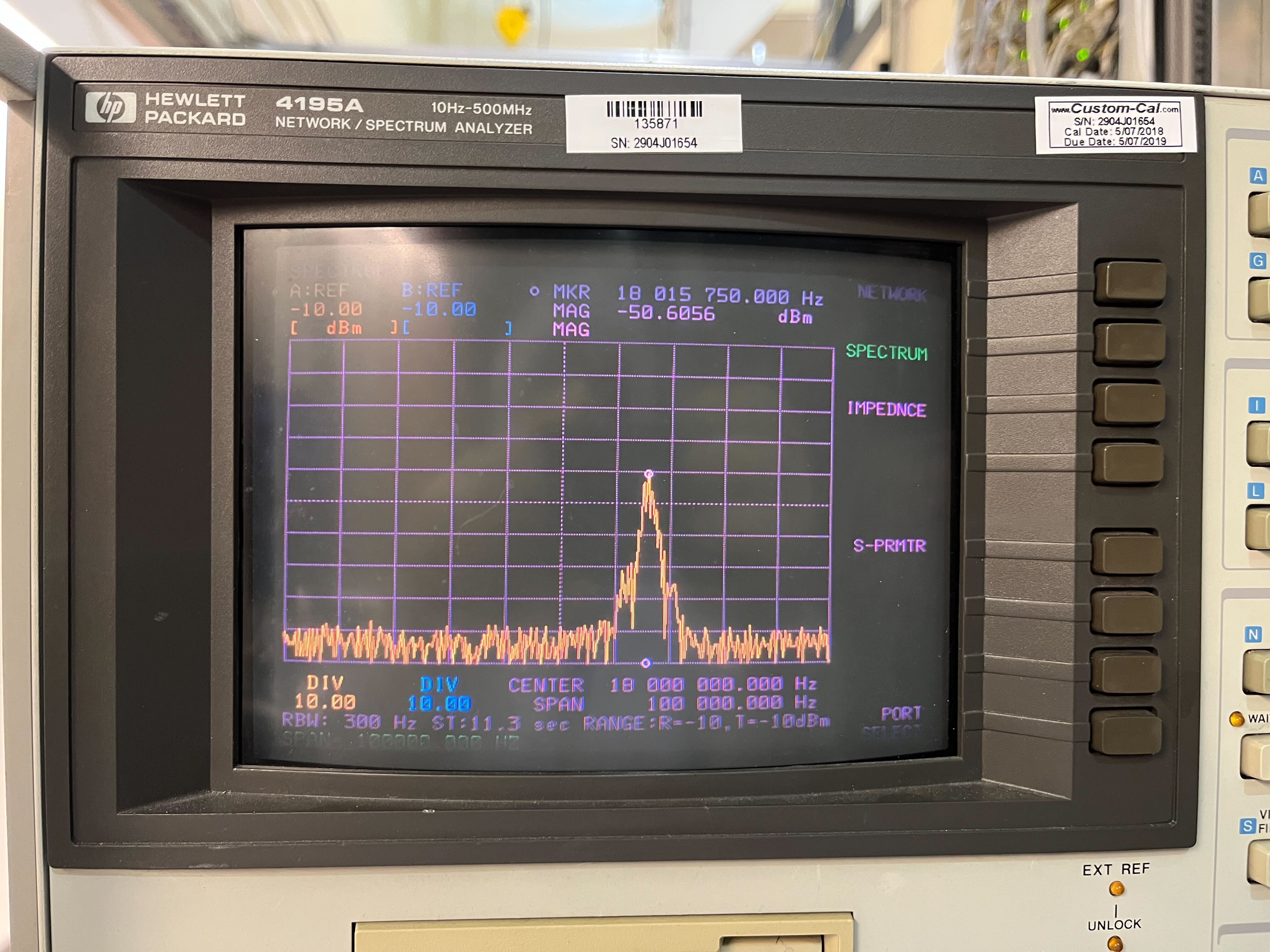
After all of this alignment, we started resurrecting the phase-locking loops for the stabilization of our LO at the homodyne. We started with optimizing the CLF PD alignment and tuning the OPO crystal's temperature/wedge displacement to achieve rough phase matching and co-resonance. At this point, phase dithering and injecting the seed beam into the back of the OPO allowed us to observe NLG in the phase-sensitivity of the seed transmission (yellow). Following this, we replaced the seed signal with our CLF signal detuned from the seed by +9MHz and checked the output of the CLF PD on a spectrum analyzer. Here, we can see that we are indeed generating an idler beam 9 MHz below the seed and therefore generating the necessary ~18 MHz carrier needed for phase locking the pump to the seed. The frequency error here is likely due to a failure in one of our SG382 sig gens which is preventing the PLL from locking. Next, we will have to re-establish the phase-locking electronics to really see squeezing.