[Begum, Haocun, Eric]
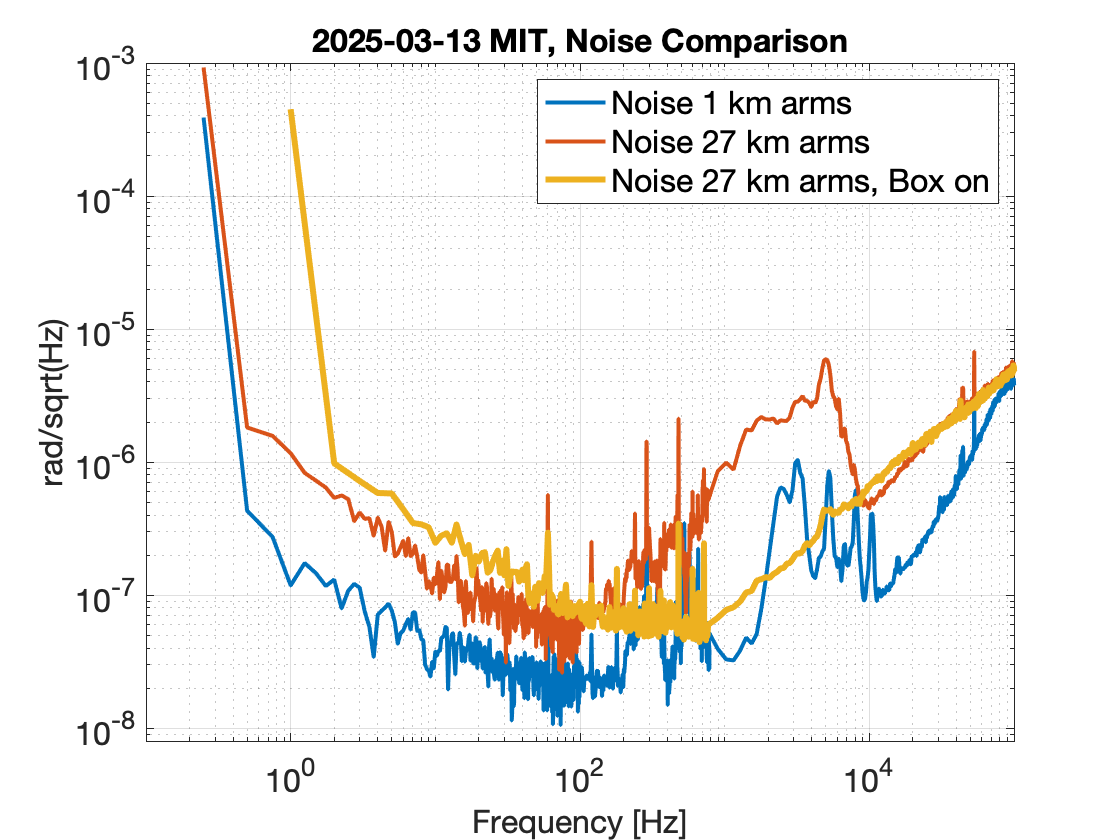
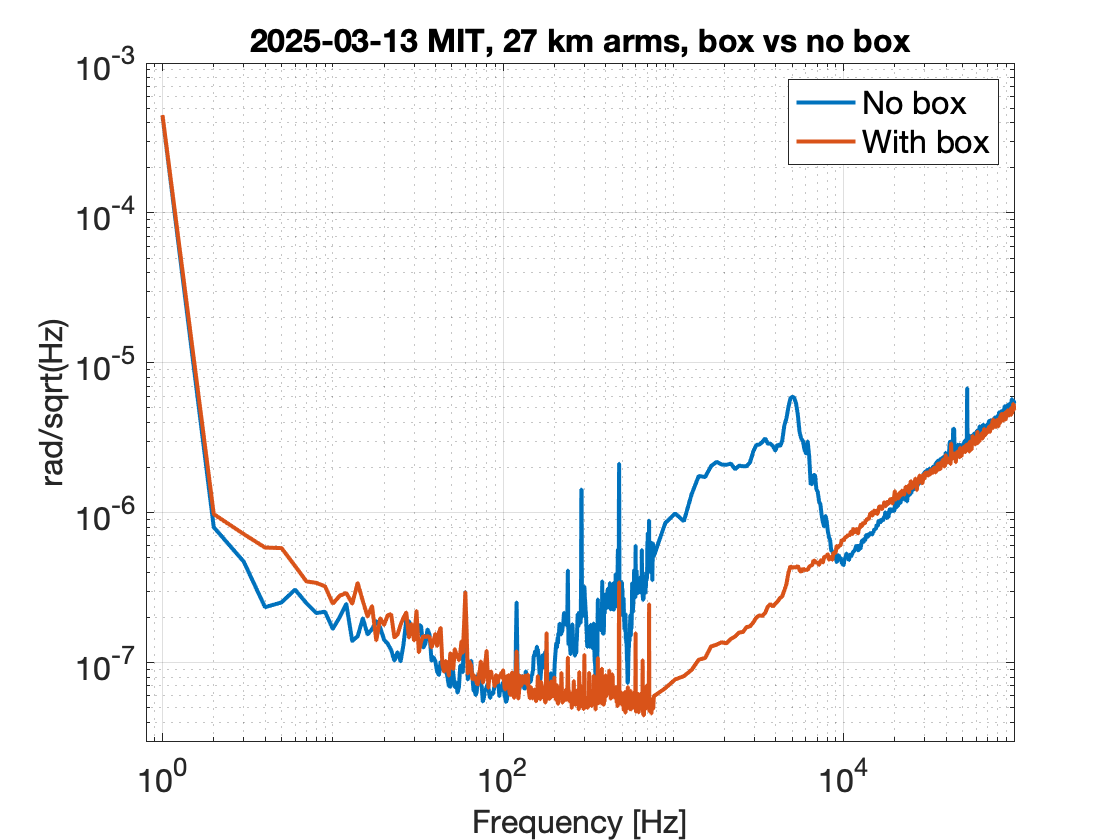
On March 13th, we first measured noise for the 1km arm length interferometer, then we replaced the arms with the 27 km vibration insensitive spools and measured noise again, see attached comparison plot. After seeing the big lump of noise 100 Hz to 1 kHz, we decided to close up the box Eric built around the setup. As seen in the figure, this squashed the 100 Hz to 1kHz (apparently) acoustic noise! Of course, a more clear comparison is with traces of the same range on the SR785 and the same arm length: here.
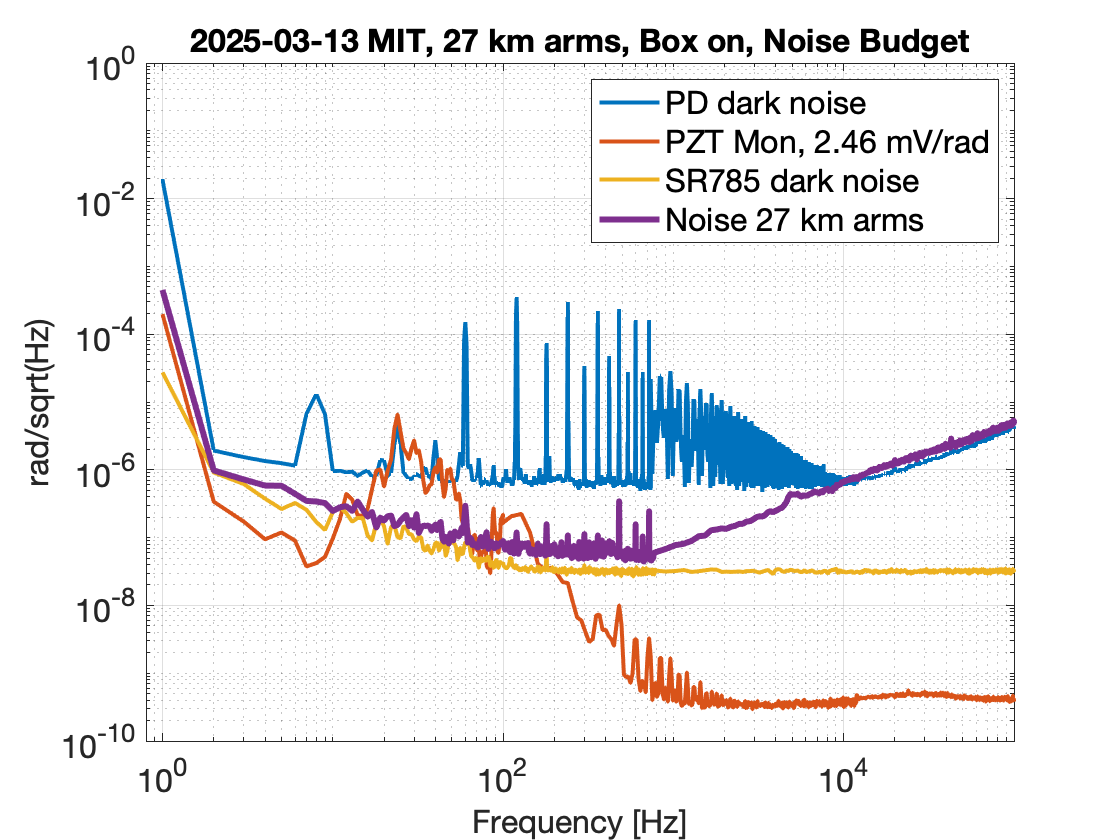
We also measured dark noise for the photo detector, SR785 and the PZT mon (remember the unusually low PZT-VCO crossover frequency and the weird resonances). PZT calibration is 10V/mm * 1.545/(2pi*1.4441)e-6 m/rad. The noise budget is attached, <800 Hz seems to be determined mostly by the SR785 noise floor, while >10kHz is consistent with the PD noise floor. The PZT MON needs to be further calibrated with the actuator transfer function.
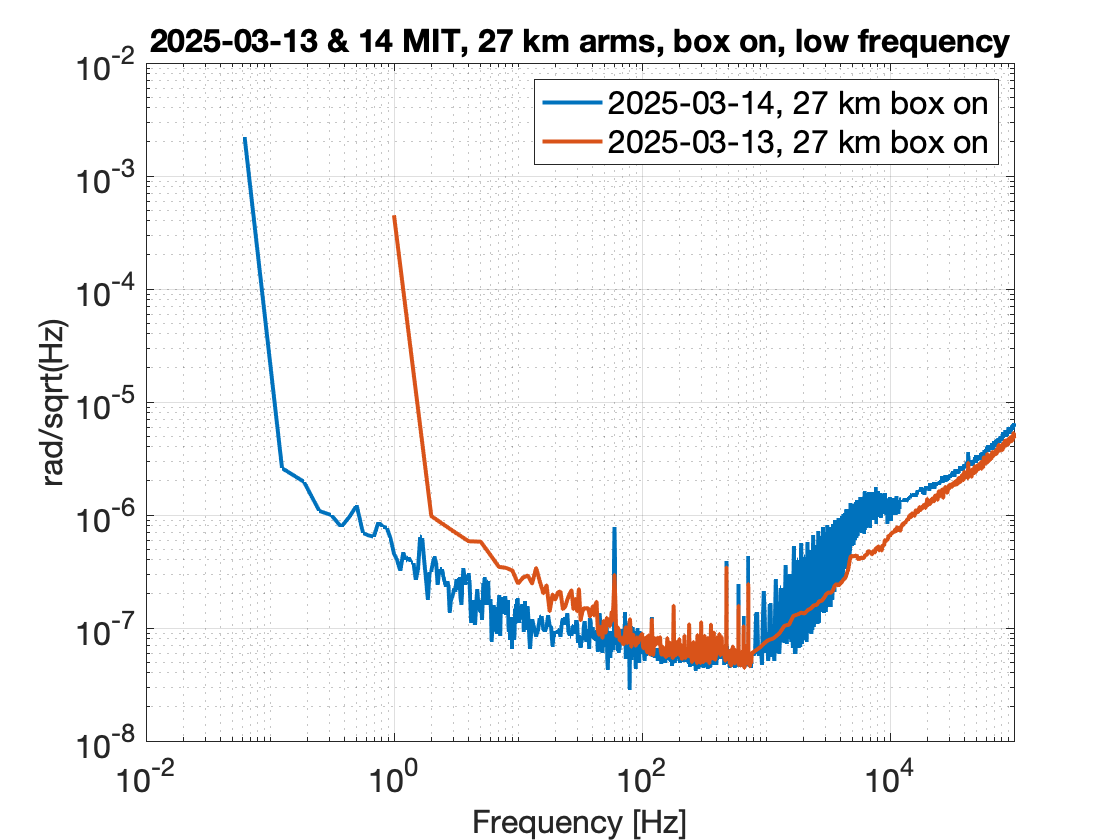
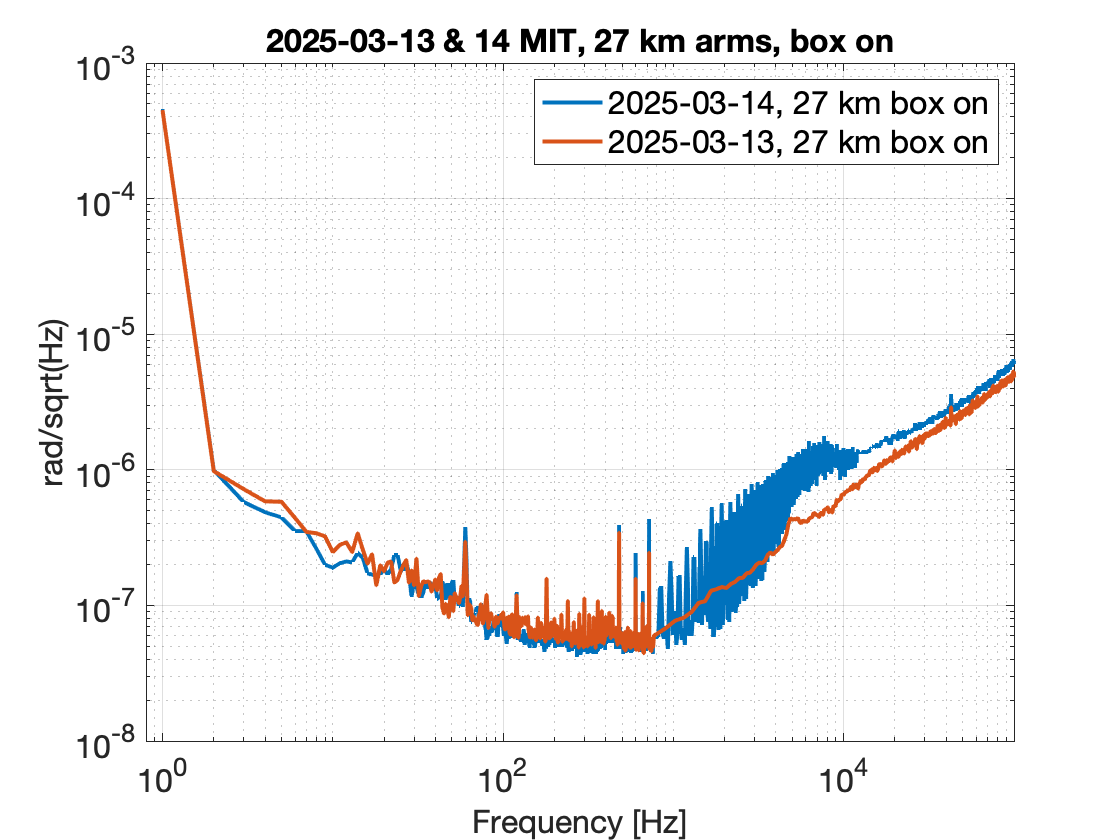
The next day, in the late afternoon, we measured the noise of the system again, this time down to 0.1 Hz. Again, a comparison plot with the same range for the March 13th and March 14th data is attached, where the noise >1kHz seems slightly elevated. This could be real and possibly due to lack of temperature control, or it could be a calibration issue, since the fringe Vpp showed variation during measurement taking campaign on March 14th. We had to keep increasing the input 1545 nm power to try to keep the HD locked and eventually, we lost the ability to lock and had to stop before completing the noise budget. After this, we decided that we have already seen the magic of the box with the acoustic noise suppression and opened it back up. The air was slightly warmer to hand just above the AOMs on the interferometer side of the table. After attempting to lock again, we saw the PZT mon drifting down and railing at the low V limit, unlike the previous days. This supports the idea that if we have a greater PZT strecher range and/or temperature control, we should be able to eliminate this drift and/or the subsequent unlocking of HD which limits the data acquisition time.
The fiber spools are now mounted on the moving stage. The next step is to move the other interferometer components onto the moving stage and start rotating!
Some other notes from this week:
- The SM splices on both ends of the 27 km spools were predicted to be <0.01 dB loss (by the splicer). We confirmed the loss to be immeasurably small on one of the four splices. The throughput losses from Spool 1 and Spool 2 are measured to be 5.2 dB and 5.15 dB. Assuming 0.1 dB insertion loss between the fiber connectors in the fiber sleeve, this is consistent with ~0.188 dB/km loss, which is pretty close to the quoted 0.18 dB/km loss by the manufacturer. (0.18 dB/km*27 km = 4.86 dB loss, 0.4 dB loss insertion loss is also nothing too crazy.)
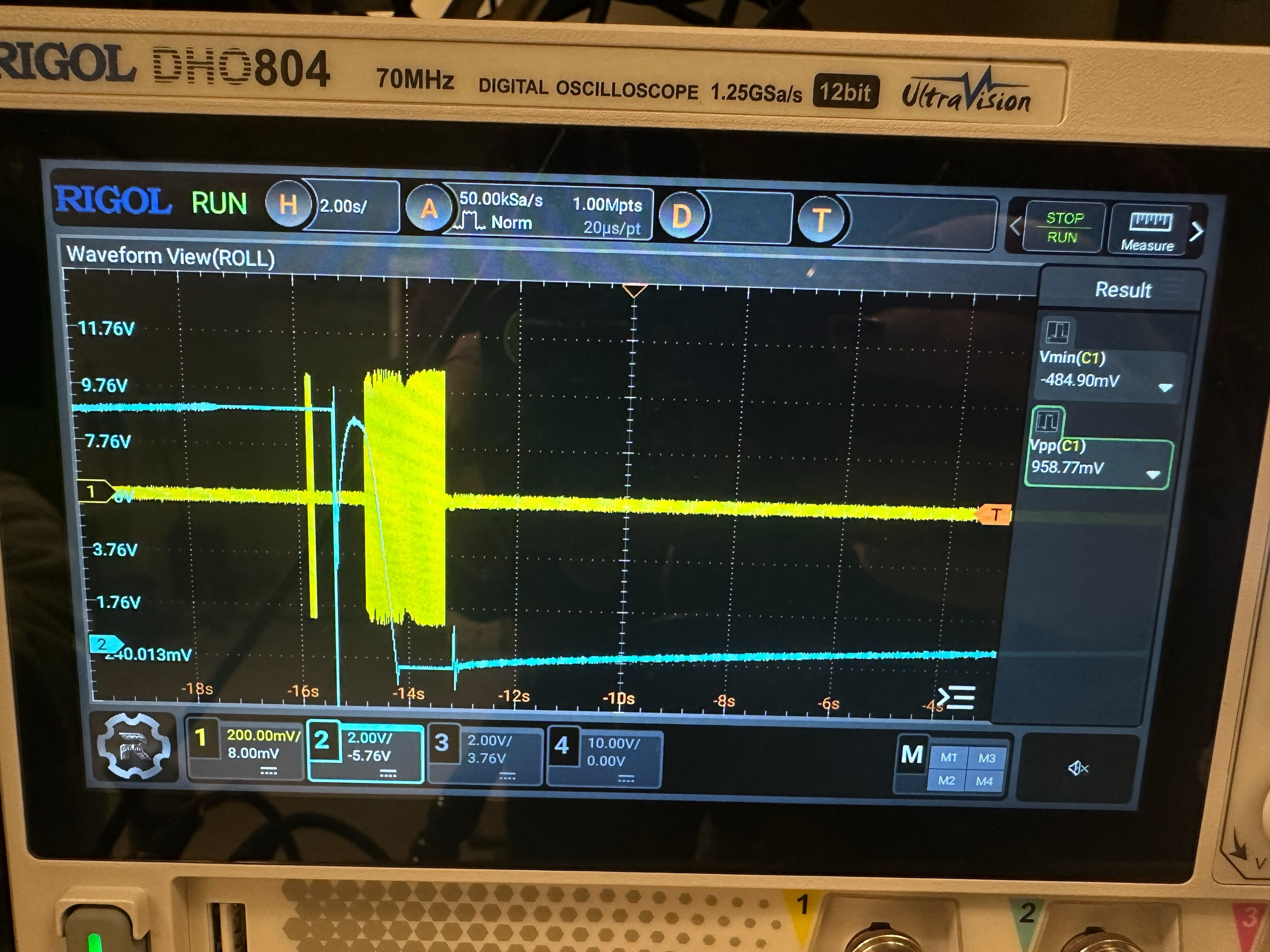
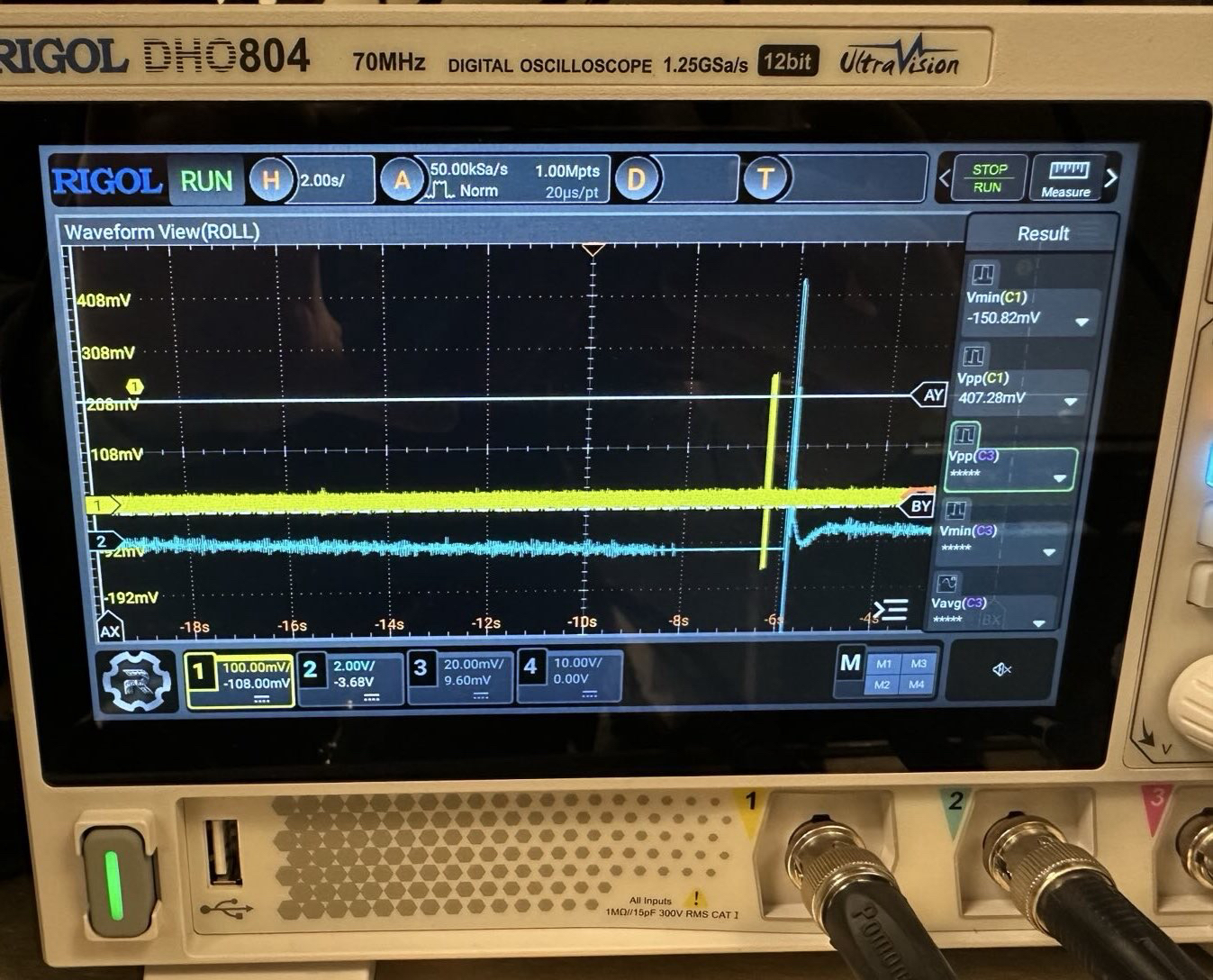
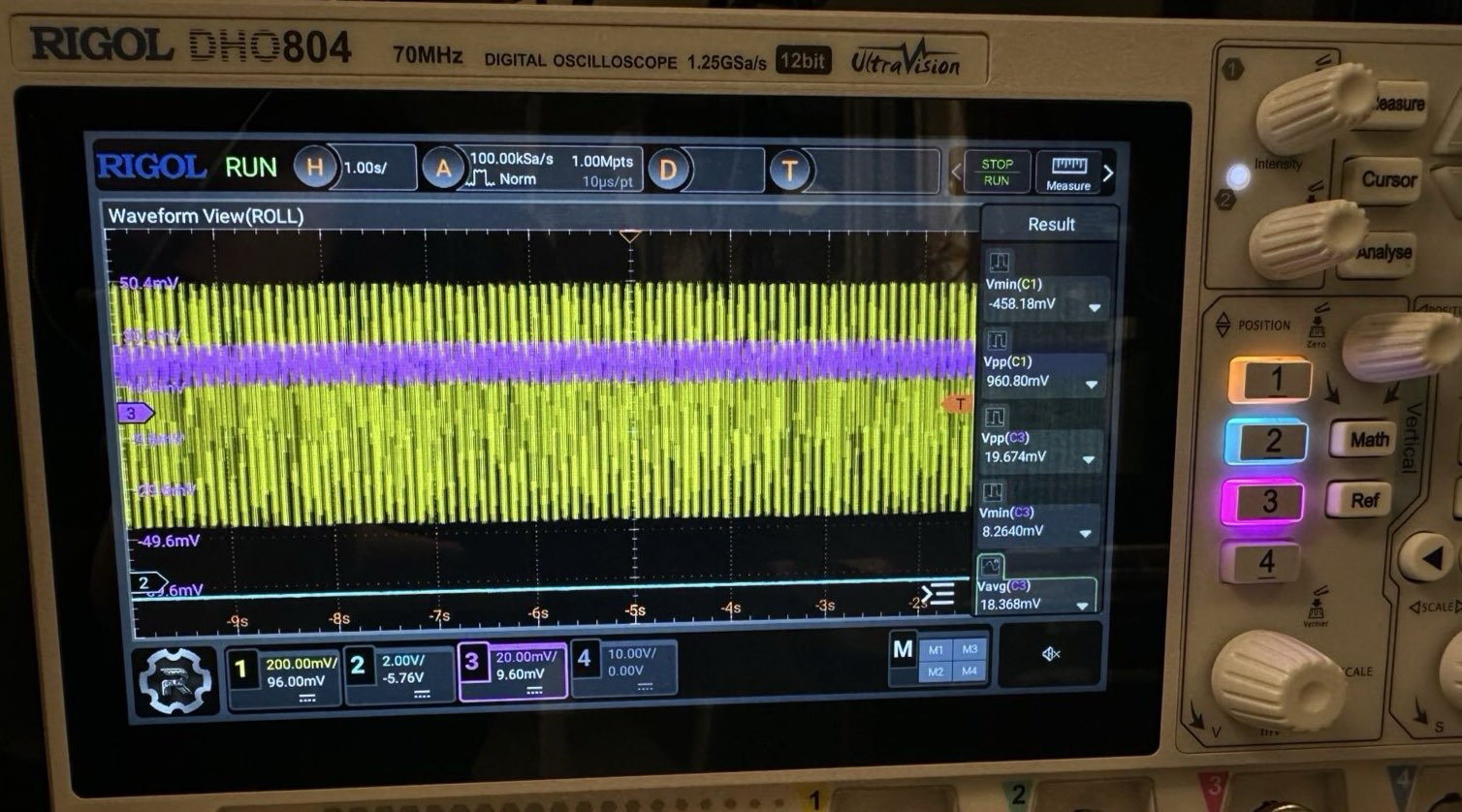
- The 1550 nm HD board has an issue. Although the input signals to the PDs are about the same (~100 nW per PD), the 1550 nm HD detector shows 50 times smaller Vpp, and its Vavg is nonzero, see attached plot for fringes on both 1550 nm (purple) and 1545 nm (yellow) HD detectors. We confirmed it is the board and not the fibers (WDM and/or BS), by switching the input fibers to 1545 nm and still observing the same issue.
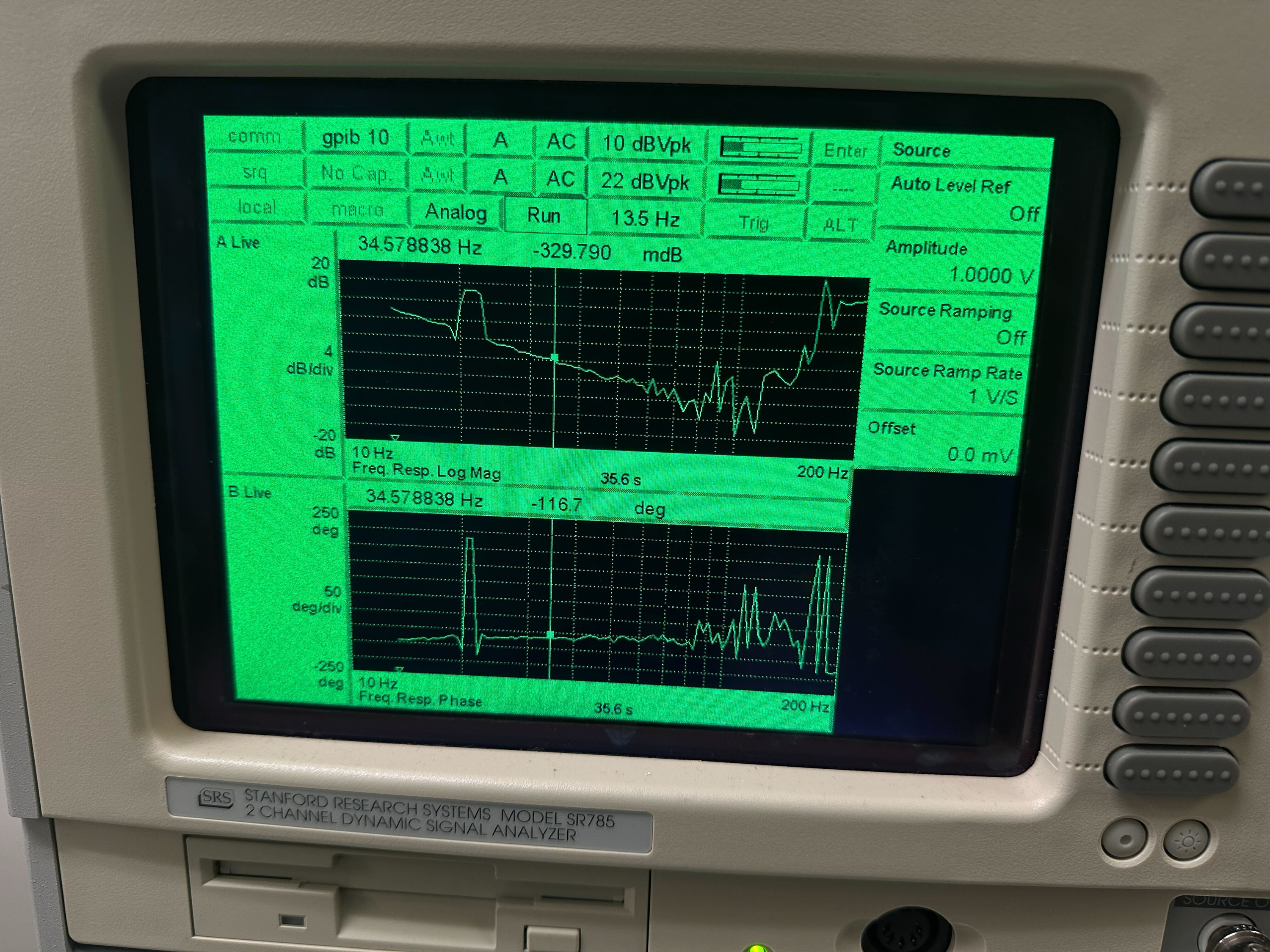
- SR785 data acquisiton has some quirks. Dorotea figured out that the code doesn't work if is run from the Spyder cmd, but it works from the system cmd. The other issue, which Jesper pointed out, is the EOD needs to be set to LF from the GPIB Connection interface. The end of string character needing to be "\n" is a known issue in Prologix GPIB adapters. After these hurdles, I opted to Eric's data acquisiton code since it sets the SR785 settings correctly. The other code works also, but the setting file needs to be updated.
- The splicer currently automatically splices after estimating fiber end angles without asking for authorization for the SM splice recipe. I reduced the threshold angle to <0.8° for now, but usually for good splices <0.5° is a better choice. This also means we would need to spend some time on optimizing the blade height on the cleaver or simply cleave until we get a good angle.