dennis.martynov - posted 20:09, Sunday 02 March 2025 (11906)
ISI feedforward with C-6D in loop
Rich, Den

We moved the bullets and recovered the C-6D balance. Looking back into data, we think the balance was lost due to the large excitation of the vertical C-6D mode by the ISI when it was stabilised with GS-13. The lesson learned that we should keep the C-6D damping loops all the time when C-6D is not in loop.

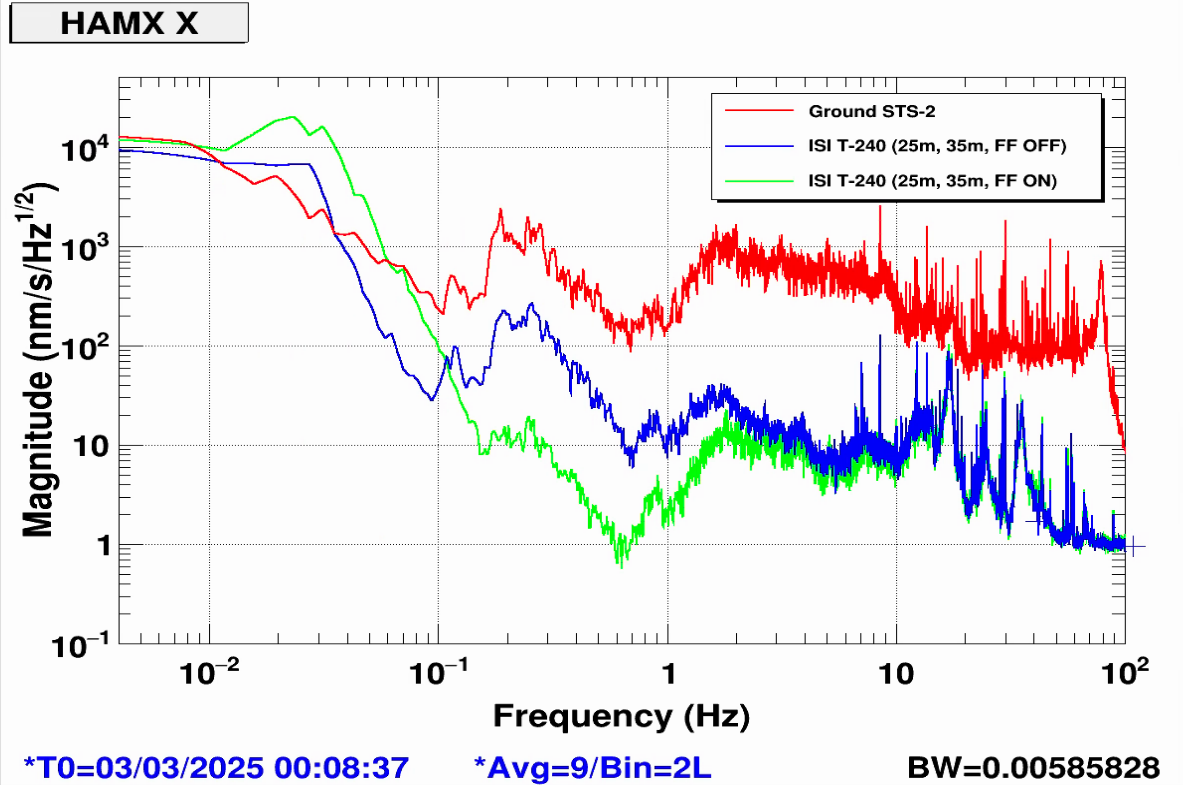
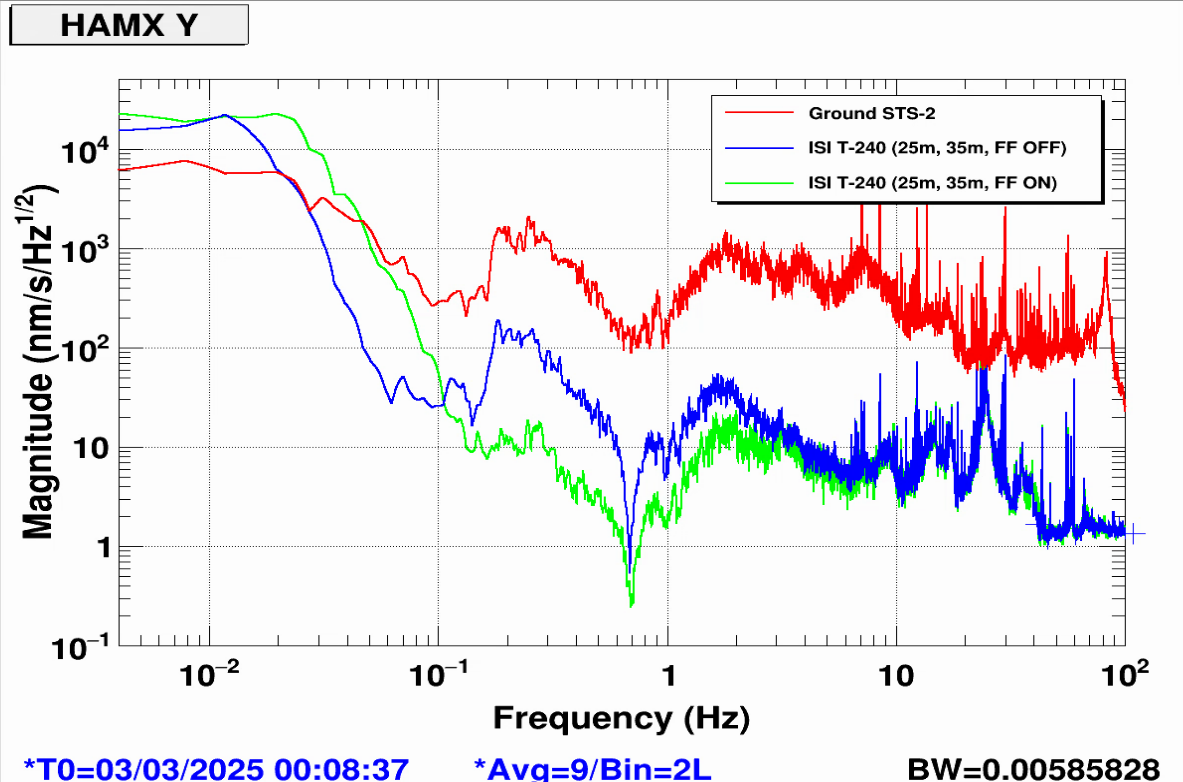
I have then tested Rich's feedforward filters with the C-6D in loop. The ISI was stabilised with 25 mHz angular blends, 35 mHz X/Y blends, and 100 mHz GS-13 V blend. The results for X/Y are attached below.

The benefit of X/Y feedforward is that we can suppress the ISI motion by an additional order of magnitude around microseism and achieve a total suppression of ~100. The disadvantage is that the ISI's tilt noise suppressed by the RX/RY loops is injected back from the STS-2 ground seismometer. The ground tilt noise enhanced the platform motion by a factor of ~10 below 100 mHz.
Images attached to this report