Because of the execrable temperature changes which have plagued our lab for the past 10 days (It was 21.2°C on the cSQZ table at the beginning of last week, then it became 23.4°C at the end of last week, then it became 24.8°C today), the cSQZ got misaligned. I had to waste two days to realign it, just to get back to where we were two weeks ago.
I first started with the alignement of the input laser beam into the SHG.
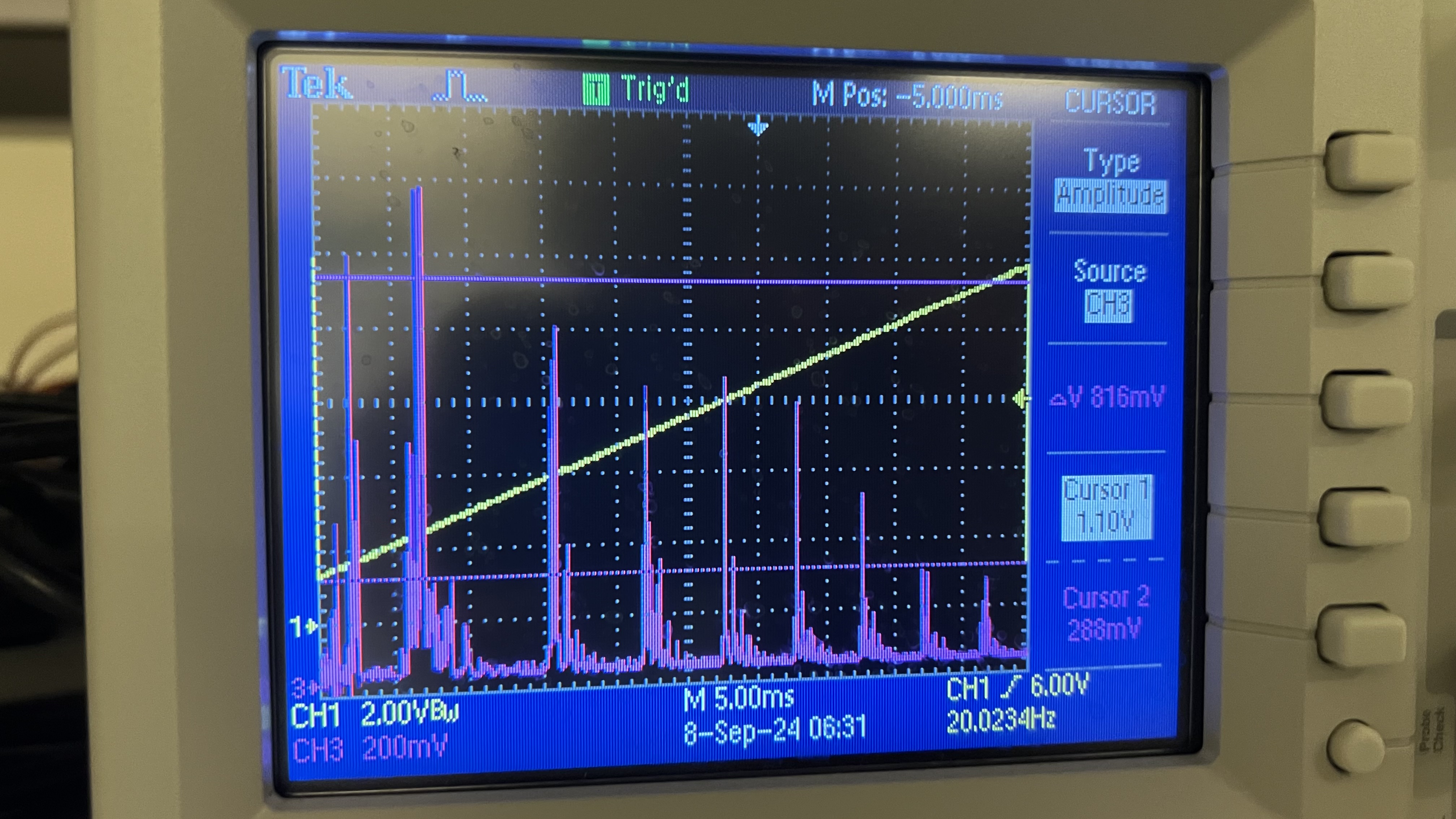
- Symptom: When scanning the SHG and comparing the peak heights between FSR, we see that they are not constant (envelope effect). Furthermore, we are not able to minimize the relative peak height between of 02 (first mismatch mode) divided by the fundamental 00, below 40%. See here.
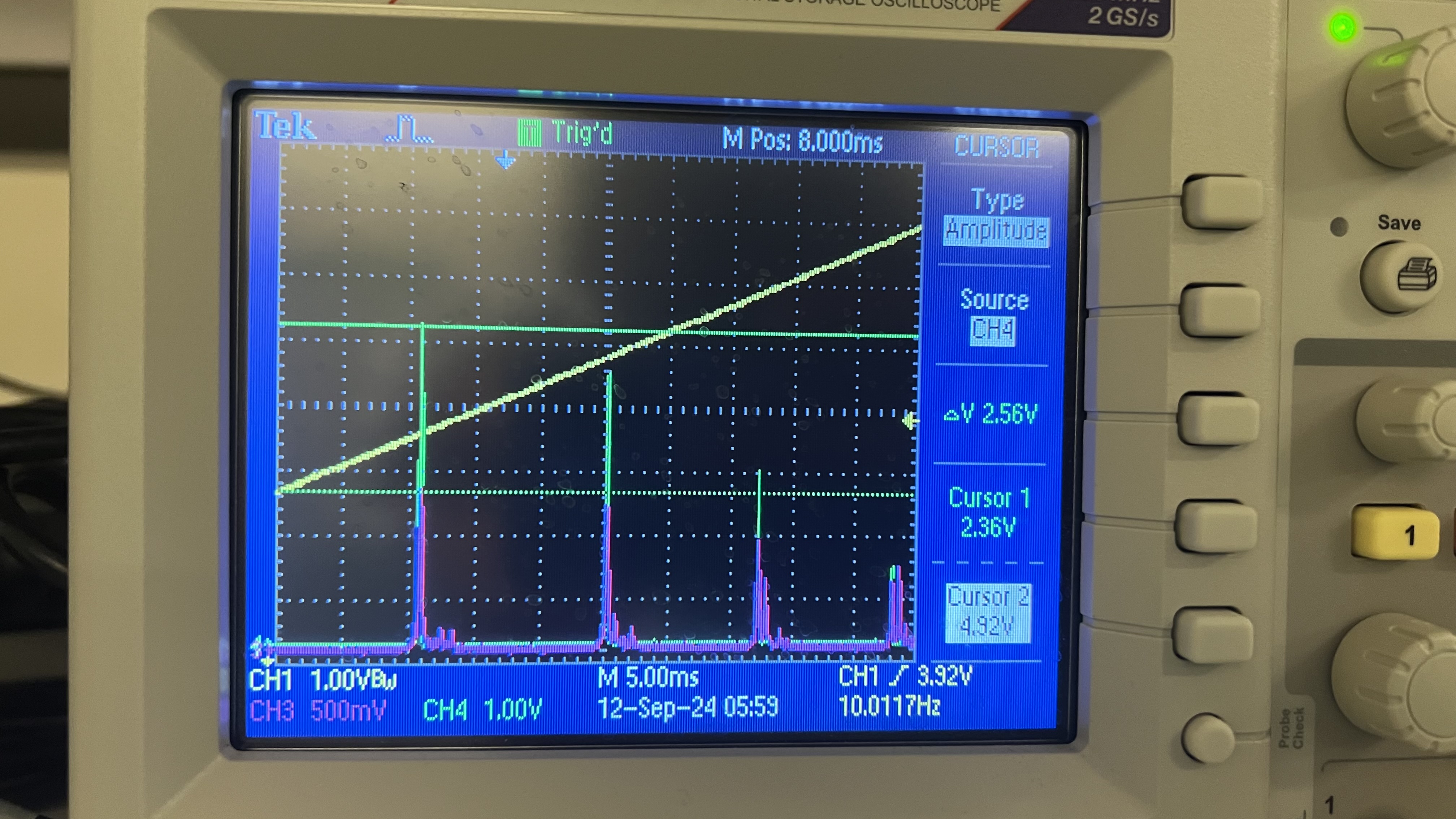
- Solution: Tune the dichroic in the SHG (tip tilt mount). This reduces the 02 height. It does not get rid of the envelope effect, which is likely due to some clipping on the input SHG mirror (we can see that the beam arrives close to the edge of the mirror and that there are two spots inside of the cavity, between the input mirror and the dichroic). See here for the decrease in mode mismatch on the highest mode.
Conclusion: With this tuned, and sending 60mW of IR, I measured 26mW of GR at the output of the SHG.
- Symptom: sometimes there is less IR power at the input of the cSQZ (drops from 60mW to 50mW).
- Solution: Tune the free-space to fiber coupler on the lightwave's board and/or the polarization paddles.
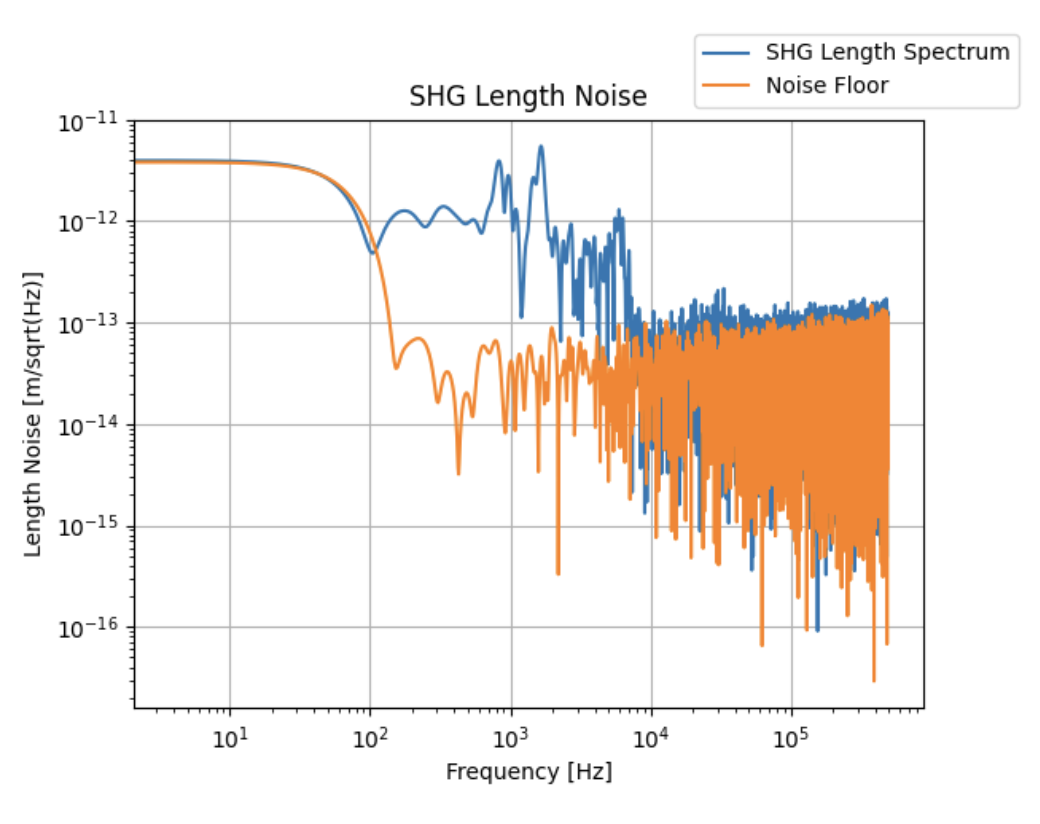
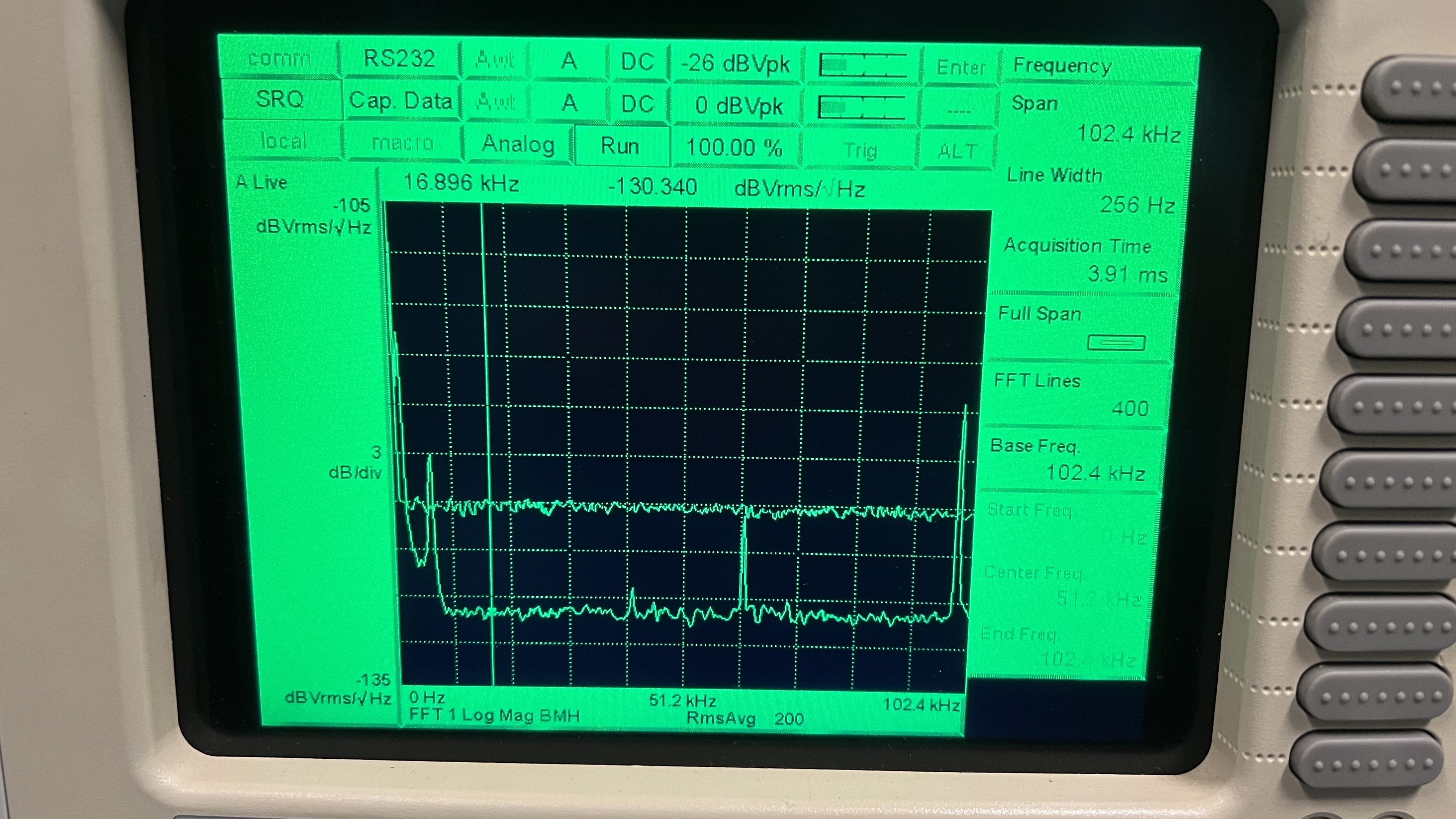
Future work: should try to reduce the 1.7kHz noise on the SHG's IR and GR when it's locked. This can cause extra phase noise on the SQZ. I tried adding an iir notch on the SHG RP at 1.7kHz but it did not help reduce the oscillations. See here for the error signal spectrum.
Since the dichroic moved, the path from the SHG to the OPO got misaligned. I had to realign it, first by making sure that the reflected GR is overlapped with the incident GR (i.e. obtain a signal on the PD GR REFL DC, then looking at both the GR Trans PD and camera. Doing so I was able to recover the same scan shape of the GR into the OPO (i.e. misalignement completely cancelled, 30% relative peak height for 02).
Future work: the lock of the OPO is not so stable currently (possibly because Hudson is working on the table in parallel). Optimize its stability.
I then closed the CLF loops and got 7dB of SQZ for >13dB of aSQZ on the SR. See photo.
It now looks like the GR and IR TRANS powers are extremely stable over ~1h (no noticable fluctuations on the scope), so much so that the power stabilization loop can be engaged on the GR TR (OPO) and this does not stabilize the CLF amplification. This means that the SQZ stabilization issue really comes from the temperature controller. It is possible that there is some thermal hysteresis/bistability which prevents the OPO oven loop from locking at the correct setpoint.