hudsonl - posted 15:19, Tuesday 09 July 2024 (11693)
Externally Clocked Red Pitayas with Click Shields: Initial Tests
[Hudson, Dorotea]

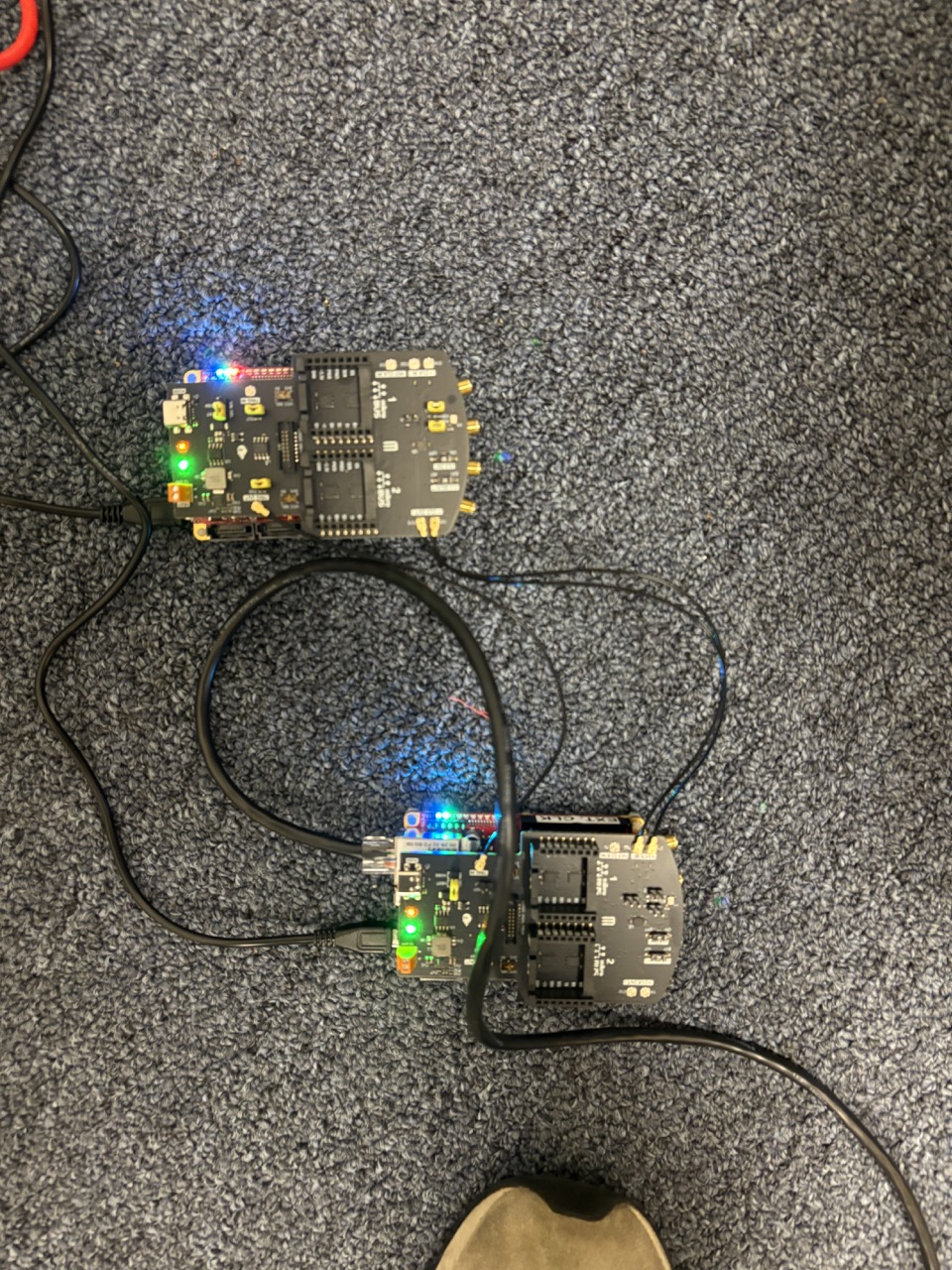
We successfully externally clocked a pair of red pitayas using click shields: https://redpitaya.com/product/red-pitaya-click-shield/

We've been working for a few weeks to set up an external clock that works with the Red Pitaya 125-14 external clock FPGAs: https://redpitaya.readthedocs.io/en/latest/developerGuide/hardware/125-14_EXT/top.html

The external clocked red pitayas require a 125 MHz low voltage differential signaling (LVDS) clock signal, which is challenging to generate and work with as it is a high-frequency current-based signal. In this signaling scheme, the clock source should generate a constant 3.5 mA of current, with the current's directionality switching each clock cycle. This current is sent across a 100 ohm resistor, generating a voltage of 350 mV across it. In practice, we were unable to set up the appropriate electronics to clock the red pitayas with a function generator. Our primary effort was to use several different comparator boards to convert voltage signals to LVDS current signals, but none of these worked well. A particular bottleneck was finding a 125 MHz square wave generator.

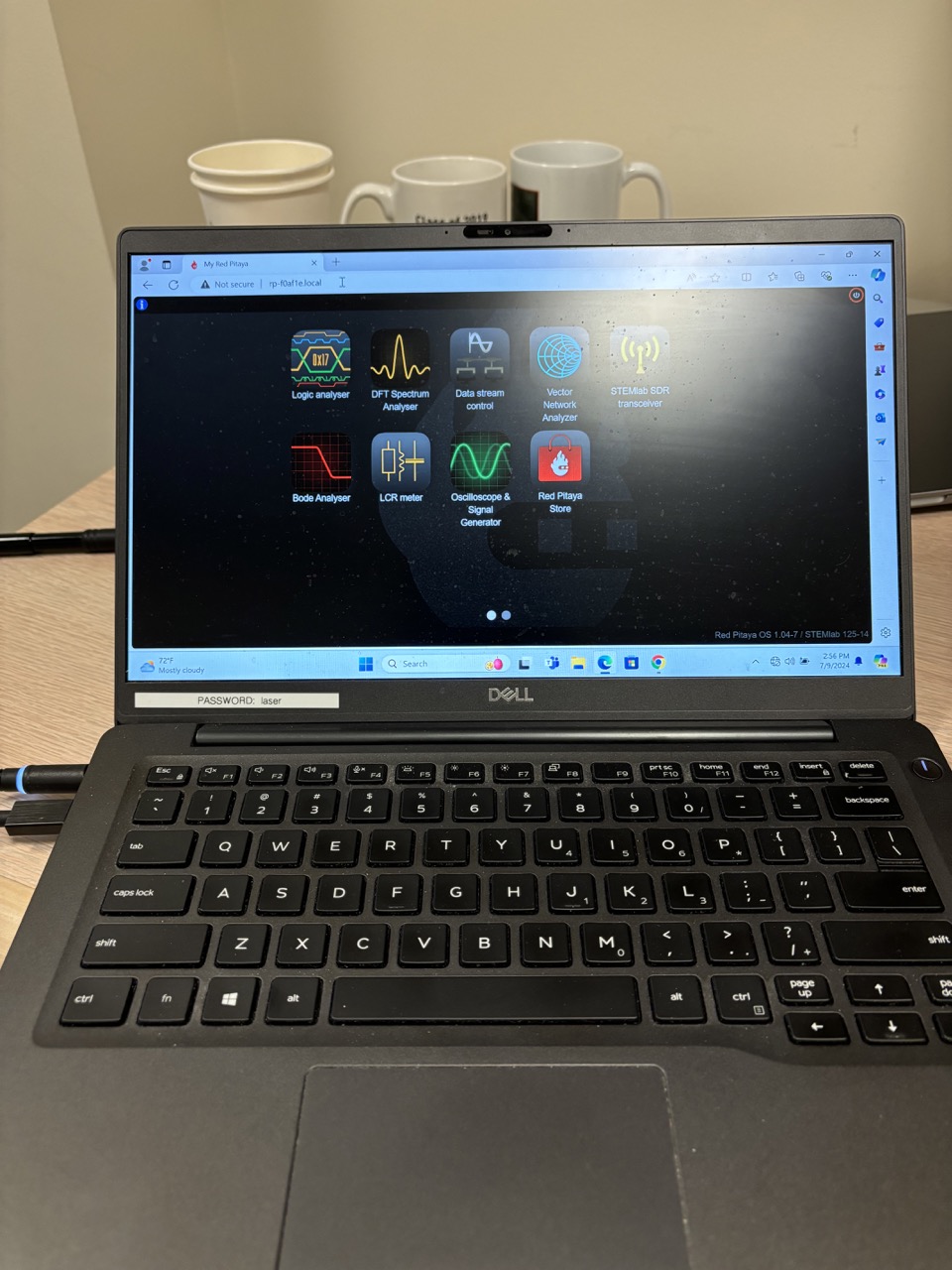
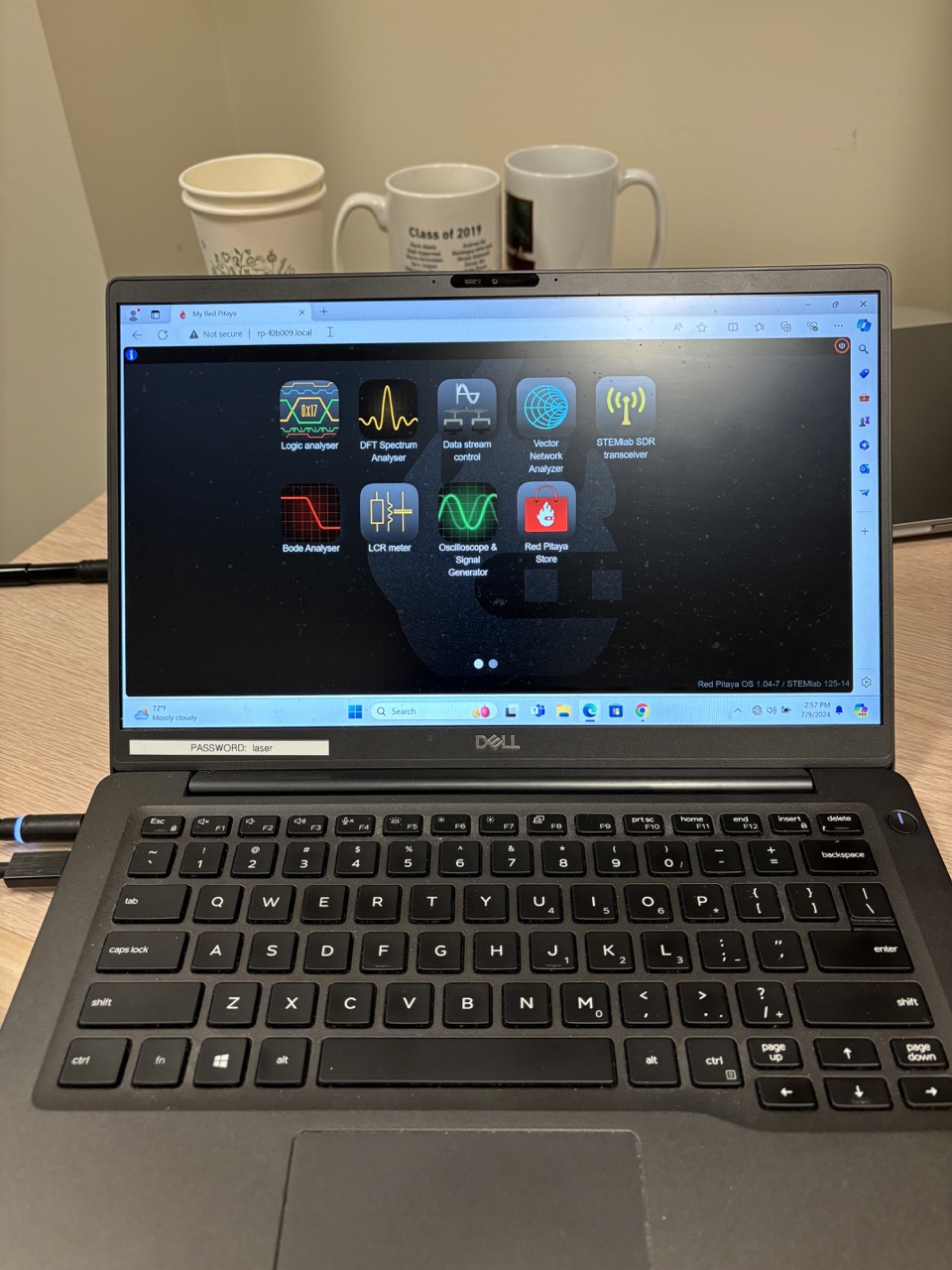
Instead of a signal generator, we started using click shields sold by stemlab (the manufacturer of the red pitayas). These devices contain their own 125 MHz oscillators and allow a red pitaya to be clocked to this oscillator, or to an external clock, which can be another click board. These click board/red pitaya combinations can be daisy chained to have many red pitayas all hanging off of the same clock. So far, I have tested these devices by loading an firmware version compatible with pyrpl onto the red pitayas ( STEMlab_125-xx_OS_1.04-7_stable.img ) and verifying that I can connect to the devices with an ethernet cable and load their associated webpages. The webpages successfully loaded for both the primary red pitaya, using the oscillator on its click shield, and the secondary red pitaya using the clock signal sent to it by the primary. These devices were connected as suggested here (see section 4.1.2.3.8.1.1): https://redpitaya.readthedocs.io/en/latest/developerGuide/hardware/ext_modules/click_shield.html?_ga=2.78914205.842550404.1720463095-1687909984.1719861672#technical-specificationshttps://redpitaya.readthedocs.io/en/latest/developerGuide/hardware/ext_modules/click_shield.html#technical-specifications

The red pitayas and associated web pages are shown in the attached images.

It remains to be verified that these red pitayas are fully compatible with pyrpl and that they produce waveforms with high relative phase stability.
Images attached to this report