malo_lg - posted 17:29, Monday 17 June 2024 (11676)
Homodyne detectors spectra (2)
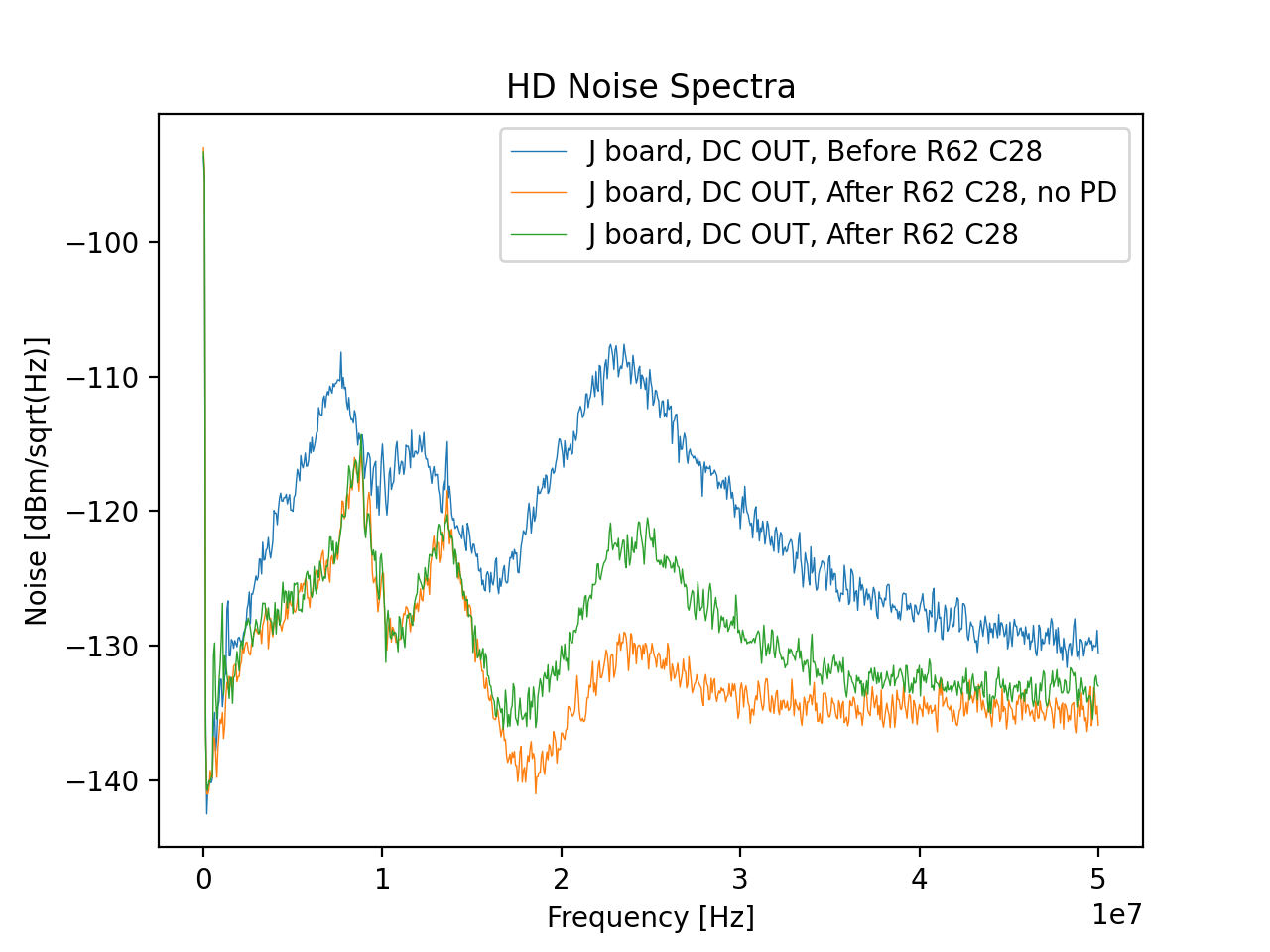
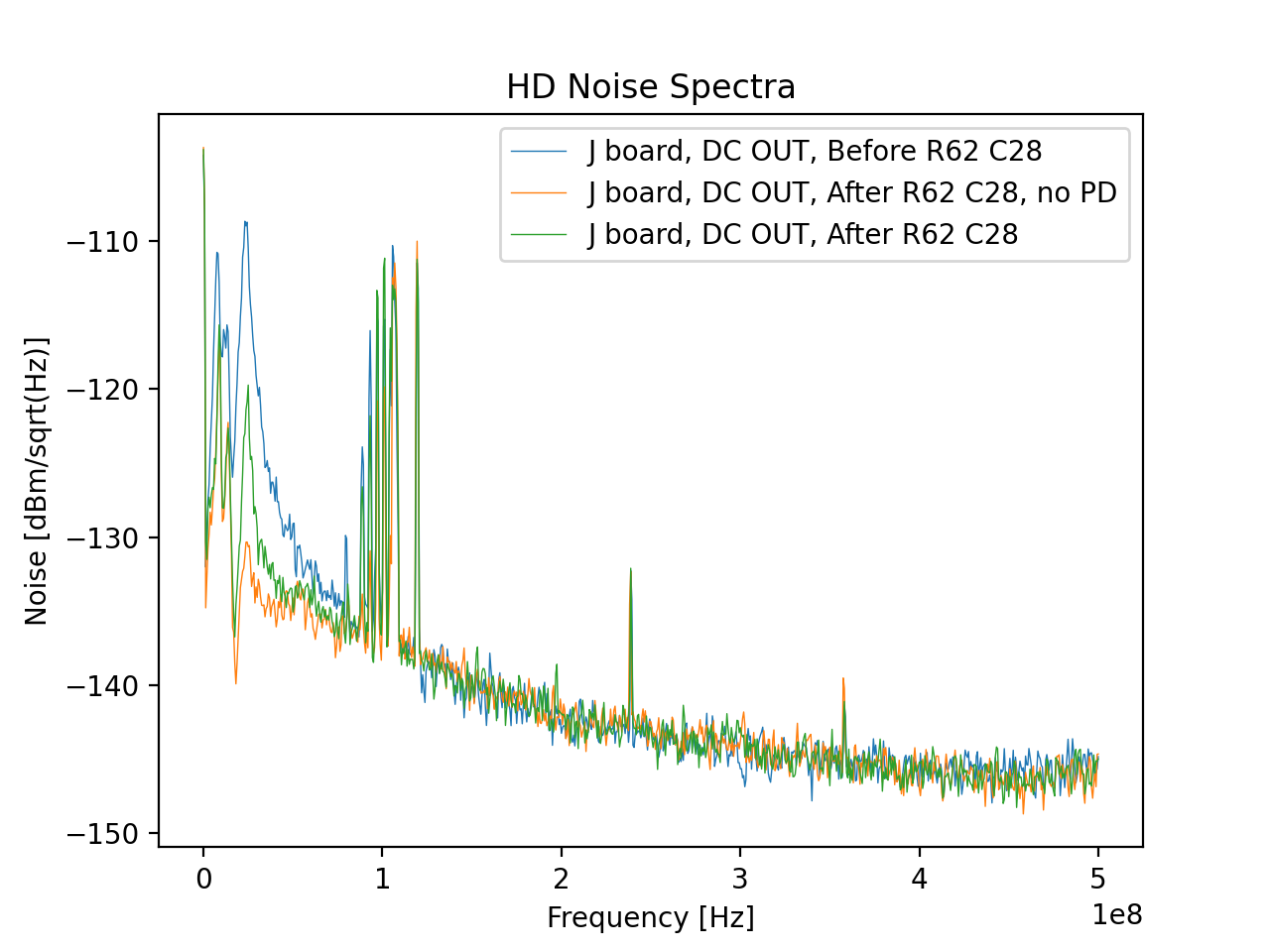
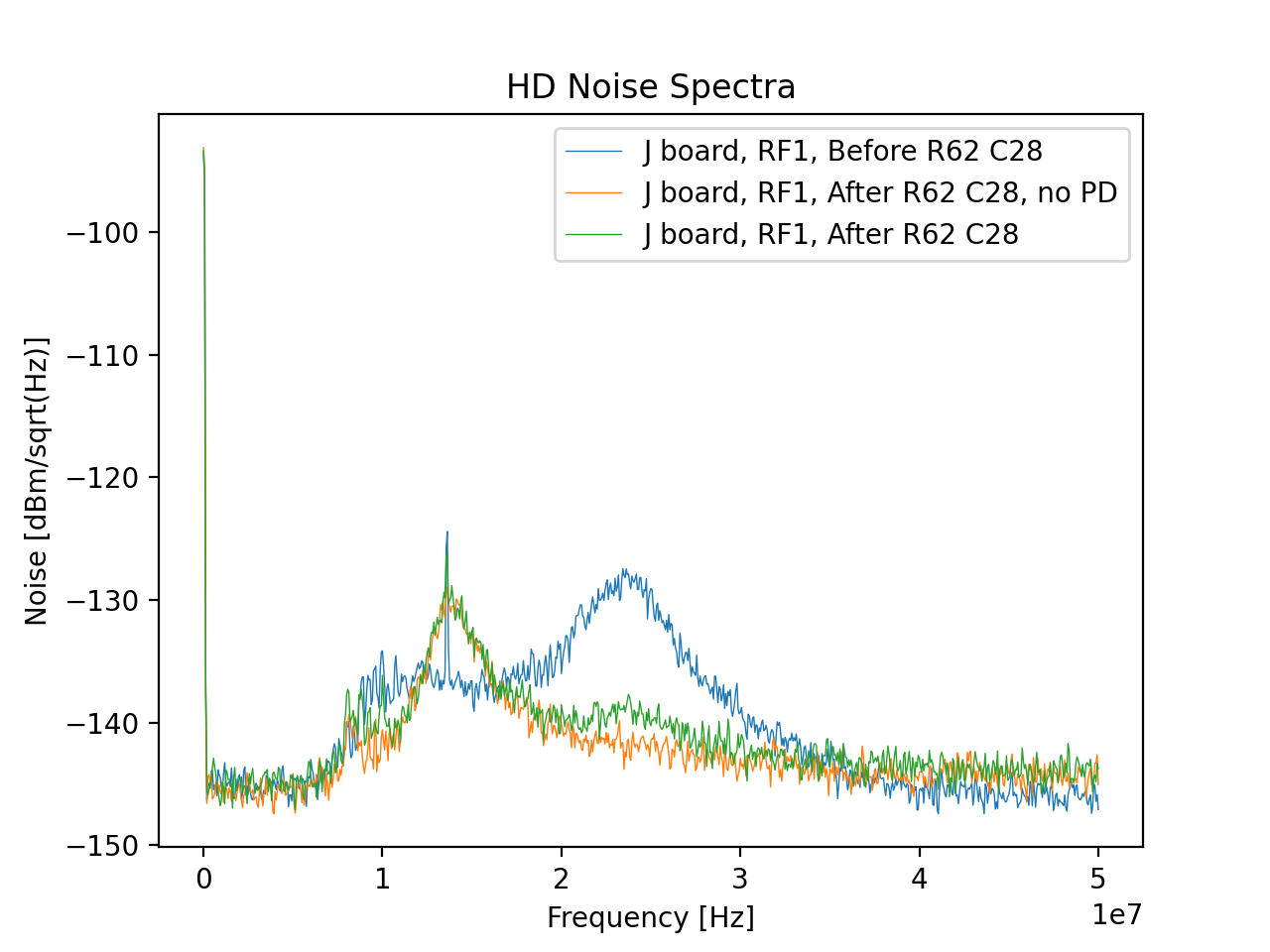
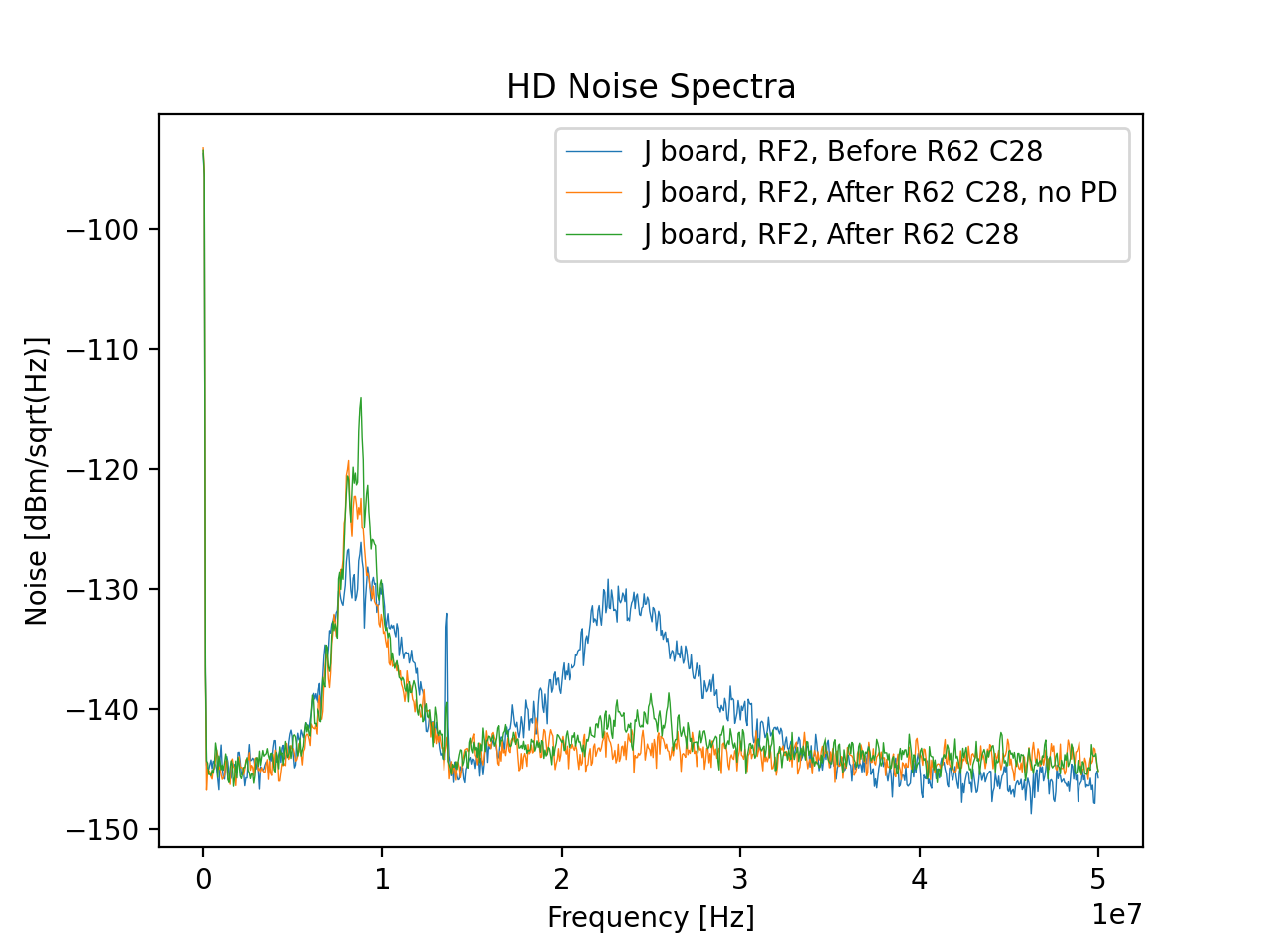
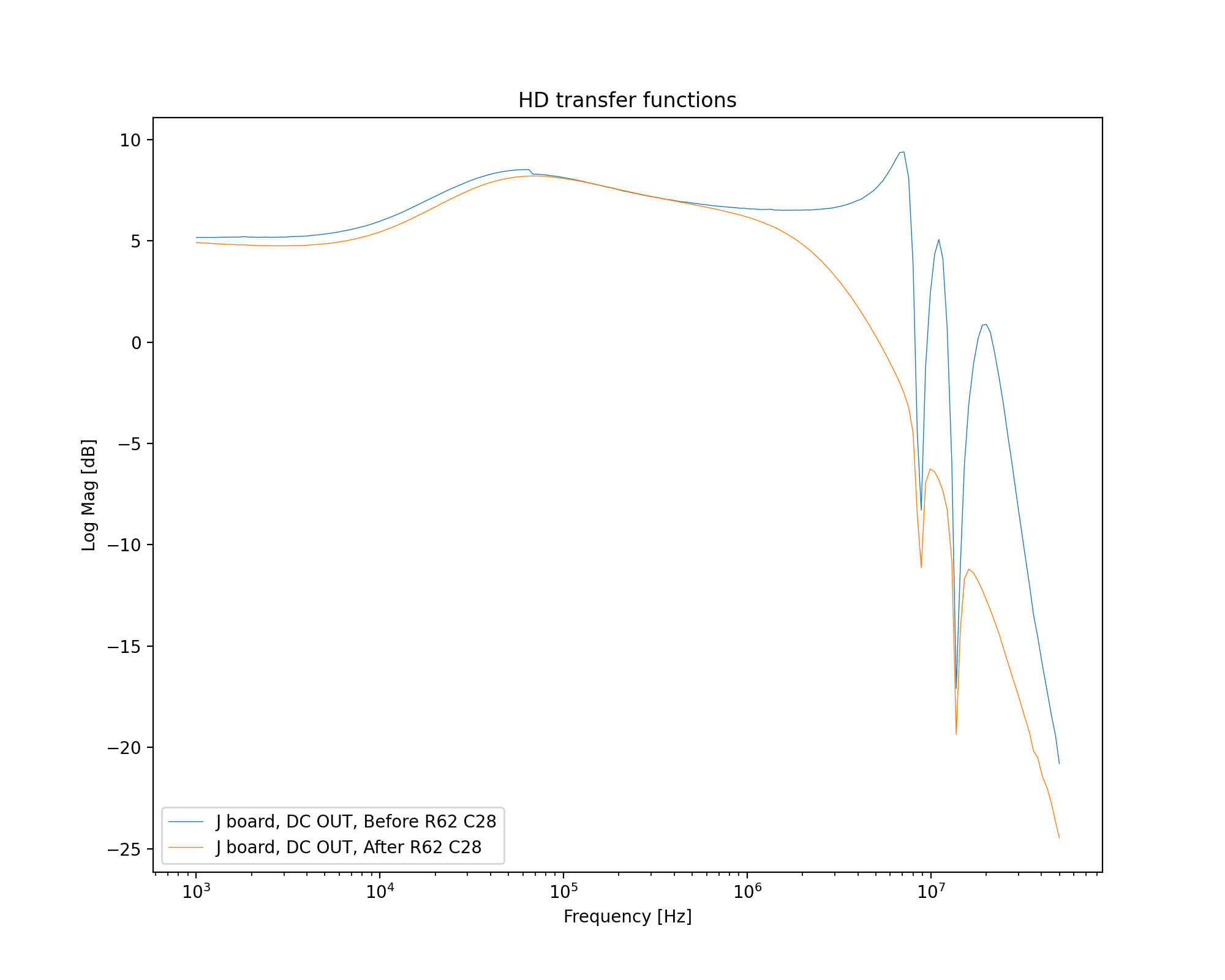
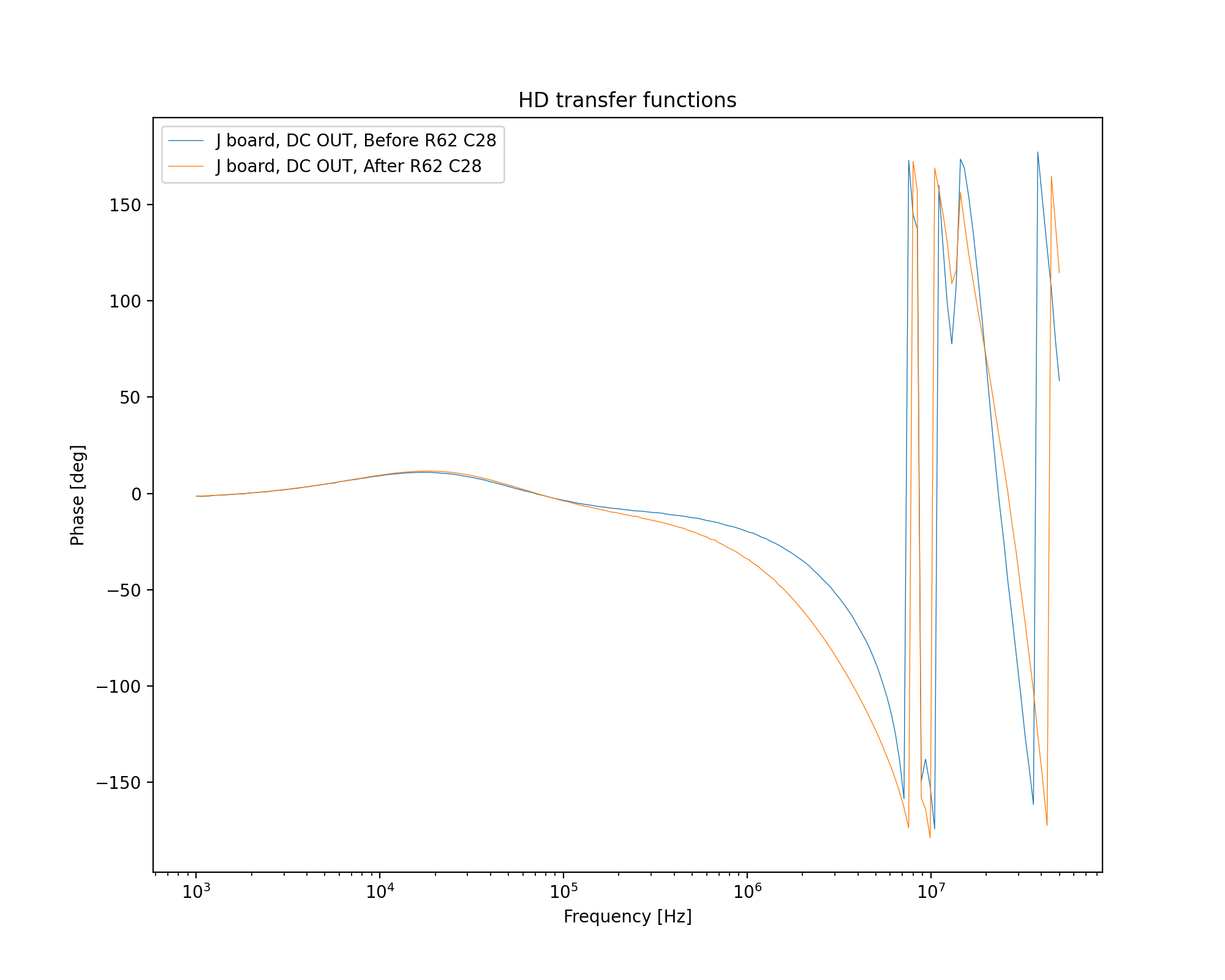
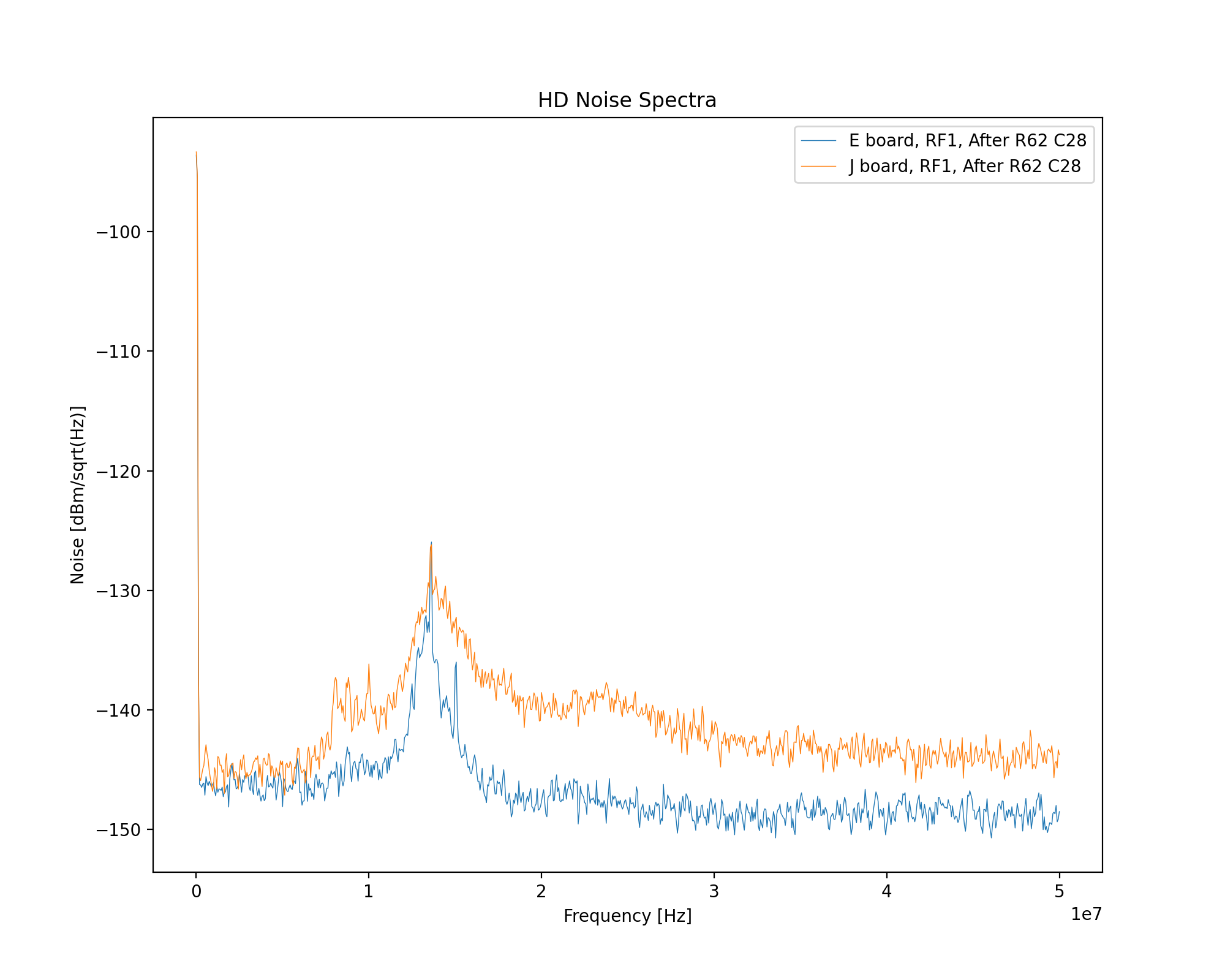
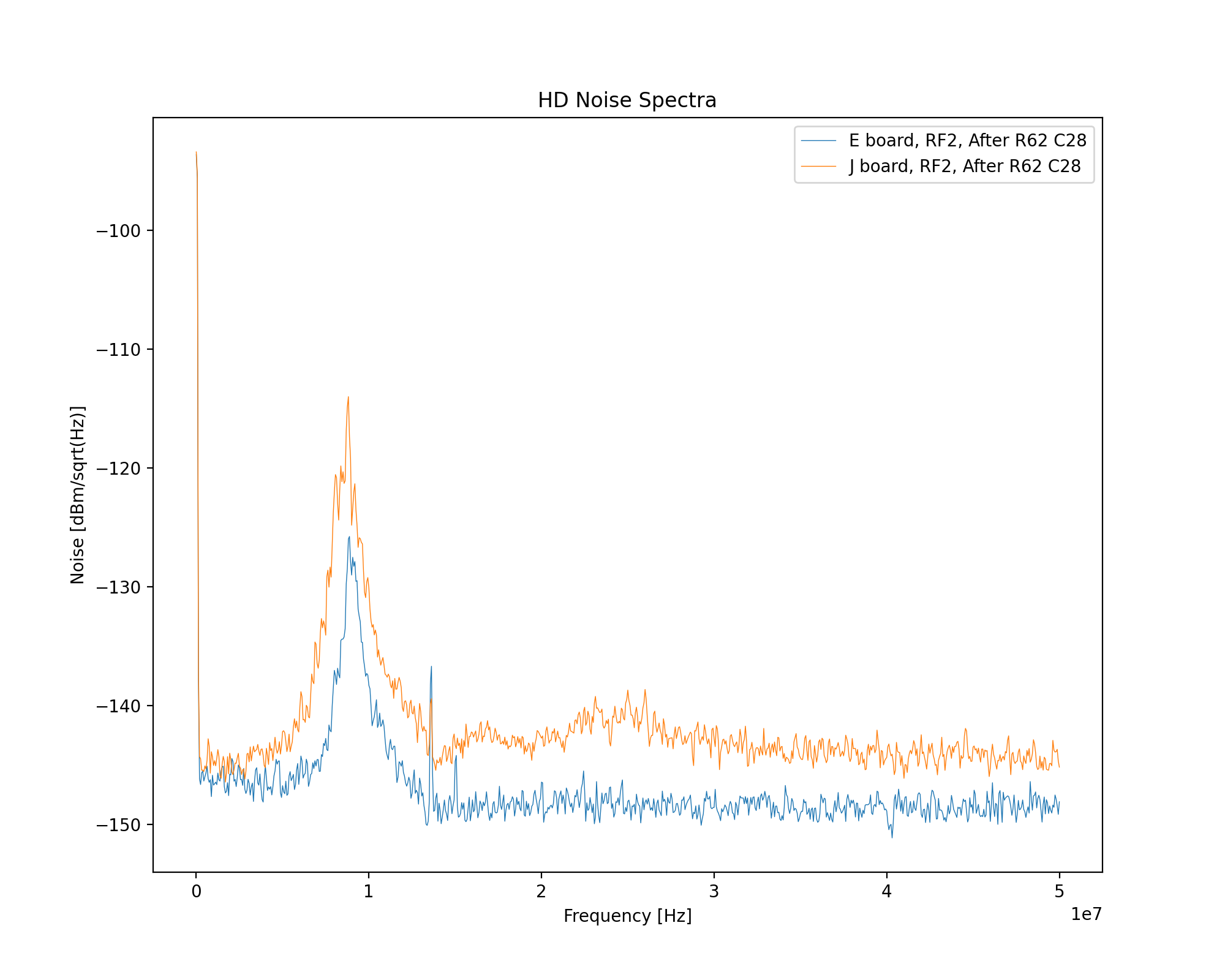
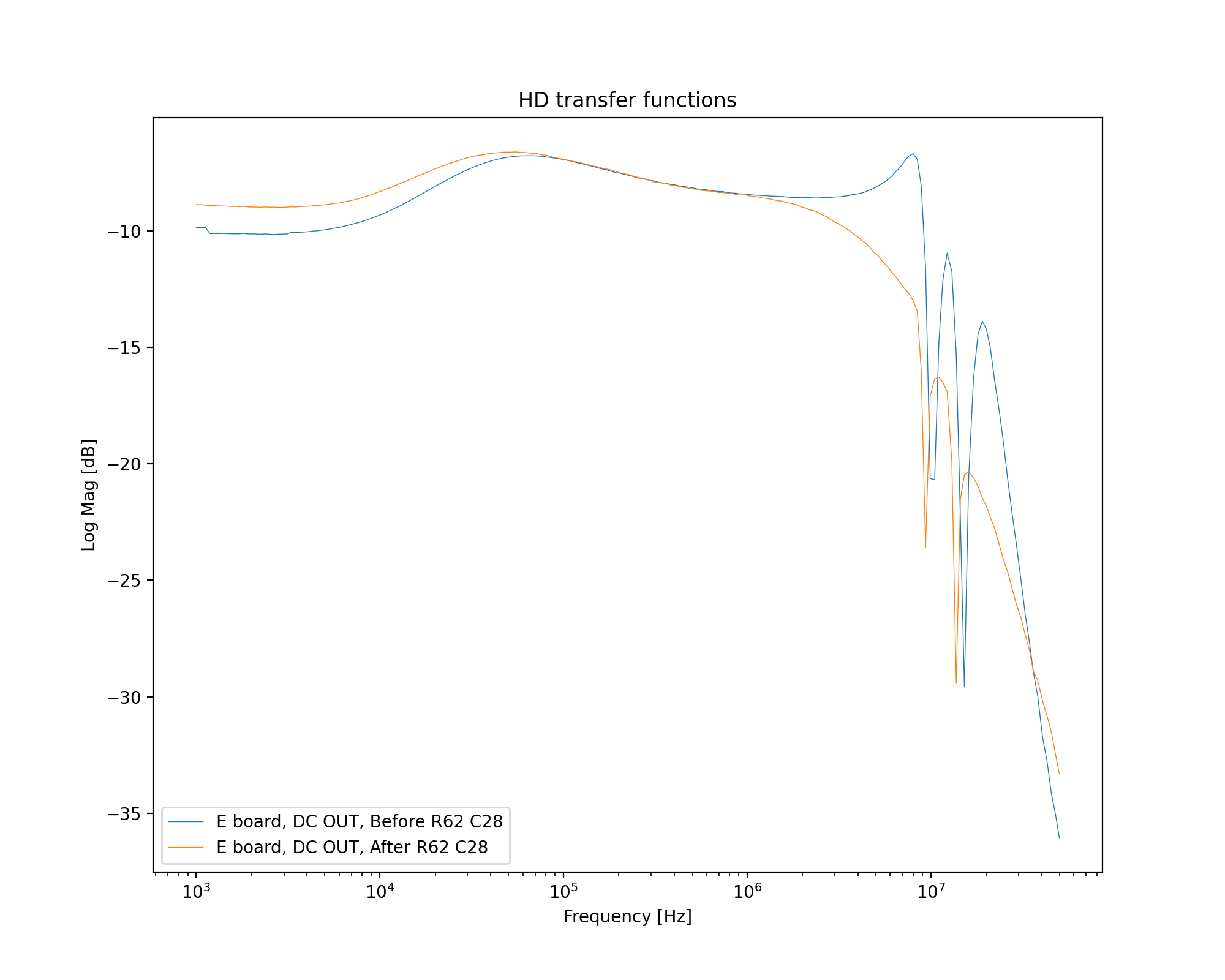
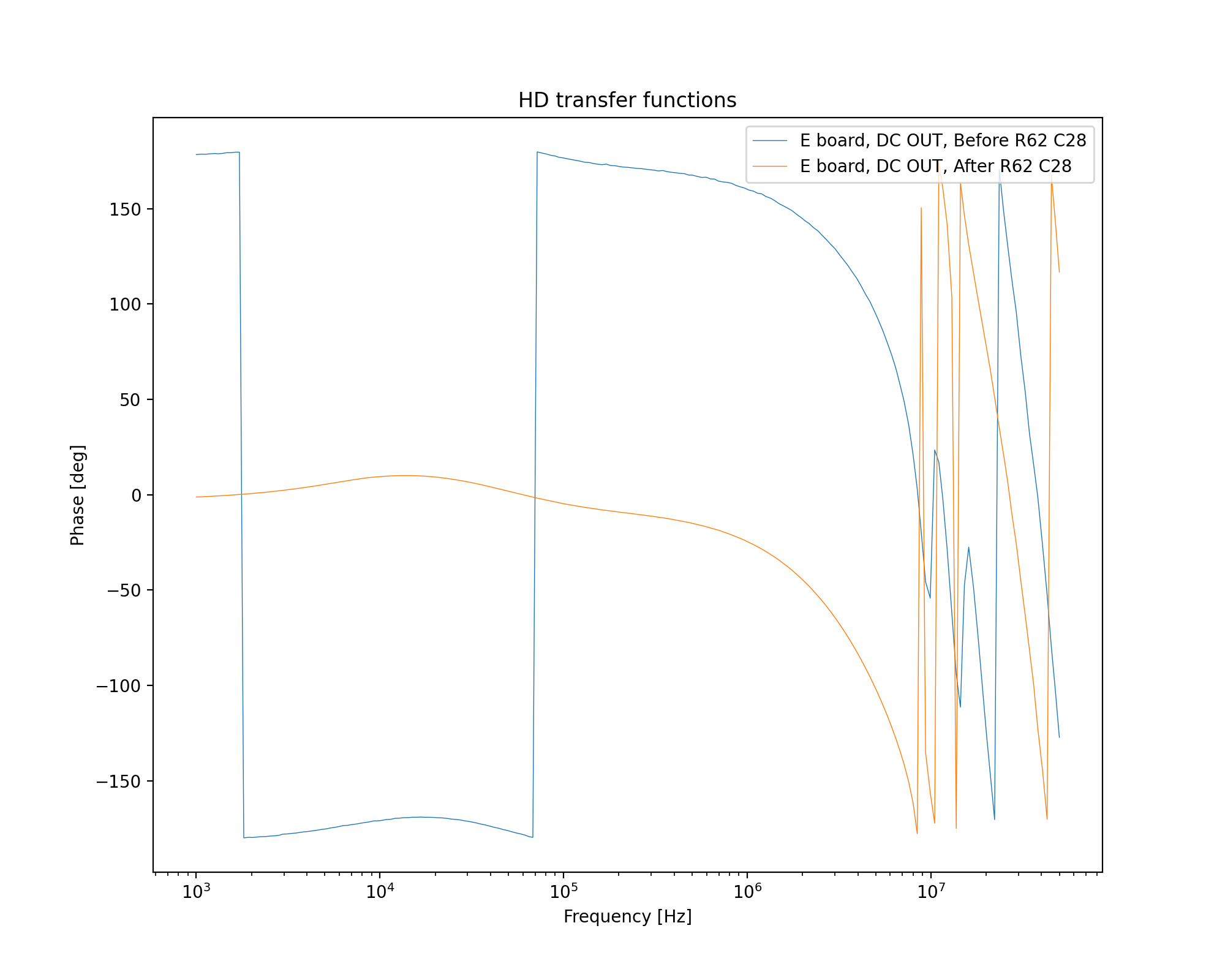
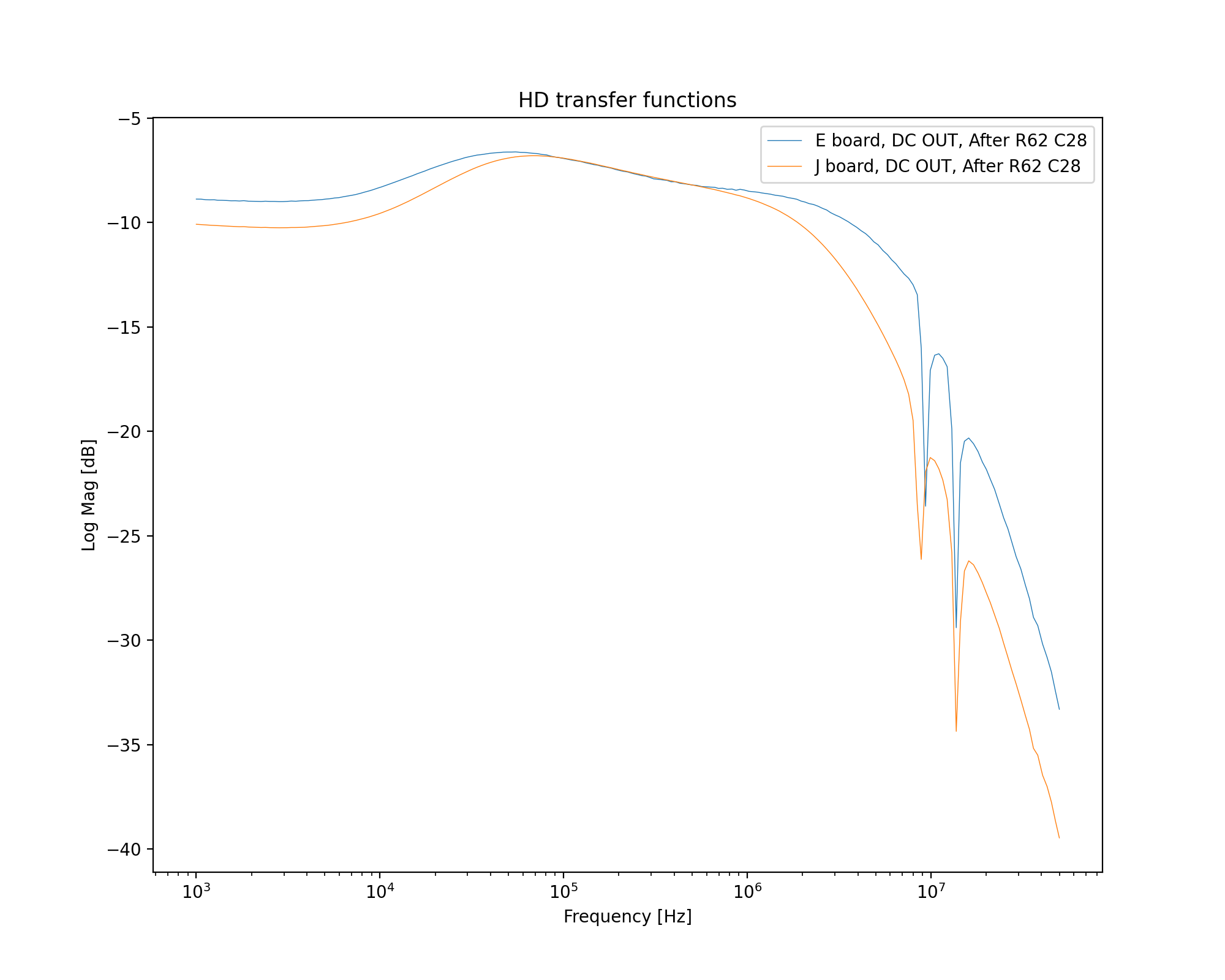
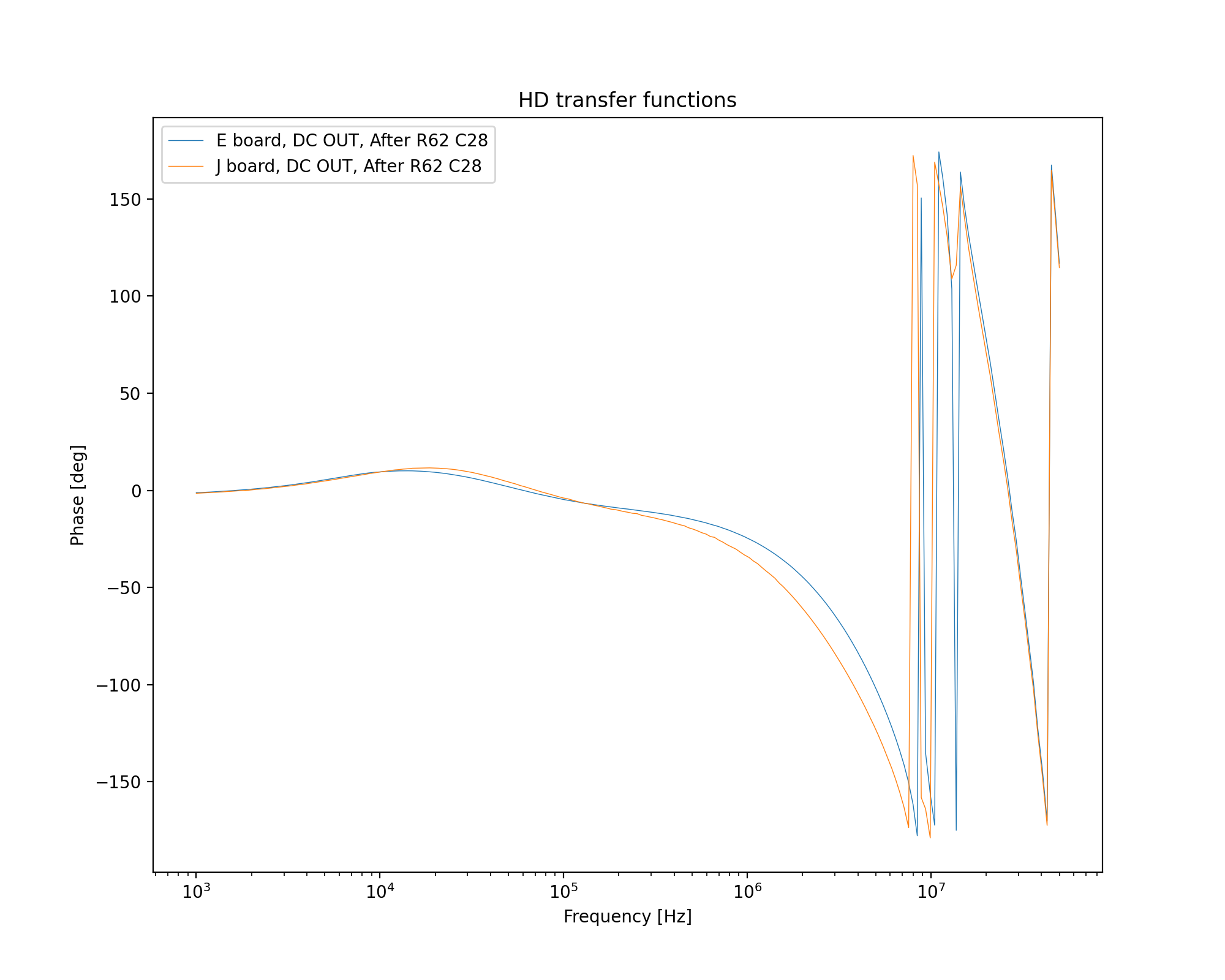
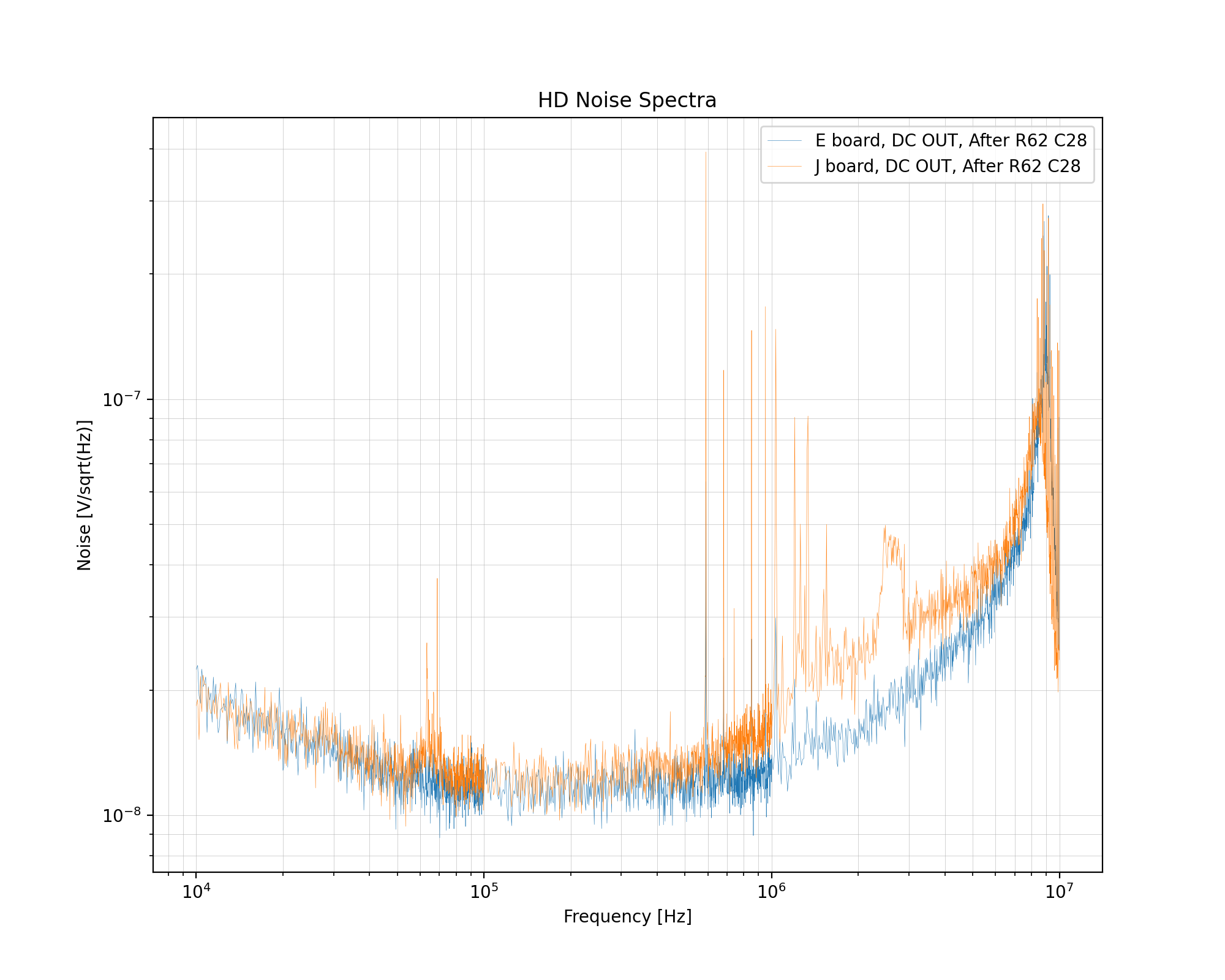
After Eric's simulations, the 22/24MHz peak on the homodyne boards noise spectra were due to the extra capacitance from the long path between the two photodiodes, and would add some broadband underlying noise. The simulations predicted that a change in the values of some components (R62 = 25k and C28 = 1pF) would reduce this noise. I implemented these changes on both boards (and put again the initial components for C40, L8, C49 and L11 where they had been changed). Here I present the plots showing the comparisons before/after this change on both boards, and comparison between both boards.

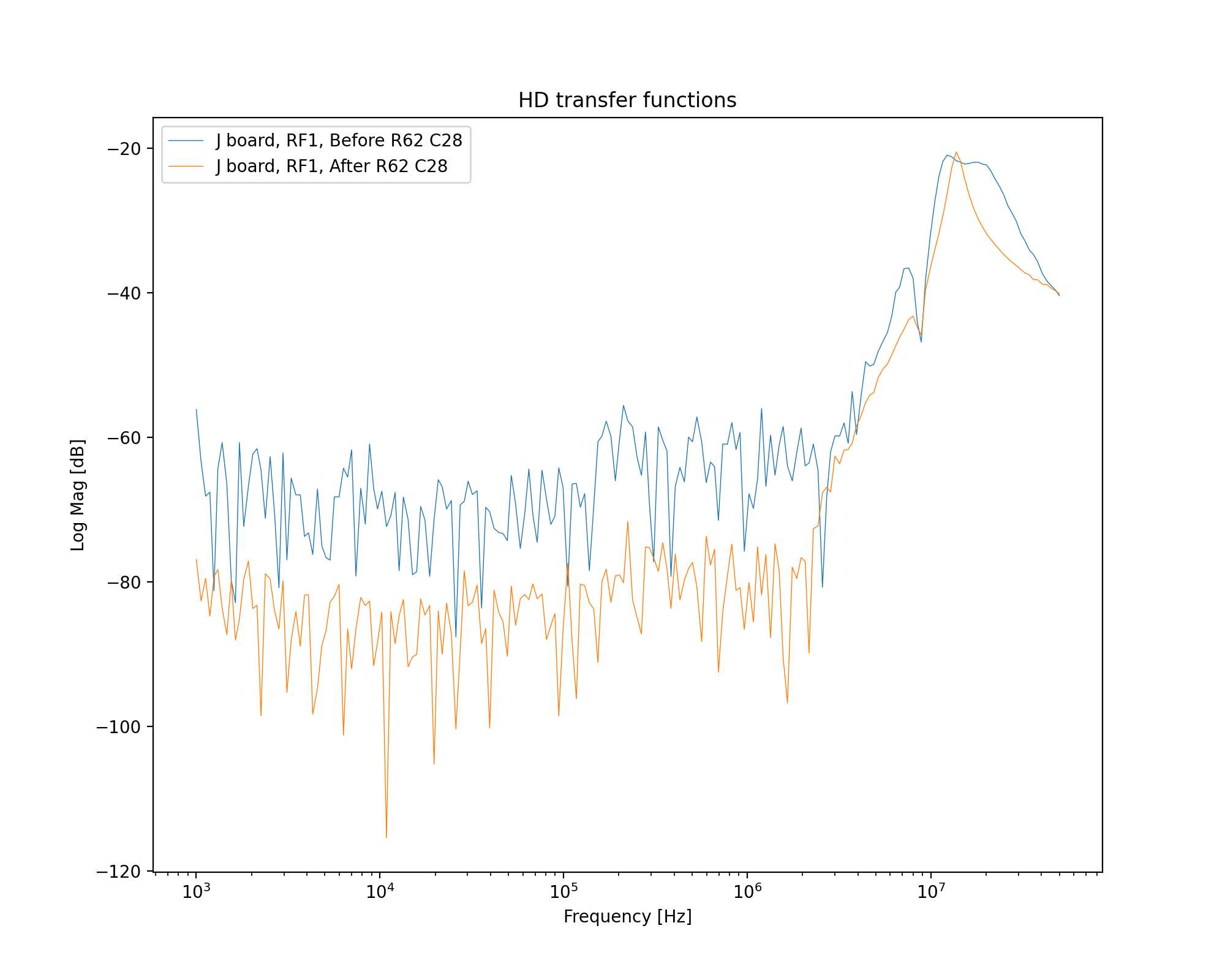
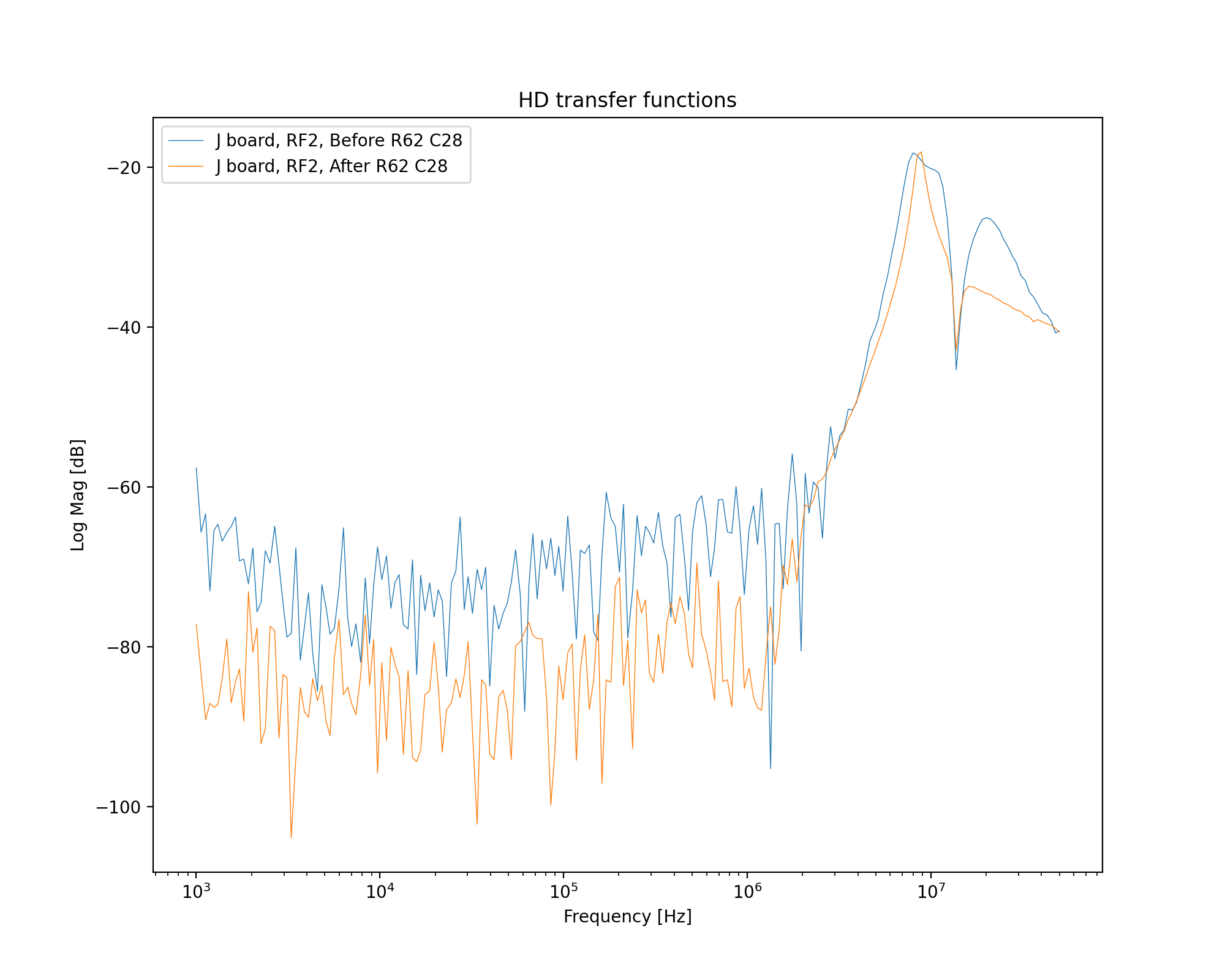
In terms of noise, the peak at 22 or 24MHz (depending on the board) was indeed highly reduced on every port. The noise was also reduced on a broader range on DC OUT (where we measure squeezing) as expected. The noise at the resonance on the RF ports was increased, but should still be low enough to use them for locking.

As for the transfer functions, there is now a progressive drop on DC OUT above a few MHz, but the curve is still flat enough for our purpose. The resonances in the transfer functions out of the RF ports are now sharper.

When comparing boards 'E' and 'J', the former seems a bit better in terms of noise level and flatness of the DC OUT transfer functions. In particular the series of peak on DC OUT noise spectra between 600kHz and 1.5MHz are smaller on board E, and some peaks at 70kHz and 2.5MHz are inexistant on this same board.

Also, some noise spectra were done without the PDs to show which proportion of the total noise comes from / is amplified by the PDs' dark current. The difference is most visible around 20-30MHz.
Images attached to this report