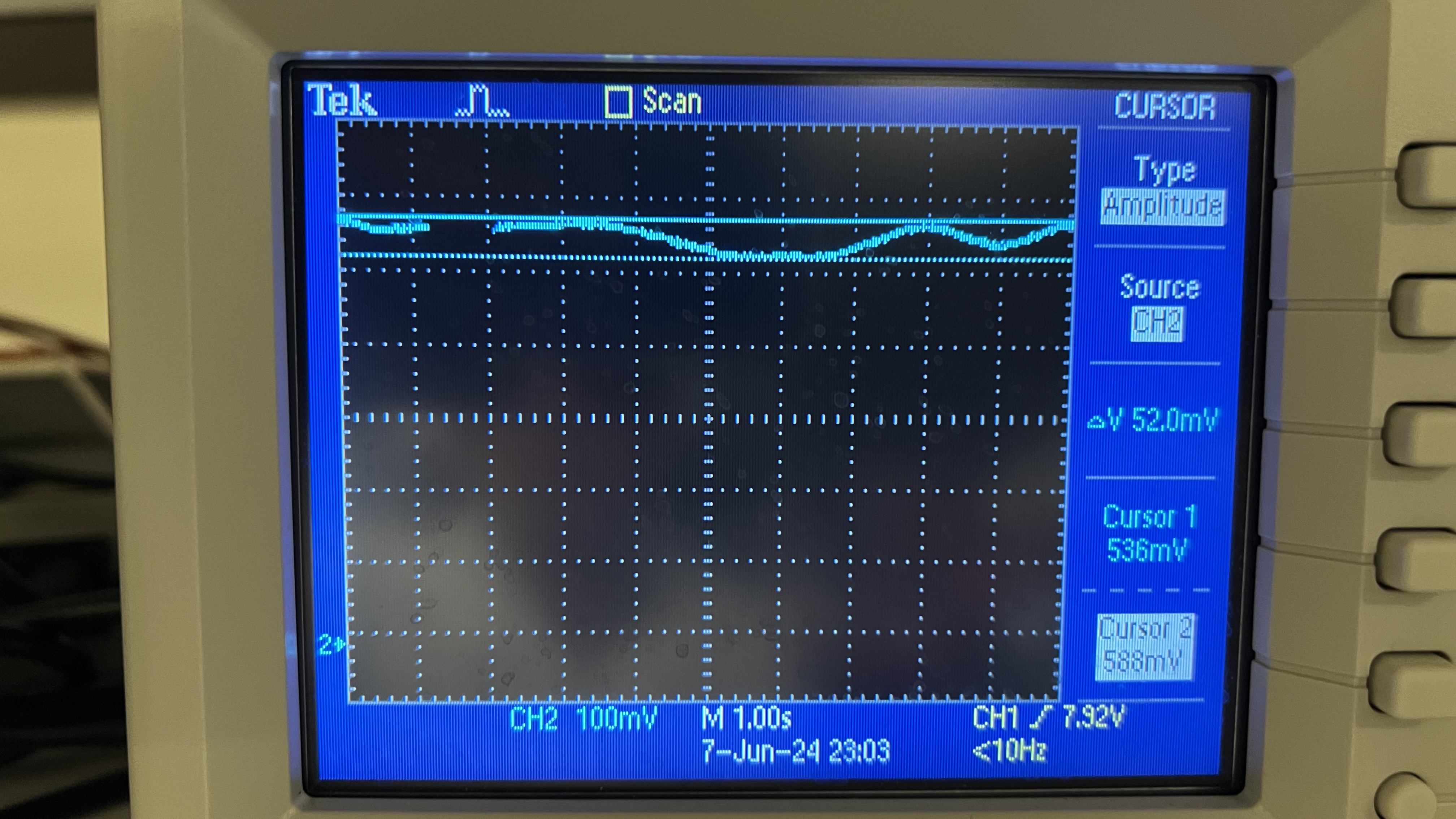
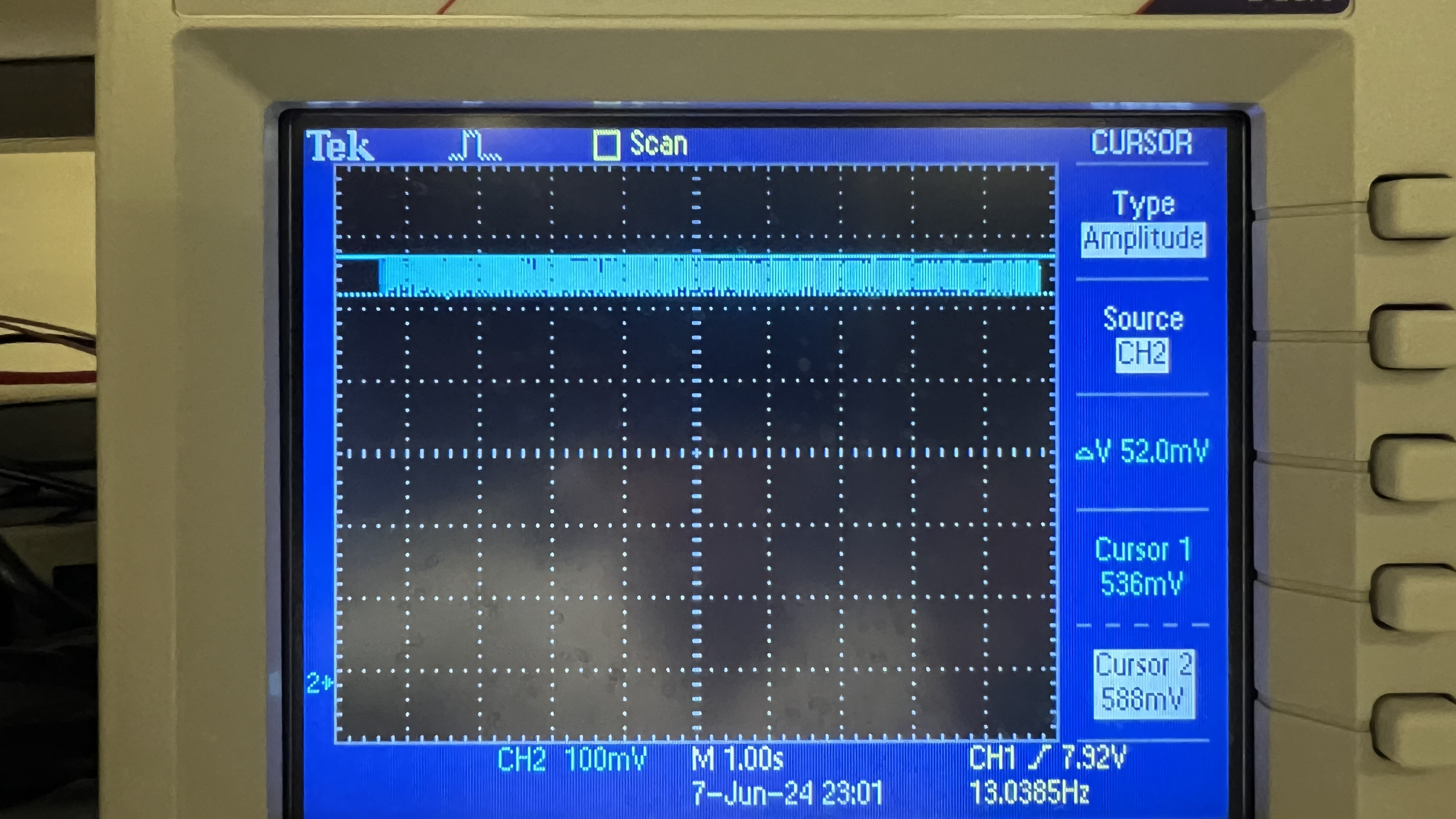
Following my previous logbook post (https://emvogil-3.mit.edu/lasti/index.php?callRep=11663), one hypothesis is that the fluctuations are coming from an interference from the light scattered by the reflection of the input SHG mirror. I tested this by swapping the PZT actuation of the SHG, from the end mirror (M2) to the input mirror (M1), and measured the DC power of the light detected on PD13 (supposedly monitoring the input power, but also affected by scattered light) on the scope for time scales larger than 1 sec (= typical sloshing optical phases timescale). I monitored the PD13 power for two cases: no actuation on M1 (sloshing phase) and full scan of M1. I get the two measurements on the scope below.
It is thus clear that the fluctuations are coming from some modulation and interference involving the input light, namely light reflected off M1, going back into the SM fiber, being scattered somewhere in the EOM Ubench and going back into the cSQZ with a random phase. I know that the scattered light reaches the Ubench because I can tap the waveplates on the Ubench and see that the fluctuations worsen.
This is a nonnegligable effect as this accounts for +-5% to +-10% of IR power fluctuations from the mean value, which translate into up to +-20% of GR power fluctuation, which translate into a large fluctuation of the NLG. See attached pdf file with the computations and orders of magnitude.
The next step is to mitigate this power fluctuation by directly actuating on the IR input using a VOA, and monitoring the GR power on the transmitted PD (also possible to monitor the NLG through the 2f beatnote of the CLF).