I report here the noise budget of the 1km-BMZIs described in the entry #11626 using both the Thorlabs and the NKT lasers.
I also used the formula (23) of Chris' optica paper to express the maximum optical power as a function of the fiber length allowed by stimulated Brillouin scattering. In the equation appears the effective length (Leff) of the fiber.
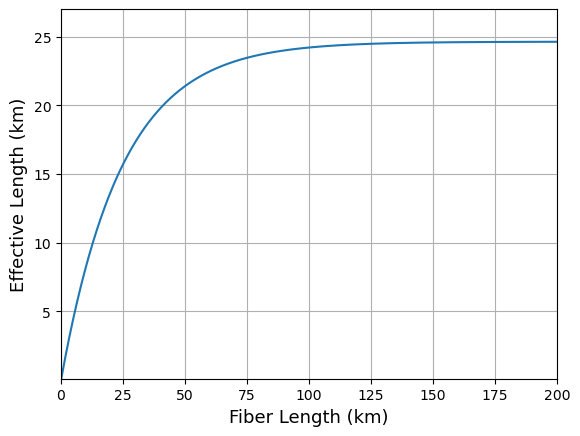
Fig. 1 shows Leff as a function of the real length for the Corning SM28-ULTRA fibers that we are currently using.
Leff = [ 1 - exp(-a*L)]/ a
where a are the losses expressed in a linear scale. The SM28-ULTRA fibers have 0.18dB/km losses which translates into a linear scale as : a = 1 - 10^(-0.18/10) = 0.0406.
The Brillouin scattering threshold power is given by:
P_B = k * K * Aeff / (gB * Leff)
where k = 19 (numerical factor), K = 1 (mixing efficiency), Aeff = pi * rmf^2 = pi * (46 um)^2 (effective area), gB = 1.68e-11 m/W (Brillouin gain).
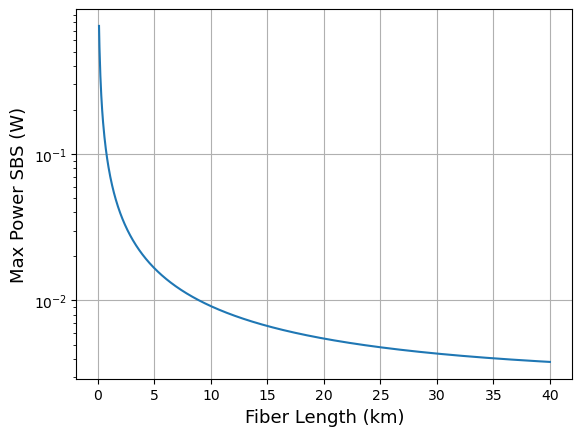
Fig. 2 show the maximum power due to SBS as a function of fiber length:
Psbs( L = 1km ) = 0.075W = 75 mW
Psbs( L = 40km ) = 0.0038 W = 3.8 mW
Noise budget BMZI 1km arms
I considered the model of the frequency noise of the lasers as shown in the entry #11616. I also included the rms of the correction and error signal data.
The input power P0 to the BMZI (before the first BS) = 3.2 mW.
1. NKT laser
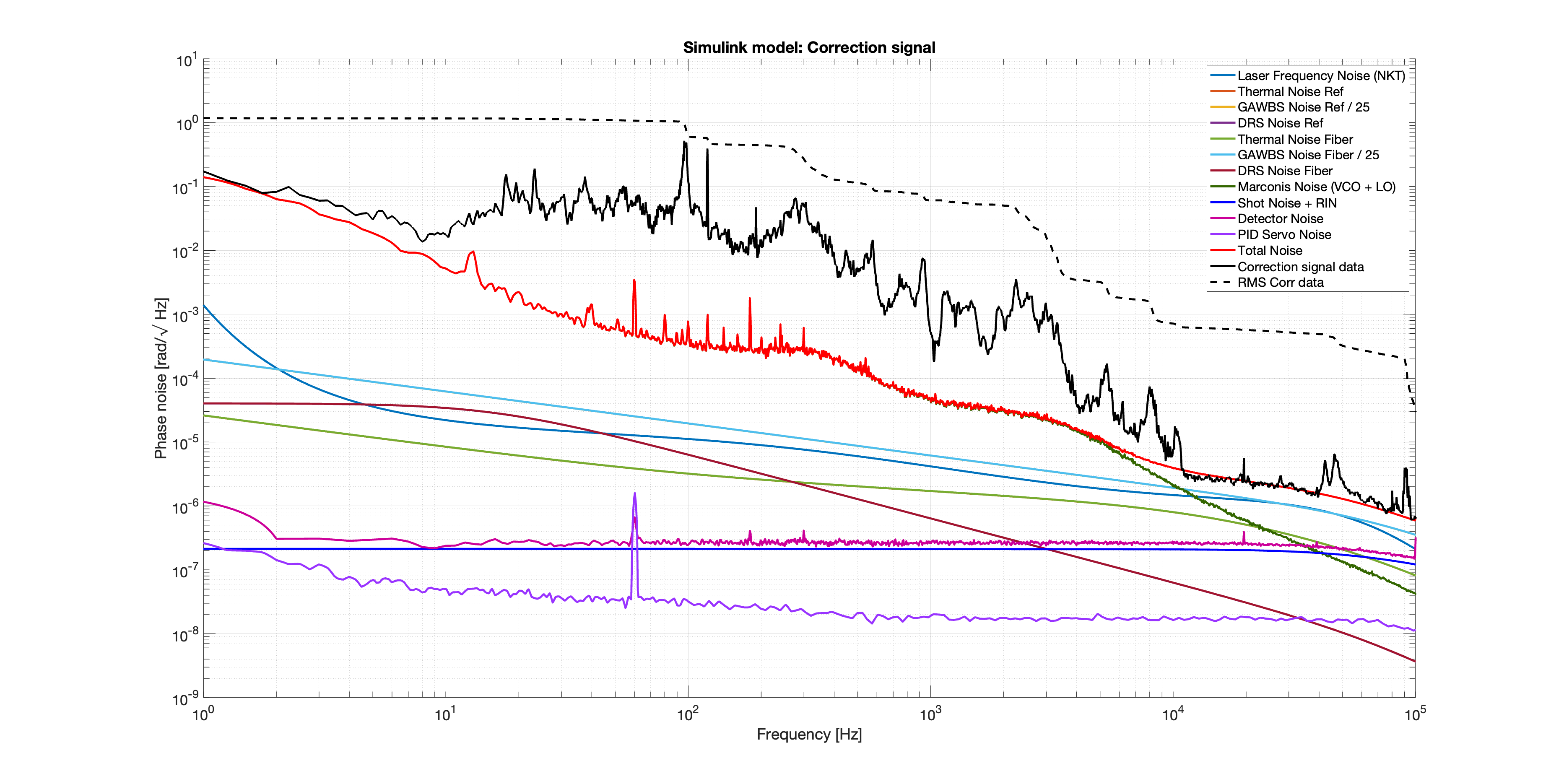
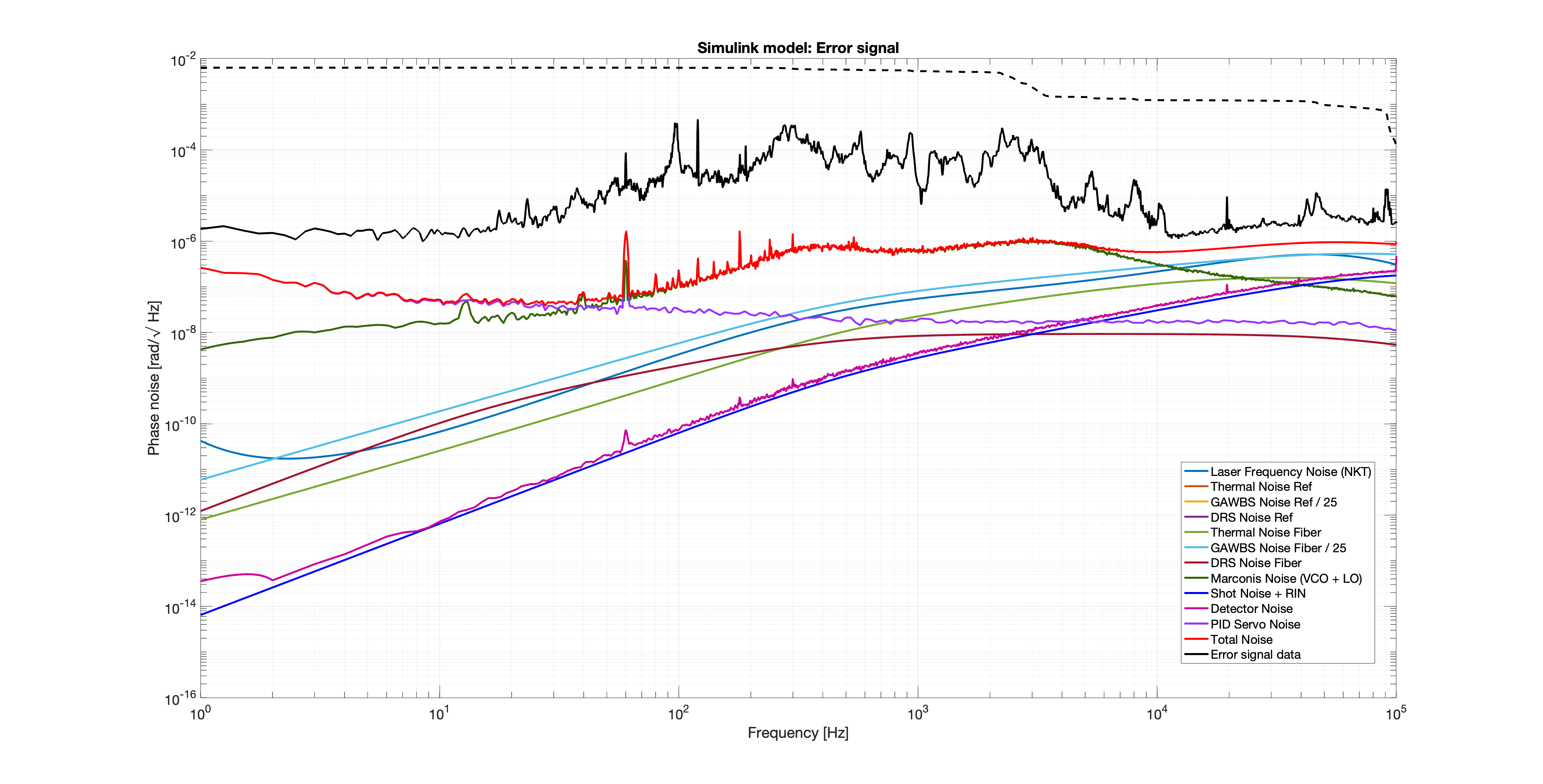
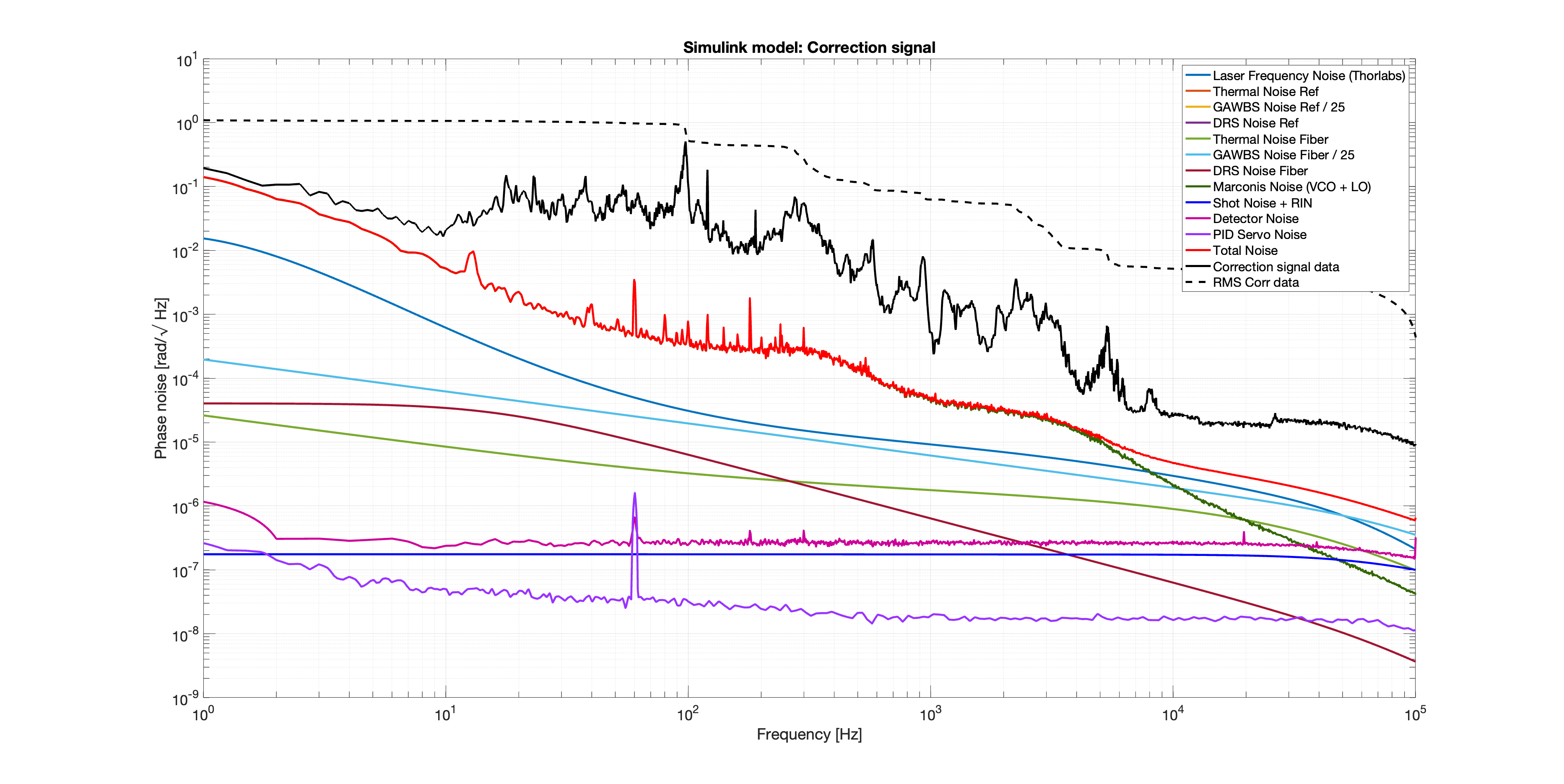
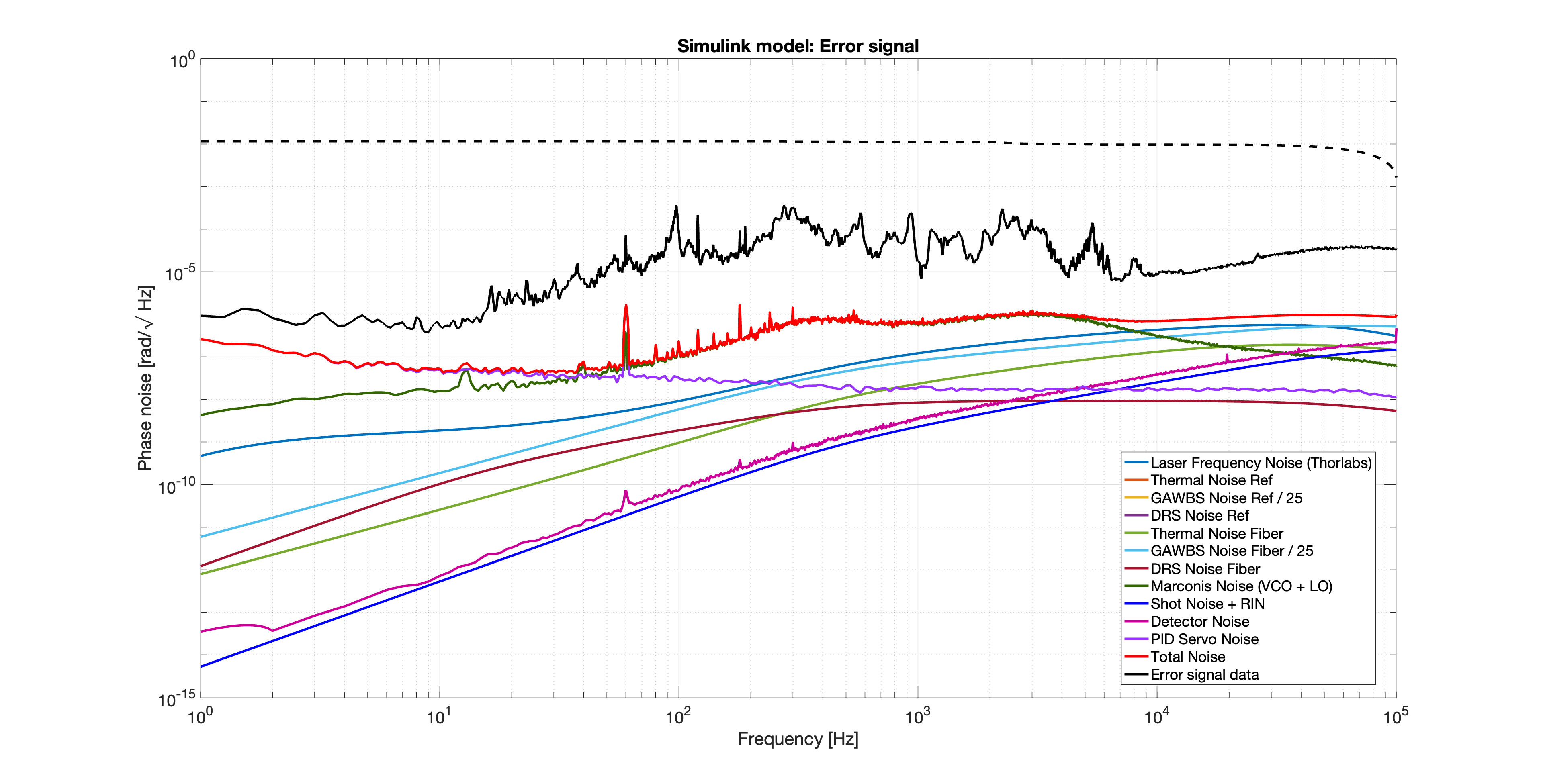
Fig. 3 and Fig. 4 show the correction and error signal noise budgets respectively.
2. Thorlabs laser
Fig. 5 and Fig. 6 show the correction and error signal noise budgets respectively.
There is an underestimated source of noise in the thorlabs laser case. We just received the 100m and 200m spools, so I will build an UMZI with unbalance < 329m in order to measure the frequency noise.