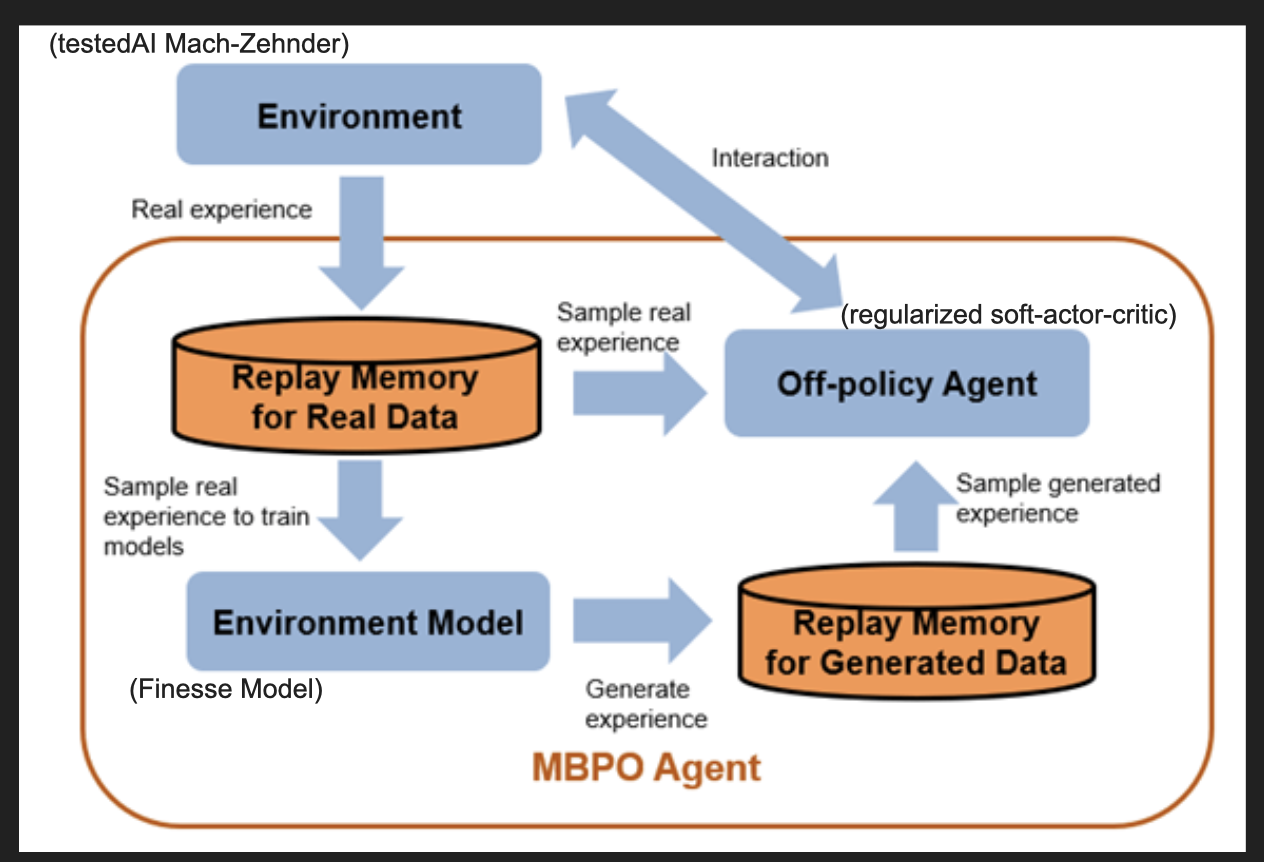
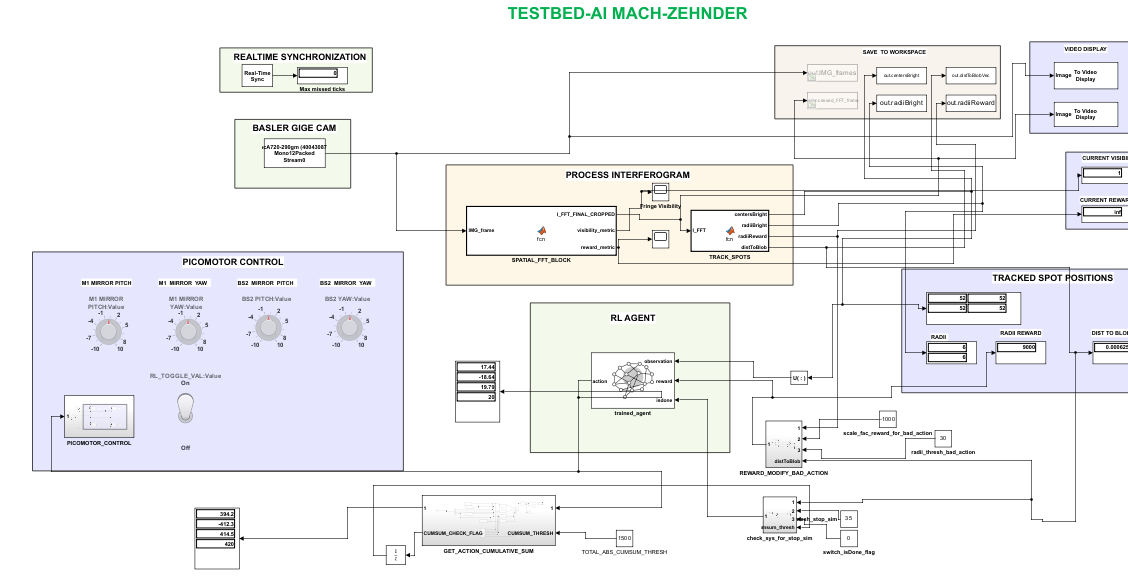
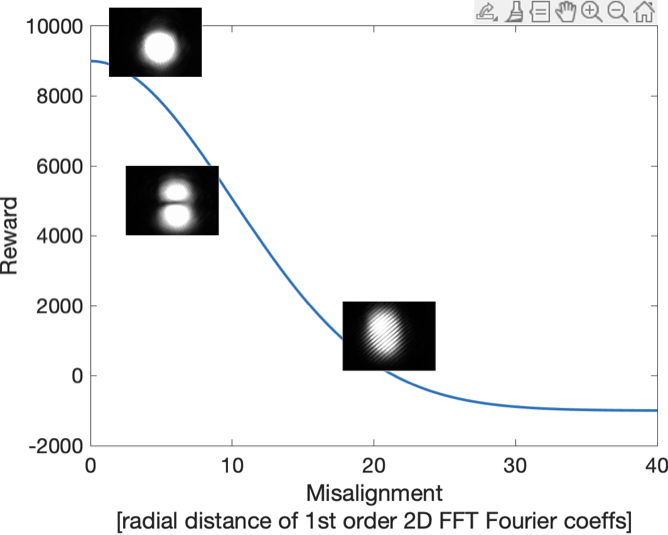
With the Newport pico-motors and Basler camera installed, the next steps are configuring the RL agent and integrating it into the tested setup. As depicted in Figure 1, I have set up a model-based policy optimization coupled with hybrid real/simulation-based learning. The agent would primarily interact with the experiment via the pico-motors attached to the mirror in reflection (M1) & the final beamsplitter (BS2). Currently (figure 2), the state information is derived from the spatial Fourier transform of the interferograms. 2D spatial FFT has three prominent terms: DC and two spots whose radii correspond to the amount of misalignment, and angle determines the relative pitch/yaw contribution. (state velocities will be added later). The immediate reward for a particular set of actions is currently calculated from the above states. The reward is specially constructed (see the last fig) to penalize deviations and encourage states closer to the optimal circular fringe state. Initially, I was thinking of using fringe visibility, but this requires mechanically perturbing the first beamsplitter (BS1) from -pi to pi, which is noisier.
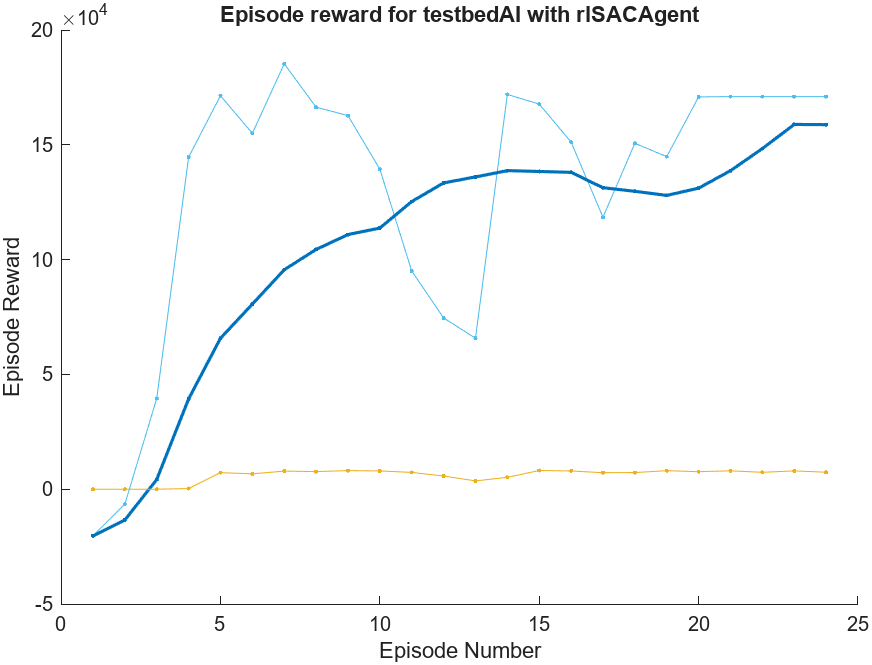
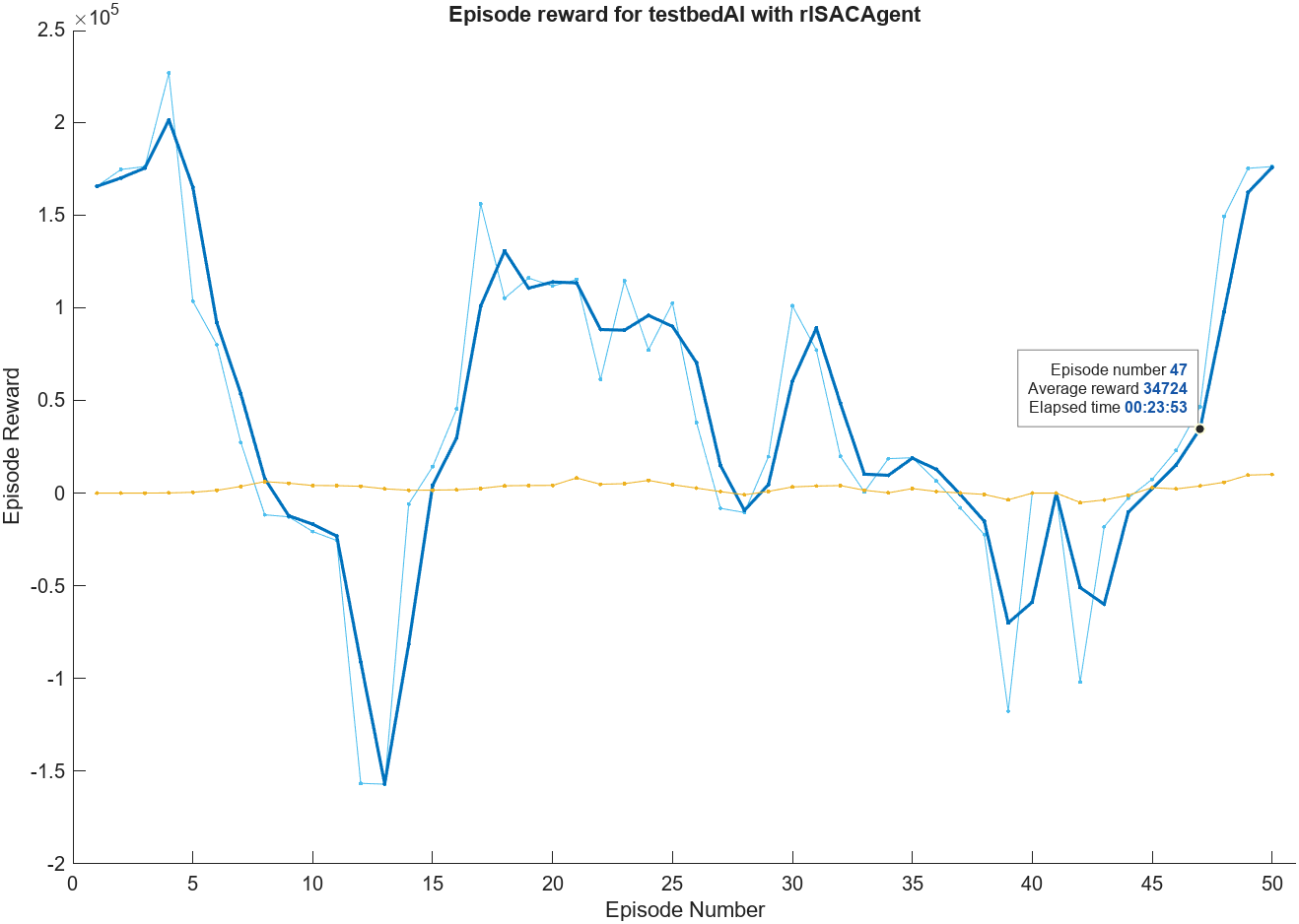
From the initial training, it seemed (from figure 3) like the agent was learning to collect higher rewards. But on closer inspection, the agent was merely pushing out one of the beams to have a single circular beam that mimicked the central maxima. I have tweaked the model to kill the training episodes whenever the misalignment get significantly worse. This prevents the above behavior (figure 4). But I haven't yet trained it for more than an hour. This will be done in the coming days.
I plan to augment the real experiences collected by the agent with those obtained from a Finesse simulation of the setup. This could potentially speed up the learning. Another idea is to fill in the experience buffer from data collected from human demonstrations (sub-optimal policies). Both these should, in principle, help us tackle the sample inefficiency from real-world learning.