
[Regina, Rich, Eleonora]
We started measuring seismic noise in LASTY to estimate the seismic noise that we should mitigate in GRAVITES. We conducted this work in LASTY since the sensors can be interfaced with the CDS system.
We have access to three different types of seismometers:
1. Nanometrics Trillium 240 Broadband Sensor: it has a corner frequency of 4 mHz and reads three axes. This sensor provides the best spectrum for us as we are interested in measuring low-frequency seismic noise. We properly connected the cables to the electronic boards, but the signals X MON, Y MON, and Z MON were not sensitive to seismic activity. Following the reference in DCC D0901489 (https://dcc.ligo.org/LIGO-D0901489/public) and applying 5V to pin 6, we still haven't obtained a meaningful output signal. What we need to do is to center the geophone masses using a software, and we will attempt to do this next week.
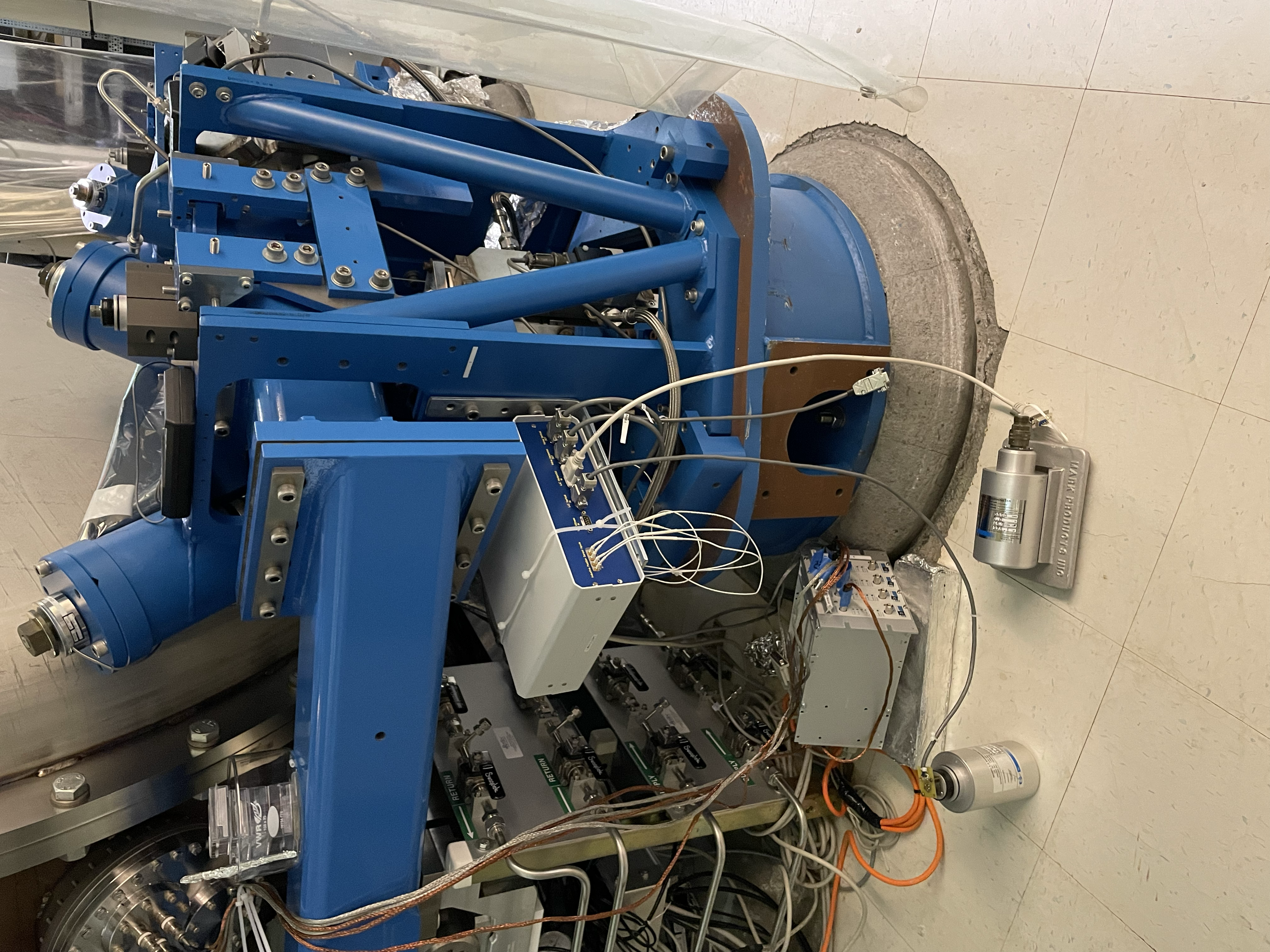
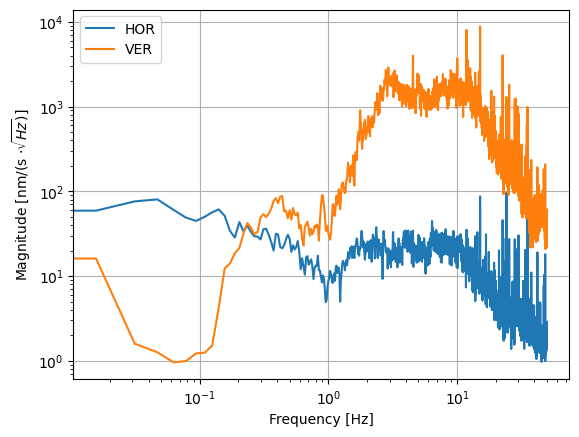
2. L4C geophone: it has a corner frequency around 1 Hz, and each sensor reads one axis, i.e., H or V. To obtain calibrated signals, we connected a vertical and a horizontal geophone to one corner (#4) of the HEPI of the vacuum chamber near the green lab (see Figure 1). We acquired the data using CDS, and the spectrum is shown in Figure 2.
3. Guralp seismometer: it has a corner frequency above 1 Hz and it is installed on Regina's bench. We haven't used this sensor yet because the seismic activity is attenuated by the bench on which it's installed, and it's not calibrated.
[Rich, Vicky, Eleonora]
We centered the masses of the T240 by sending 5V to the correct pin, as written in the manual, i.e. RX which according to this scheme corresponds to pin #18.