
[Eleonora, Anders]
Yesterday and today we worked on the coupling in fiber of the 2 mm collimated NPRO beam (see entry #11239).
1. Optical set up adjustment
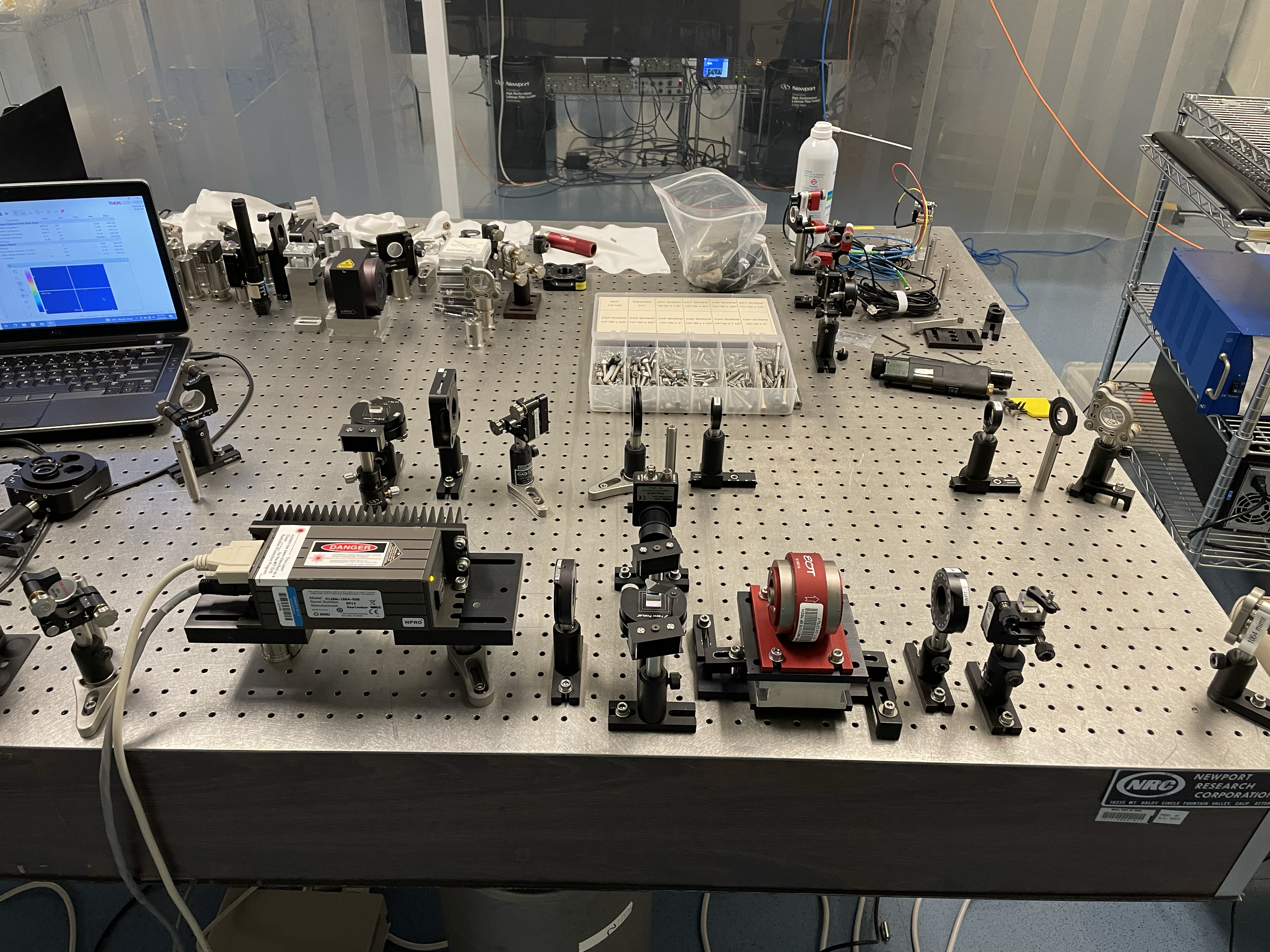
First, we installed an ATF 50/50 (super) beam splitter taken from from Slawek bench in the highbay (after asking) to split the previously collimated (logbook entry #11239) beam for testbedAI and the GRAVITES prototype. We placed a beam dump on the reflected beam for testbedAI and left it. We then installed a half-waveplate and PBS on the transmitted beam to allow for further power control into the GRAVITES prototype. We installed two steering mirrors before the fiber port / collimator in order to be able to align the beam properly and freeze the position of the two mirrors in front of the telescope. The new set up is shown in Fig. 1.
2. Beam coupling in fiber technique
We tried to couple the collimated beam with a 2 meters SM fiber, following these steps:
1. install the fiber port / collimator on a tip-tilt mount to be able to align it with the incoming beam.
2. use the RIO fiber laser on the same bench to ease the alignment process: we connected the fiber laser to the back side of the fiber port and we aligned it with the incoming beam by tuning the DOFs of the fiber port (in at least two different reference positions).
3. connect the fiber to a PD and read its power with the oscilloscope and tune the alignment with the steering mirrors in front of the fiber port.
4. once we see some power on the PD, we maximize it with the two steering mirrors in front of the fiber port.
5. we moved the fiber from the PD to the power meter to tune the alignment.
6. we started the mode matching: we moved the lens position on the rails to maximize the alignemnt and then we recovered the alignment if needed.
We did this procedure for two different fiber ports and we could not reach a coupling higher than 30%.
3. Fiber coupling: attempt 1
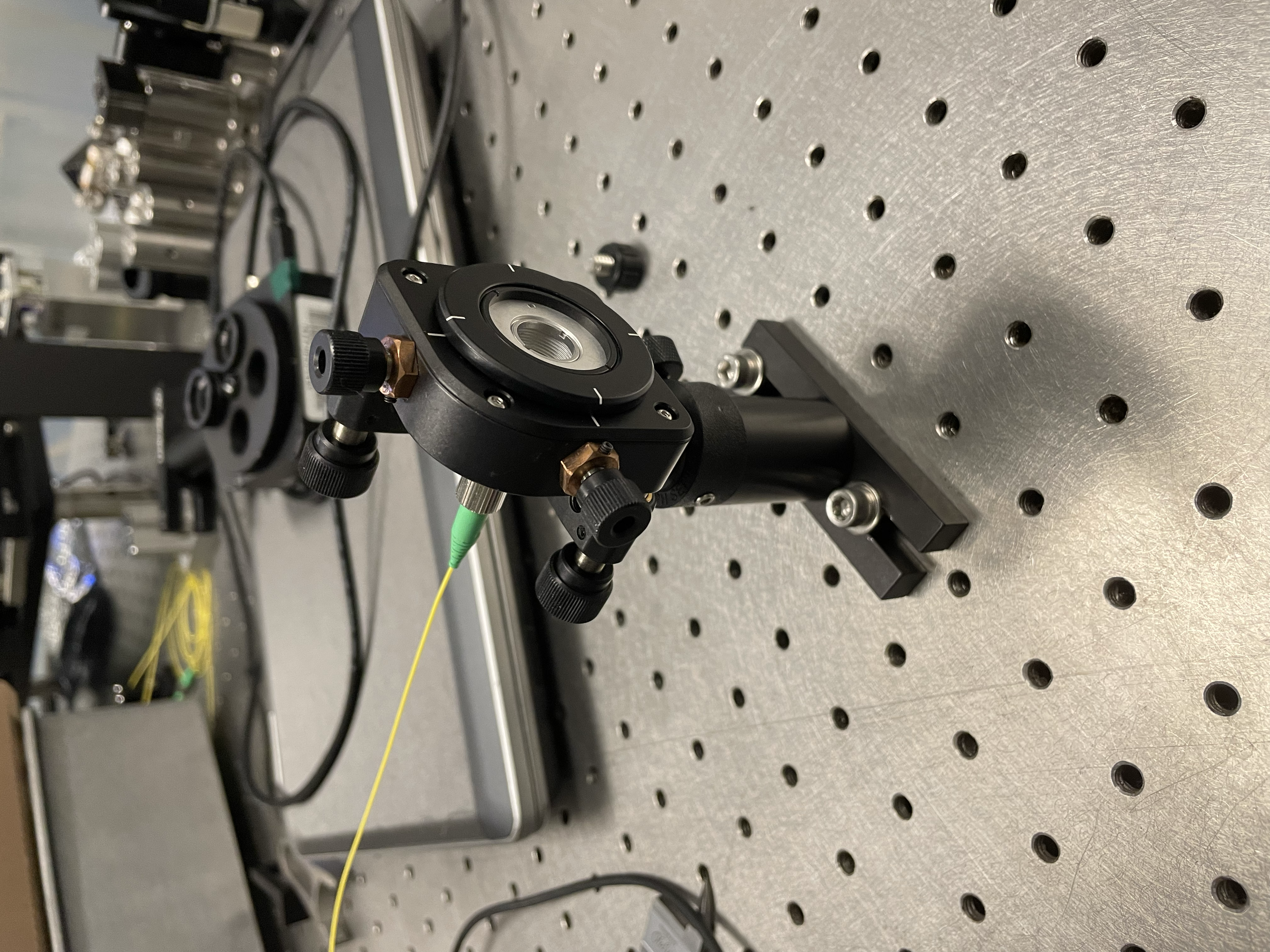
Yesterday, we started with the coupler in Fig.2 (still installed in the same mount) but we could only get around 16% of coupling. As Slawek suggested, this morning, we checked the beam coming out of the coupler when the back port is connected to the RIO fiber laser. The beam diameter was around 1 mm and it was not collimated so we decided to change fiber port.
4. Fiber coupling: attempt 2
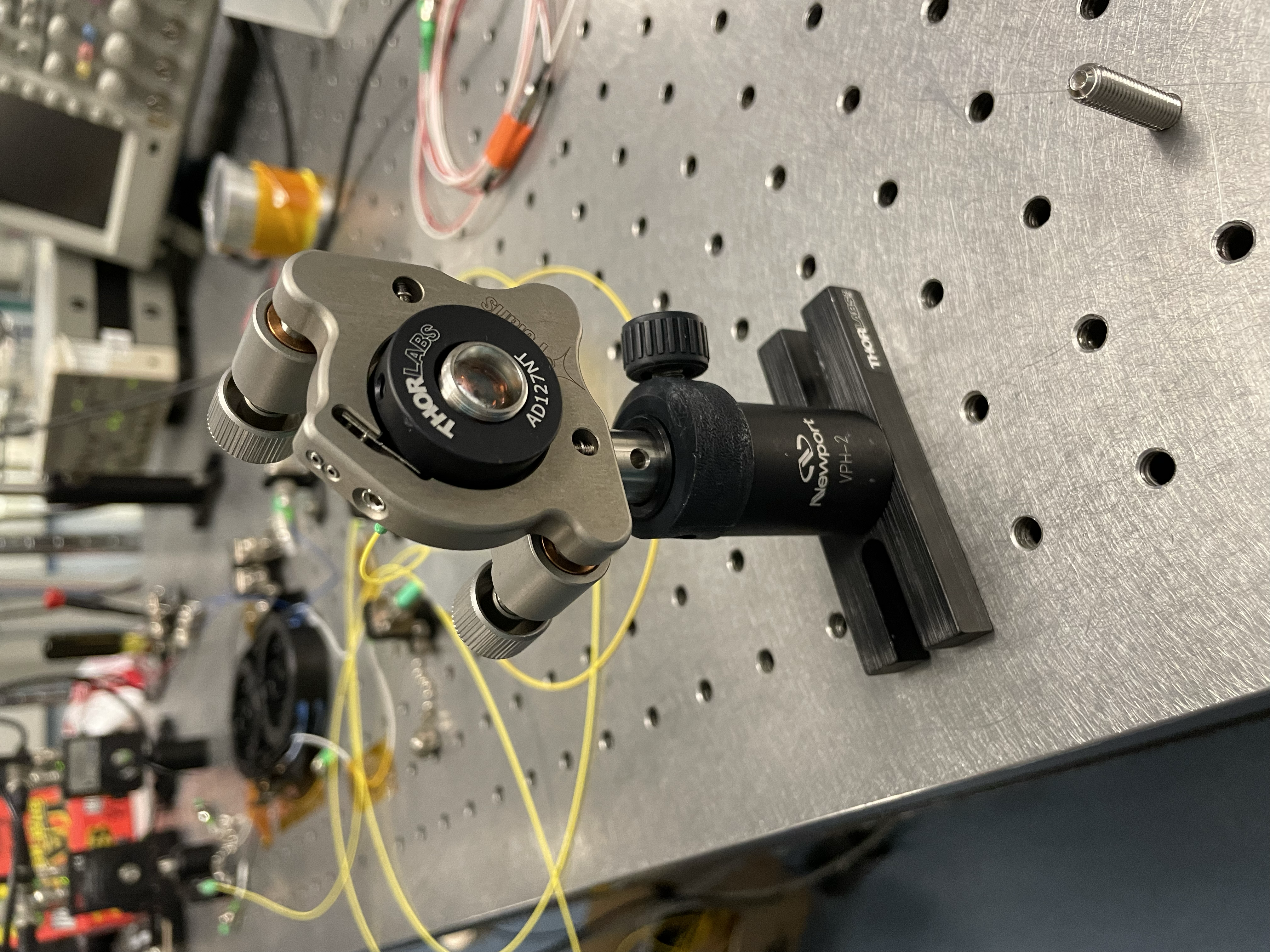
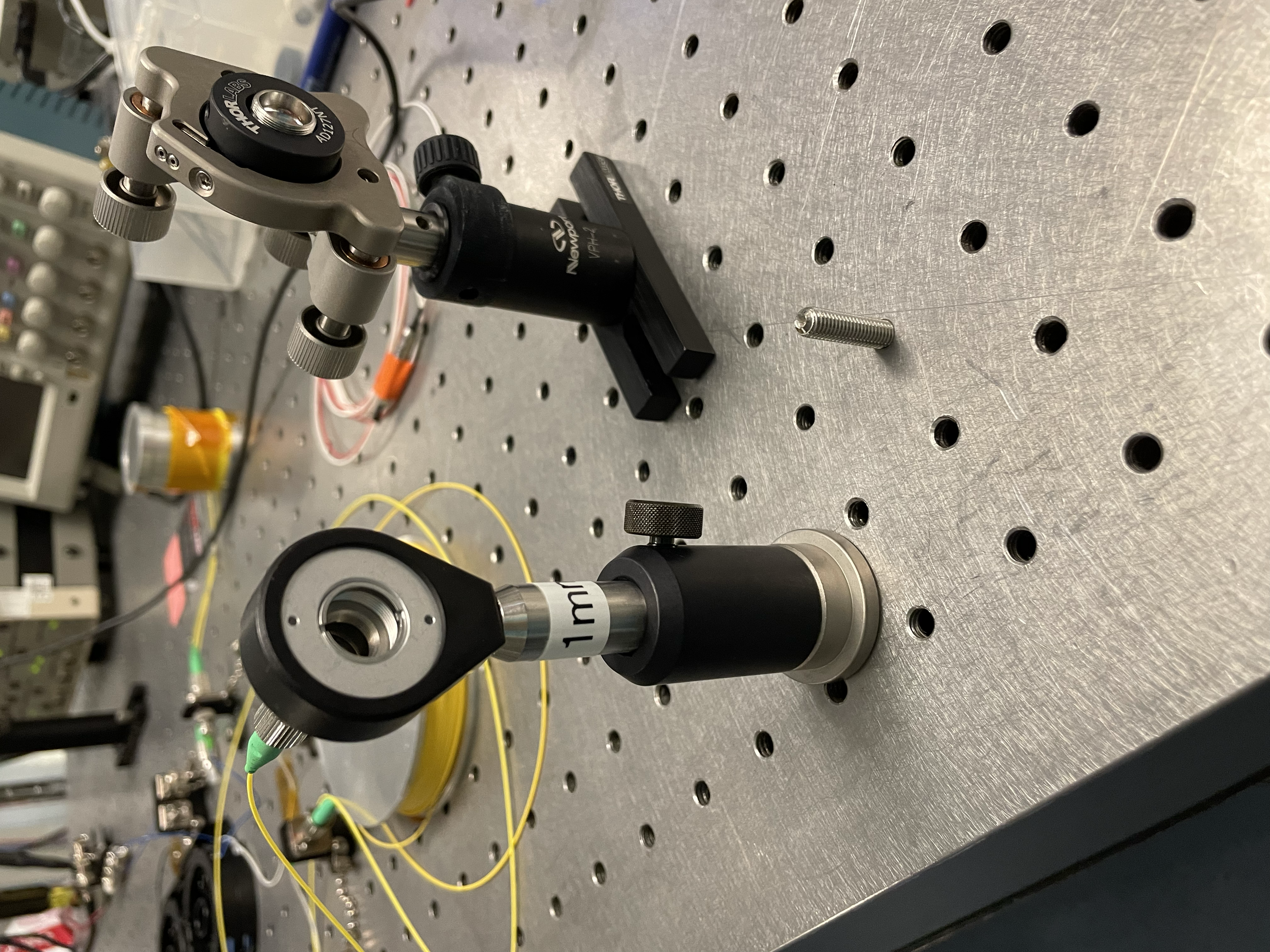
We tried the fiber port in Fig. 3 and we checked quickly that the beam diameter coming from the coupler was bigger than 1 mm. It was around 2 mm in several positions so we started the fiber port alignment.
The best achieved was 30% but in this configuration the beam diameter in front of the fiber port was no longer 2 mm but even smaller than 1 mm!
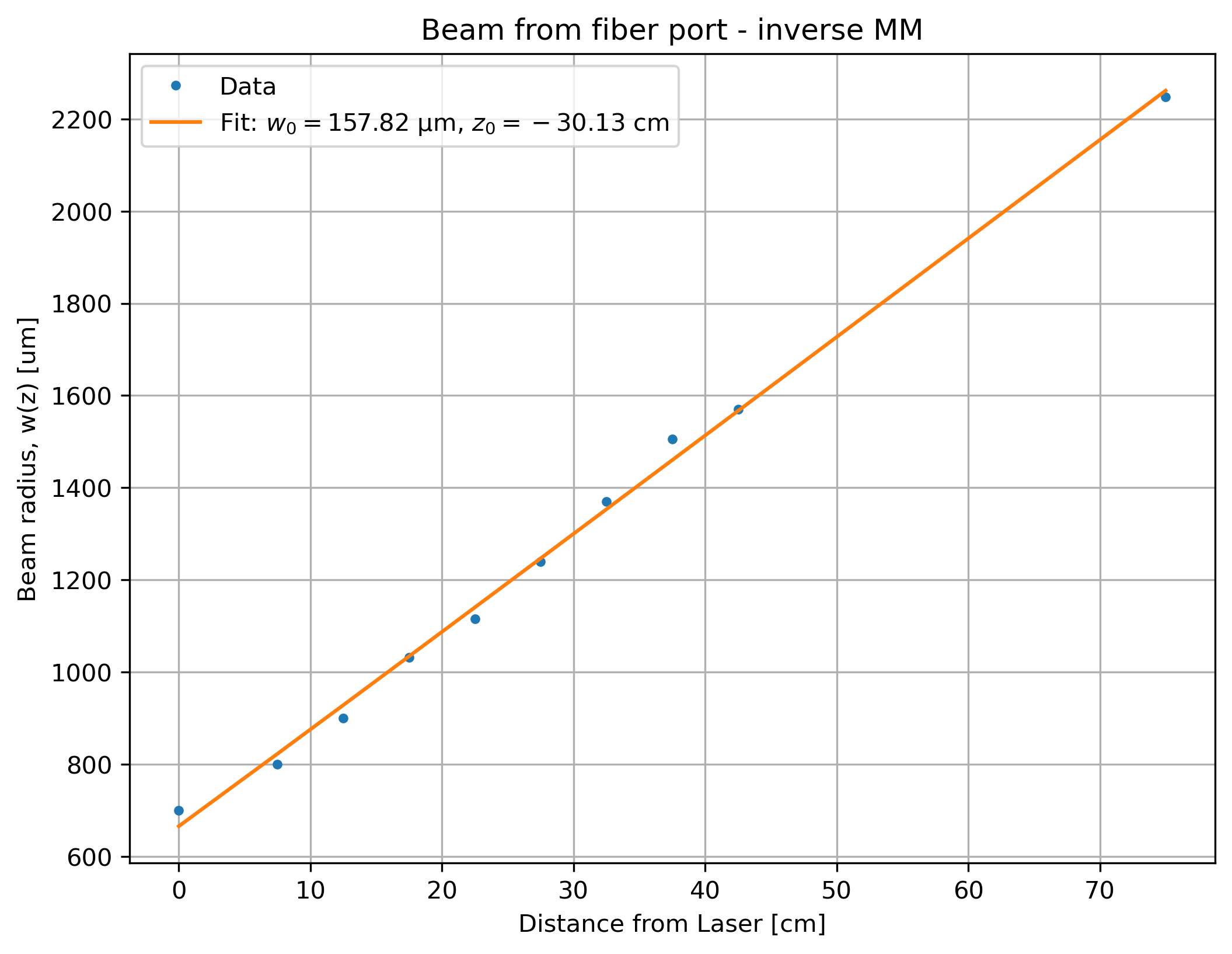
We measured the beam parameters coming out of the fiber port in order to try to do an inverse mode matching of the fiber.
The resulting beam profiling is shown in Fig. 4. The mean has a waist radius of 158 um, 30 cm before the coupler telescope which it a very divergent beam. This is extremely far from a collimated beam with 2 mm diameter.
Since we need a collimated beam for the AI experiment, it doesn't worth it to do an inverse mode matching to match the fiber port requirements.
Moreover, we also tested the fiber port in Fig. 5 and it also gives a divegent beam.
5. Next steps
If we want to use the NPRO laser beam for the gravites prototype we need to buy a new fiber port / collimator at 2 mm.
[Eleonora, Eric]
We realized that the fiber port / collimator in Fig. 3 is a F240APC-A (Thorlabs), i.e. a collimator for green light. This explains its behaviour at 1064nm.