[Anders, Eleonora]
The objective is to output a collimated roughly 2mm diameter beam that could be used for testbedAI and also coupled into a 2mm (diameter) fiber port collimator for the 1064 nm prototype for GRAVITES.
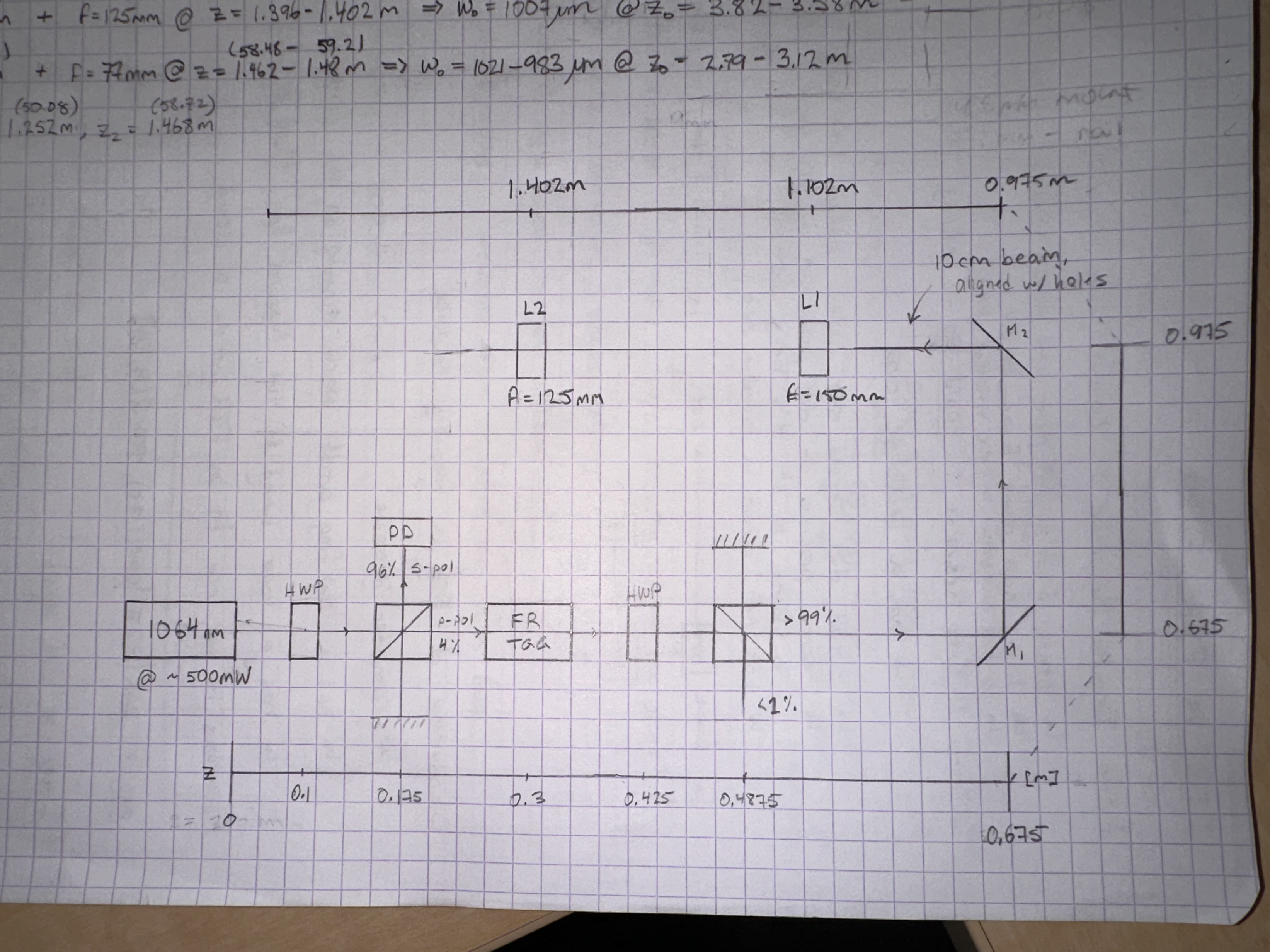
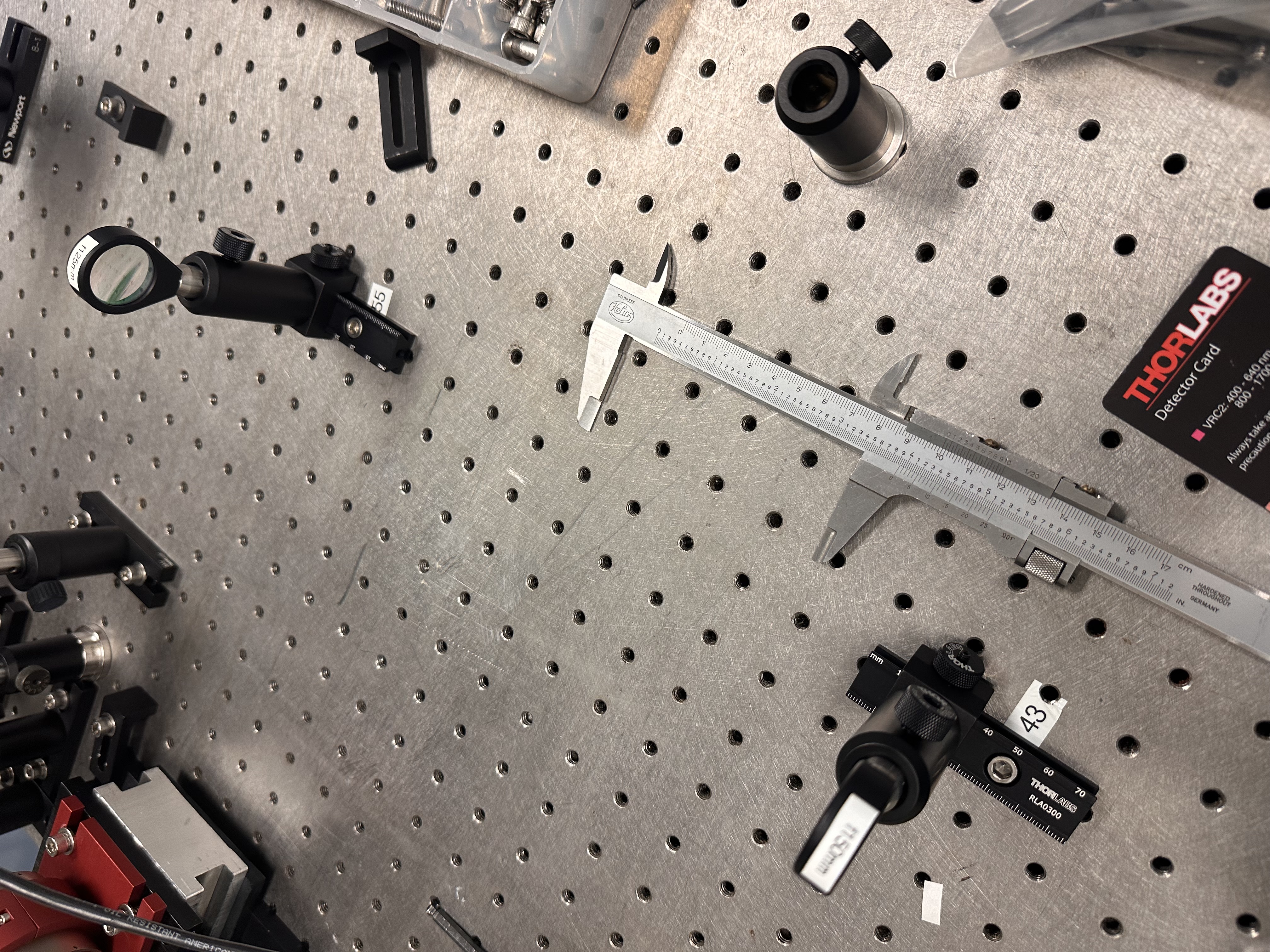
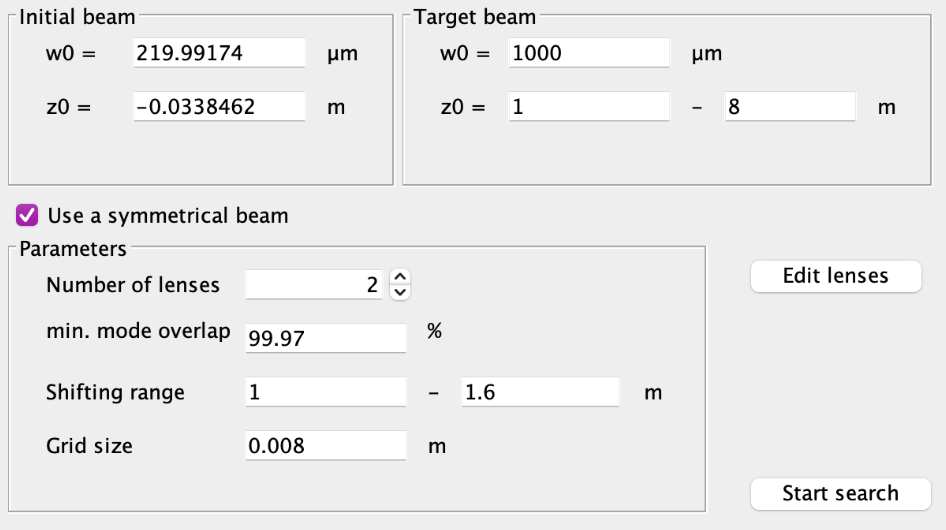
Considering the beam parameters estimated in the logbook #11232, i.e. w0 = 219.99um and z0 = -0.0338m, we simulated a telescope using the software JamMT (a mode-matching software). The desired output beam parameters are w0 = 1000um (waist radius) and z0 between 1 and 8 meters. Other JamMT parameters such as the shifting range were entered based on the table layout, i.e., the last adjustment mirror is roughly 0.975m from z=0 [photo of table dimensions attached below].
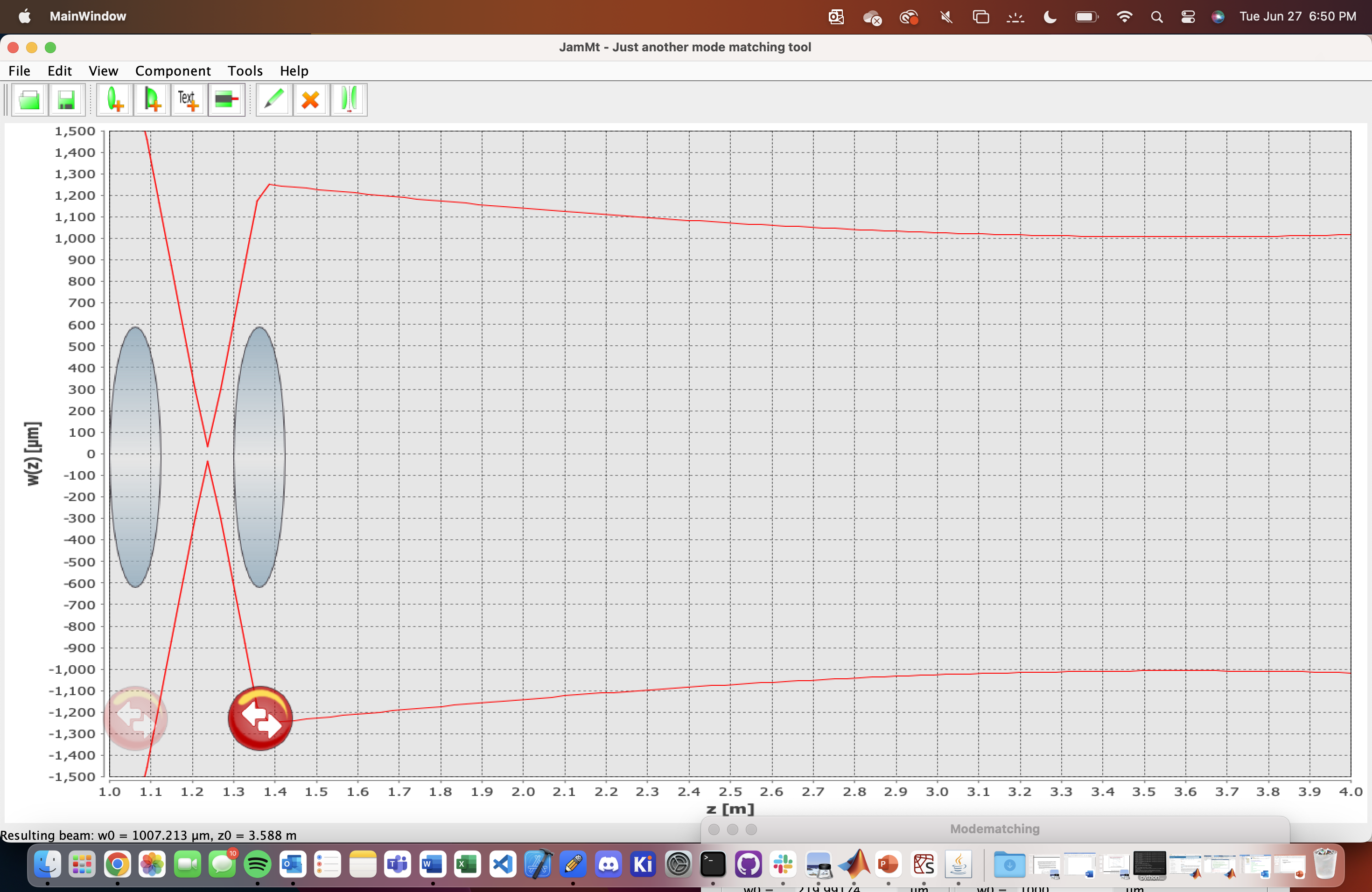
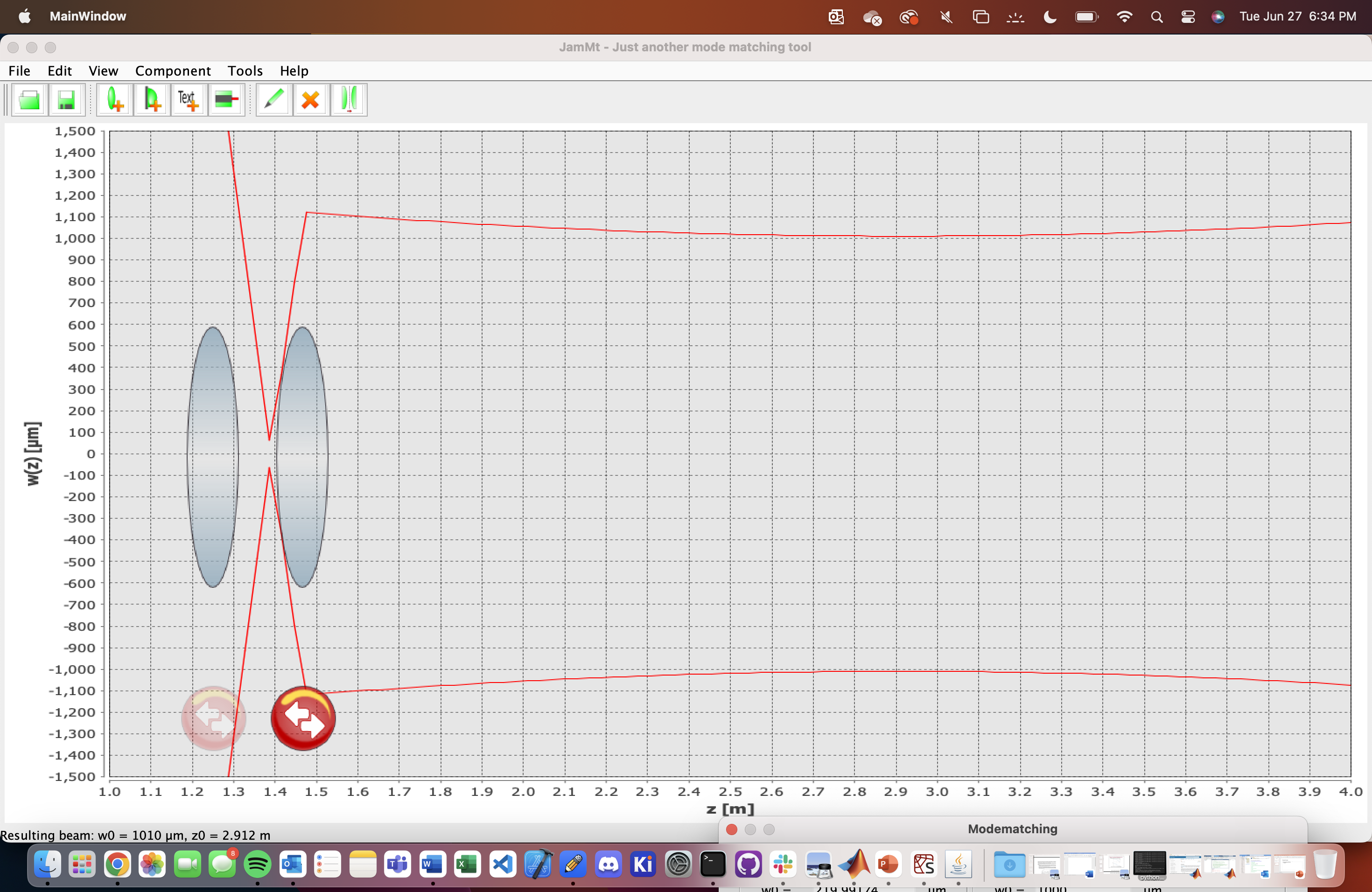
The simulation in JamMT suggested a variety of lens combinations considering a discrete list of common lenses found on ThorLabs, the most relevant two options were recorded (screenshots attached below).
Option 1: f=150mm @ z=1.102m + f=125mm @ z=1.402m --> resulting beam w0 = 1007um and z0 = 3.58m
Option 2: f=125mm @ z=1.252m + f=77mm @ z=1.468m --> resulting beam w0 = 1010um and z0 = 2.912m
A ThorLabs order was made for f=125mm and f=150mm lenses, along with optical rails and posts for fine tuning. We had access to a f=77mm lens already.
Both options were assembled and the beams examined (at one location) with the beam profiler. It was determined experimentally that Option 1 produced a more desirable beam for our purposes.
As a result, an inital (rough) measurement of the beam profile after the Option 1 telescope was recorded. The data is presented in the following table:
| Distance from Laser [m] | Beam Diameter [um] |
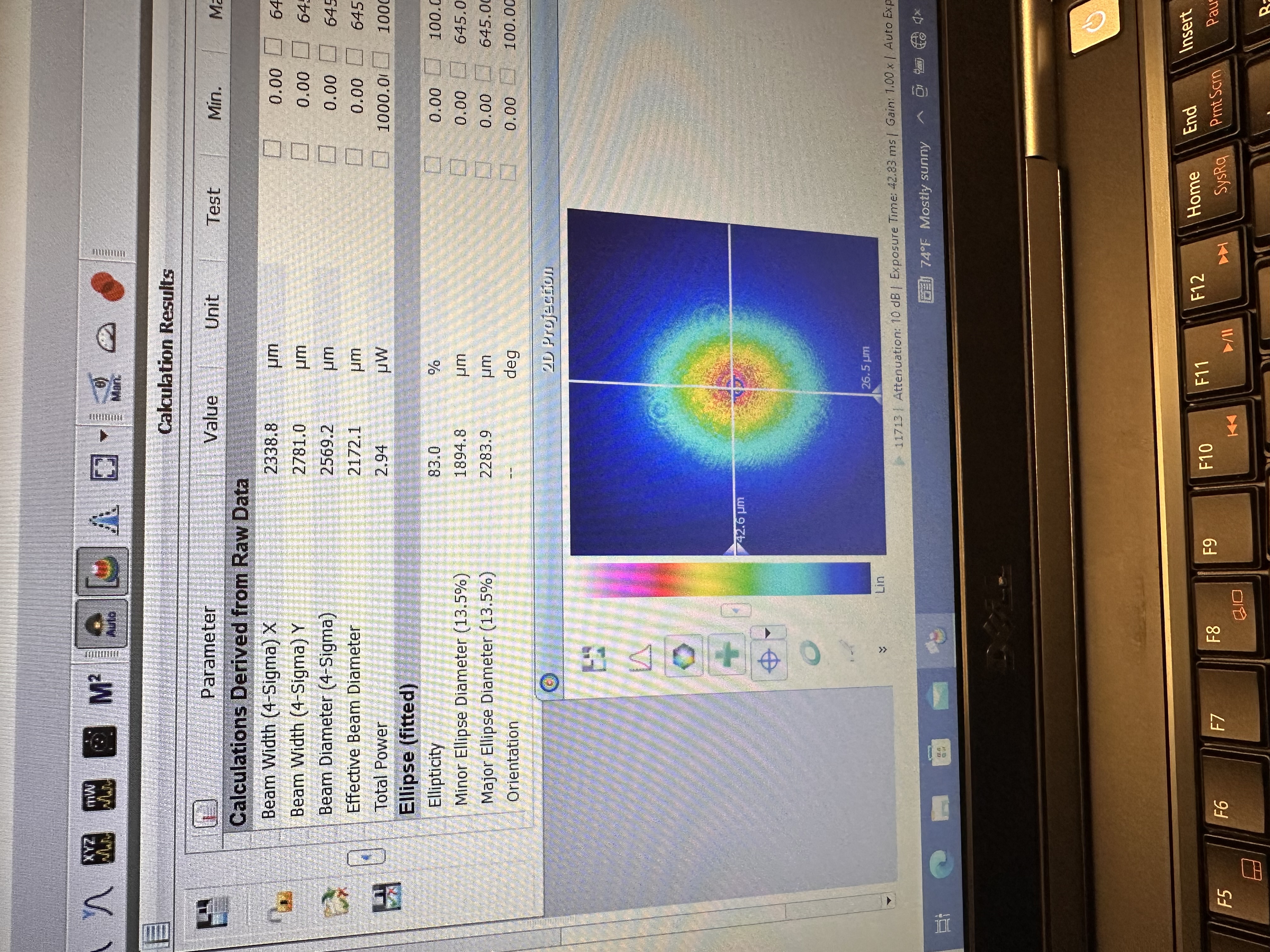
| 1.45 | 2172 |
| 1.525 | 2209 |
| 1.6 | 2198 |
| 1.675 | 2192 |
| 1.75 | 2240 |
| 1.825 | 2216 |
| 1.9 | 2236 |
| 1.975 | 2288 |
| 2.05 | 2309 |
| 2.125 | 2351 |
| 2.2 | 2335 |
| 2.275 | 2351 |
| 2.35 | 2412 |
Based on this prelimary data, we are happy with the telescope and should be able to fine-tune as needed in the future. The divergence angle was computed to be 0.015 degrees, which is well below the 2 deg ceiling.
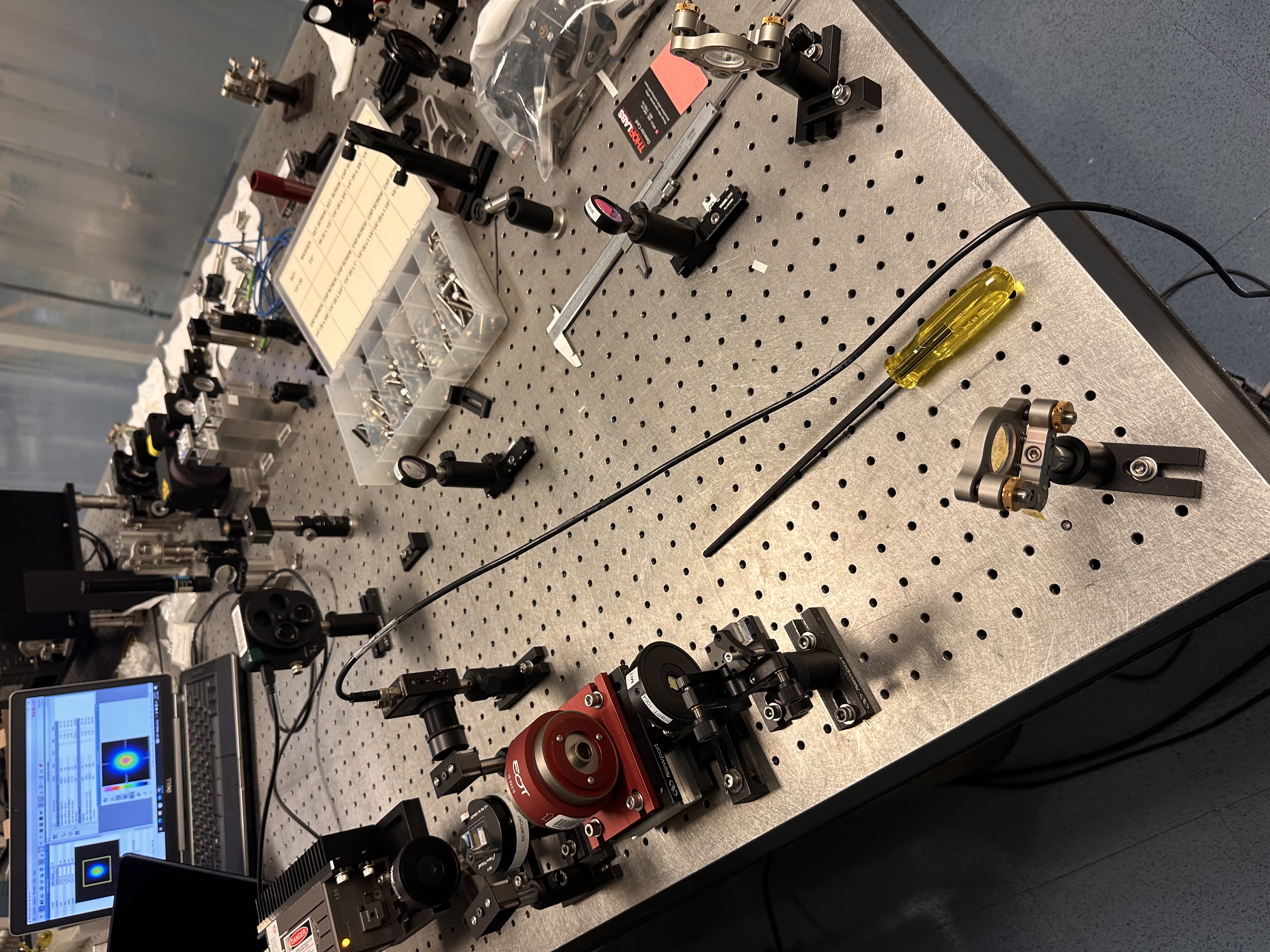
Other photos attached include the optical table layout, the lenses as configured, and the beam profile as seen by the beam profiling software for the first measurement at 1.45 meters.